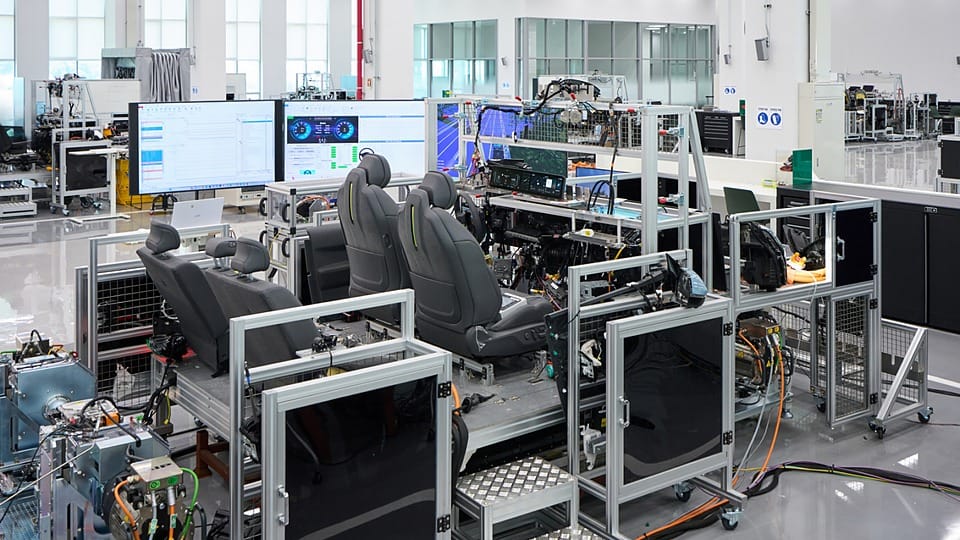
How Hyundai Motor Group is Driving the Future of Electrified Mobility with Advanced R&D

Page sharing

Editorials How Hyundai Motor Group is Driving the Future of Electrified Mobility with Advanced R&D

Please use Safari to download the files.

Empty cart?
Next
Prev
이전 페이지

How Hyundai Motor Group is Driving the Future of Electrified Mobility with Advanced R&D

Added to
Media Cart
Copied to
clipboard
URL copied to clipboard

Share via email We do not collect email addresses.

Editorials 202602130800
How Hyundai Motor Group is Driving the Future of Electrified Mobility with Advanced R&D

7 minutes read
Added to
Media Cart
Copied to
clipboard

Share via email We do not collect email addresses.

How Hyundai Motor Group is Driving the Future of Electrified Mobility with Advanced R&D

Hyundai Motor Group has won countless global awards for its products, highlighting the success of how its vehicle are design and engineered - a key element of that is Hyundai Motor Group's Namyang Research and Development Center in Korea. Here we go behind the scenes of what goes into the testing and develoment of Hyundai Motor Group's vehicles at it Namyang facility

Hyundai Motor Group (the Group) is rapidly advancing its electrification strategy, backed by a bold vision and a foundation of proven results.

As a global EV leader with award-winning models and cutting-edge electrification technologies, the Group continues to shape the future of mobility with a focus on its customers – and at the core of this transformation is the Namyang R&D Center, a powerhouse of innovation, located in Hwaseong, South Korea.

Namyang R&D Center: The Heart of Hyundai Motor Group’s Innovation

Established in 1996, Namyang is Hyundai Motor Group’s largest research and development hub. It oversees the entire vehicle development lifecycle – from initial design and engineering to testing and validation – for passenger cars, commercial vehicles, and next-generation mobility platforms. The Namyang center plays a pivotal strategic role in realizing the Group’s electrification roadmap and enhancing global product competitiveness.


It all starts with our customers, conceiving and engineering vehicles to deliver the highest standards of Quality, Dependability and Reliability – what we call ‘QDR’.


This industry-leading R&D facility has led the development of EVs such as the Hyundai IONIQ 5, Hyundai IONIQ 6, Kia EV9, and Kia EV3 – the past four World Car of the Year award winners from 2022 to 2025, with vehicles designed and engineered at Namyang taking a total of 12 World Car Awards since 2022.

How Hyundai Motor Group is Driving the Future of Electrified Mobility with Advanced R&D
Added to
Media Cart
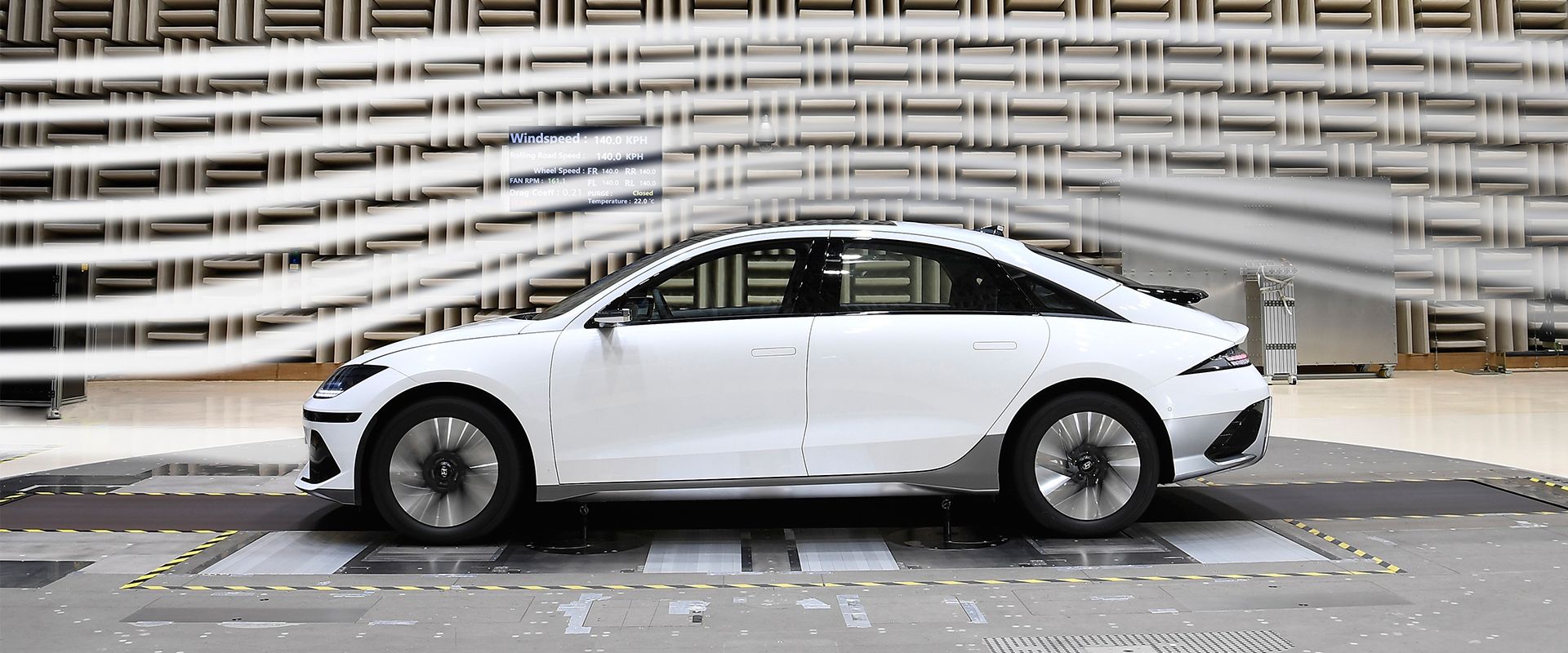
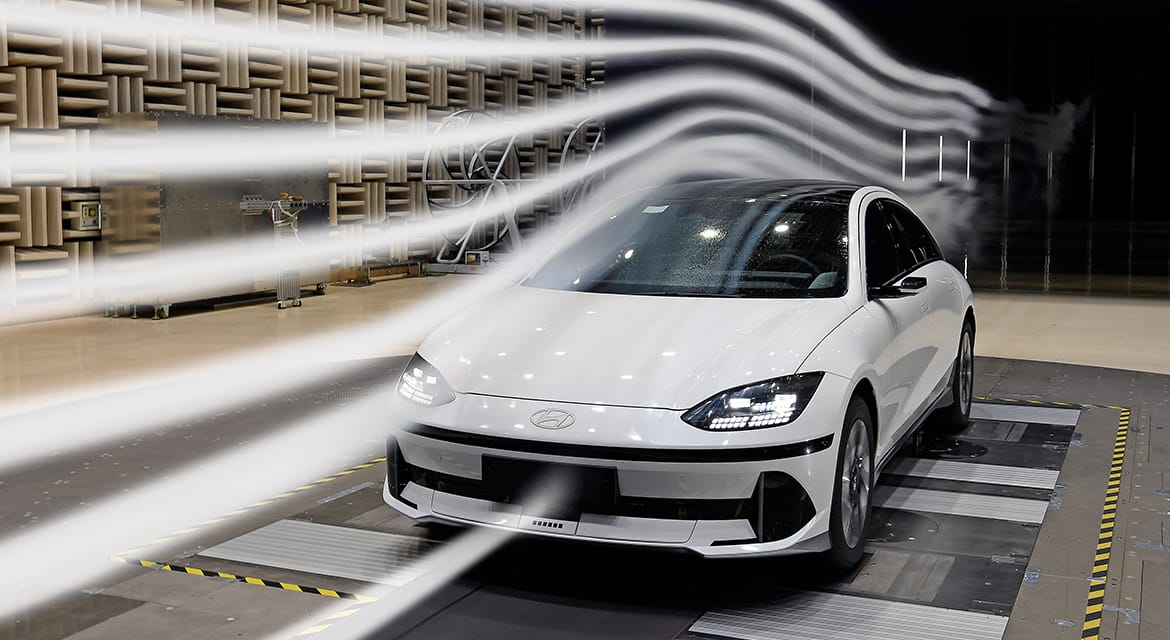
Hyundai IONIQ 6: designed for efficiency
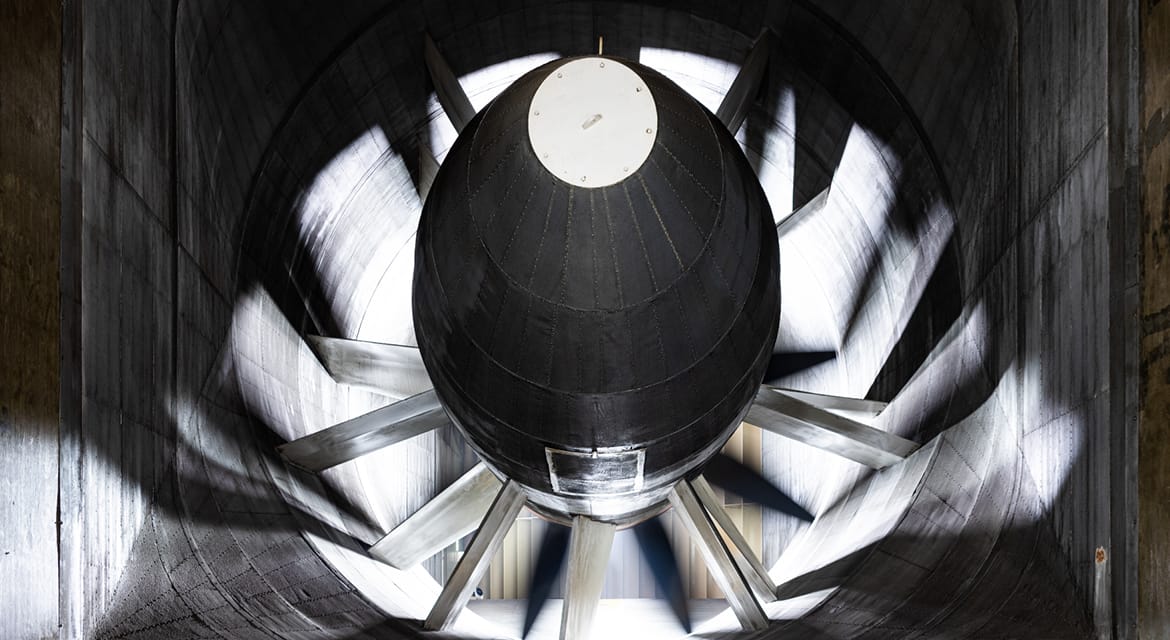
Wind tunnel
All Hyundai Motor Group vehicles are tested digitally and physically to ensure optimal aerodynamic efficiency
2 photos
How Hyundai Motor Group is Driving the Future of Electrified Mobility with Advanced R&D How Hyundai Motor Group is Driving the Future of Electrified Mobility with Advanced R&D
Added to
Media Cart

Aerodynamic Testing Facility to Optimize EV Efficiency

Why It Matters


Aerodynamic efficiency is a key factor in EV range and performance. Hyundai is pushing boundaries with ultra-low drag technologies – both active and passive design – to maximize energy efficiency.


Highlights


  • Facility size: ~6,000 m² (about the size of a soccer field)
  • Wind tunnel: 3,400 hp system simulating airflow speeds up to 200 km/h
  • Noise reduction: Carbon fiber fan blades, cutting noise to 54 dB at 100 km/h
  • Ground simulation: Rotating belt system replicates ground-level airflow


Key Evaluations


  • Drag and lift analysis: Measures resistance and vertical forces
  • Wake flow optimization: Reduces turbulence behind the vehicle through the study of vortex patterns, improving efficiency

Aero Challenge Car


Hyundai Motor Group’s ‘Aero Challenge Car’ was developed as a research prototype to explore next-generation aerodynamic solutions, achieving a world-best drag coefficient of 0.144Cd. It features proprietary active aerodynamic technologies designed to reduce drag and boost efficiency, including:


  • Active Cowl Cover (ACC): Eliminates the gap between the windshield cowl and glass, reducing air pressure and improving windshield airflow
  • Active Rear Spoiler (ARS): Deploys based on driving mode to minimize vortex formation and enhance high-speed stability
  • Active Side Blade (ASB): Retractable blades extend the rear overhang by 40 cm to suppress side vortices and stabilize wake flow
  • Active Rear Diffuser (ARD): Fan-shaped diffuser unfolds from the rear underbody to control airflow and optimize wake dynamics
  • 3D Integrated Undercover: Streamlines airflow, covering more than 87 percent of the underbody with a contoured 3D surface


These innovations are experimental and not yet production-ready but signal future directions in EV design to maximize aerodynamic efficiency and further enhance driving range and convenience for customers.

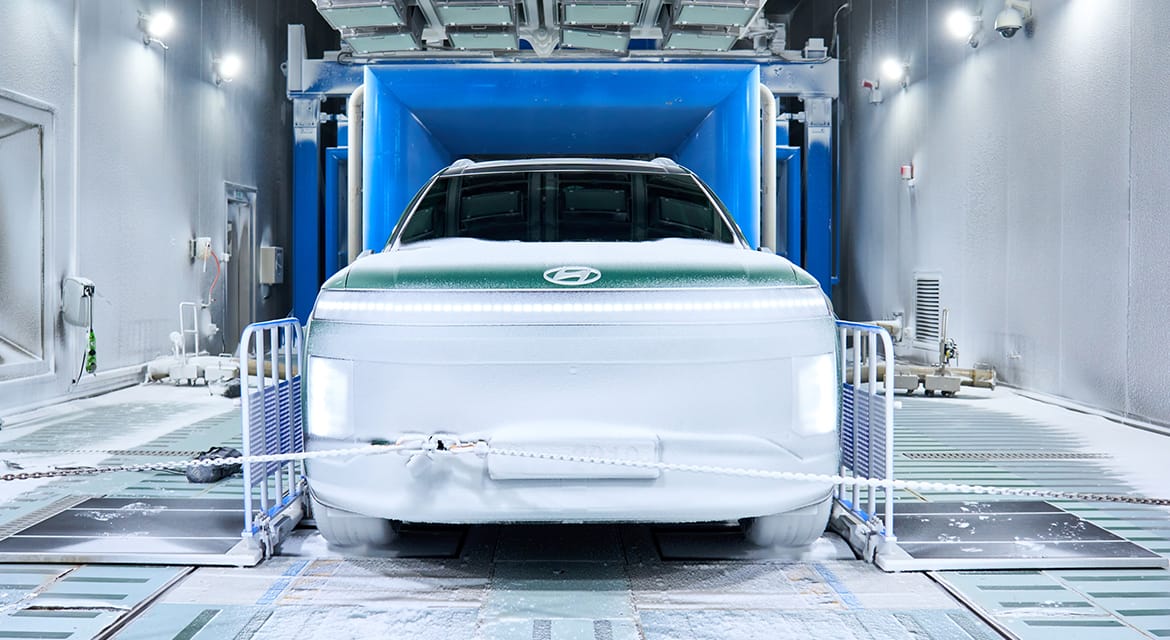
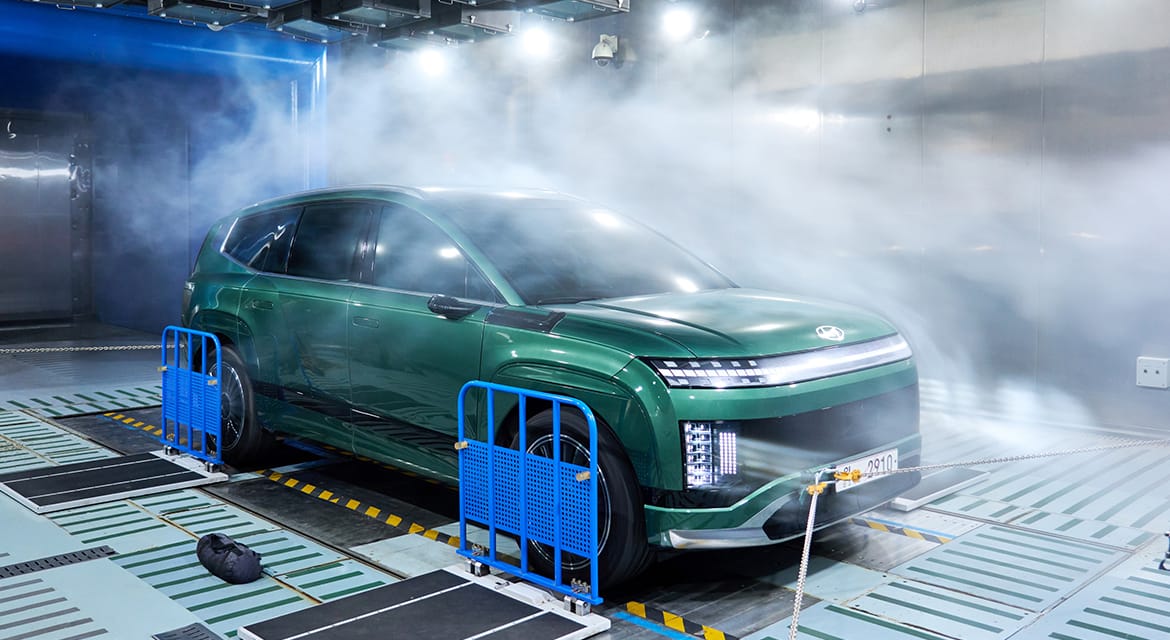
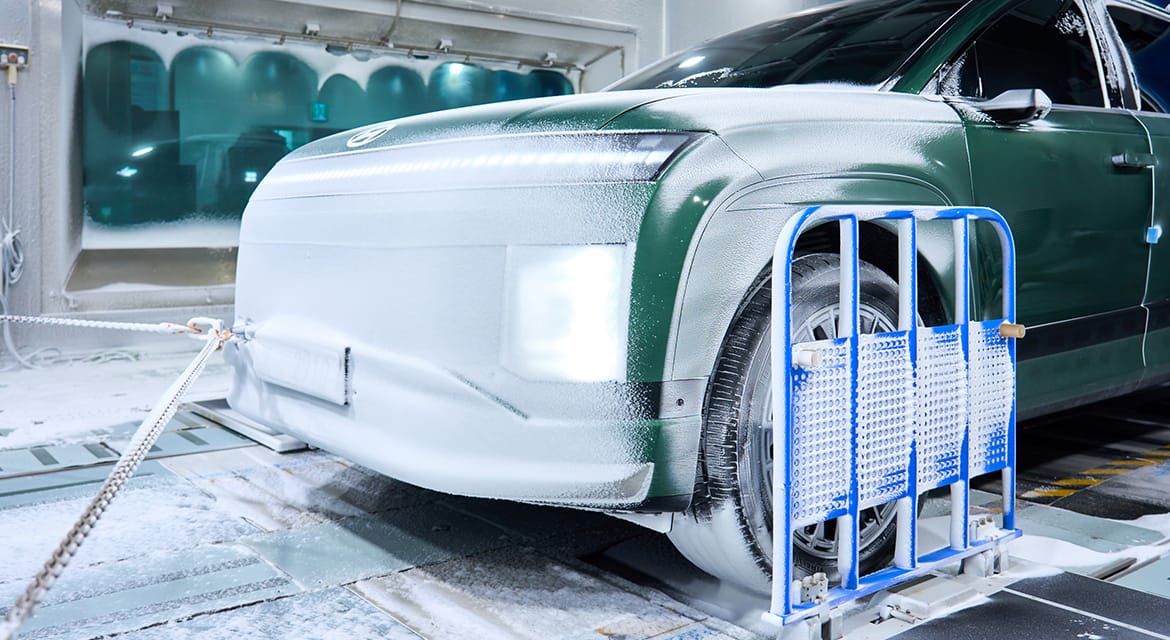
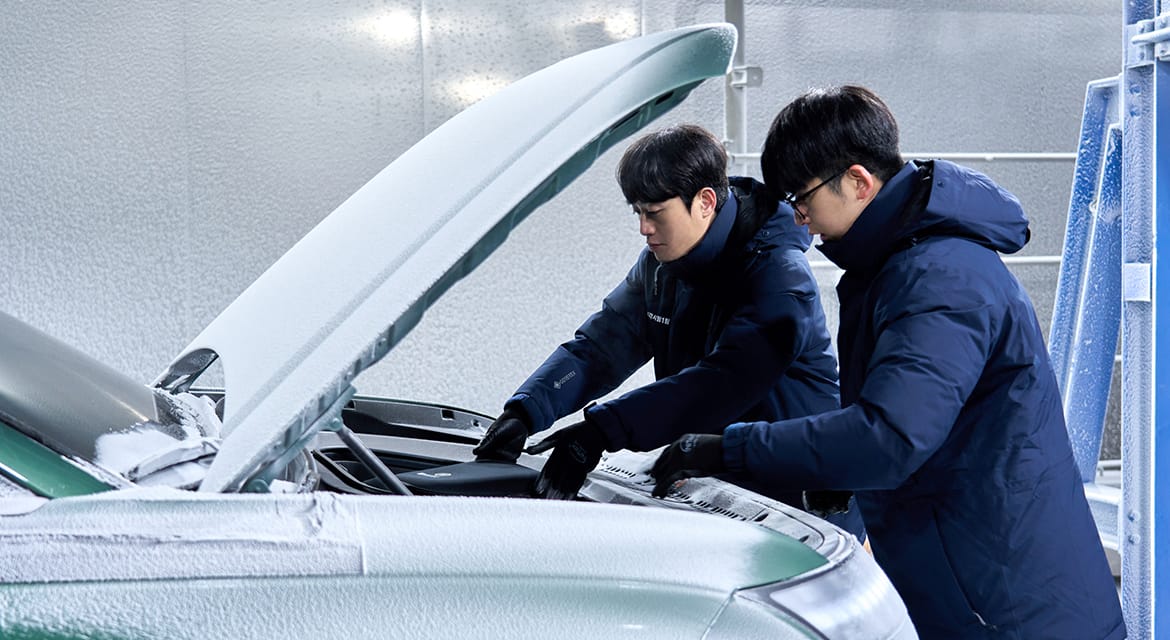
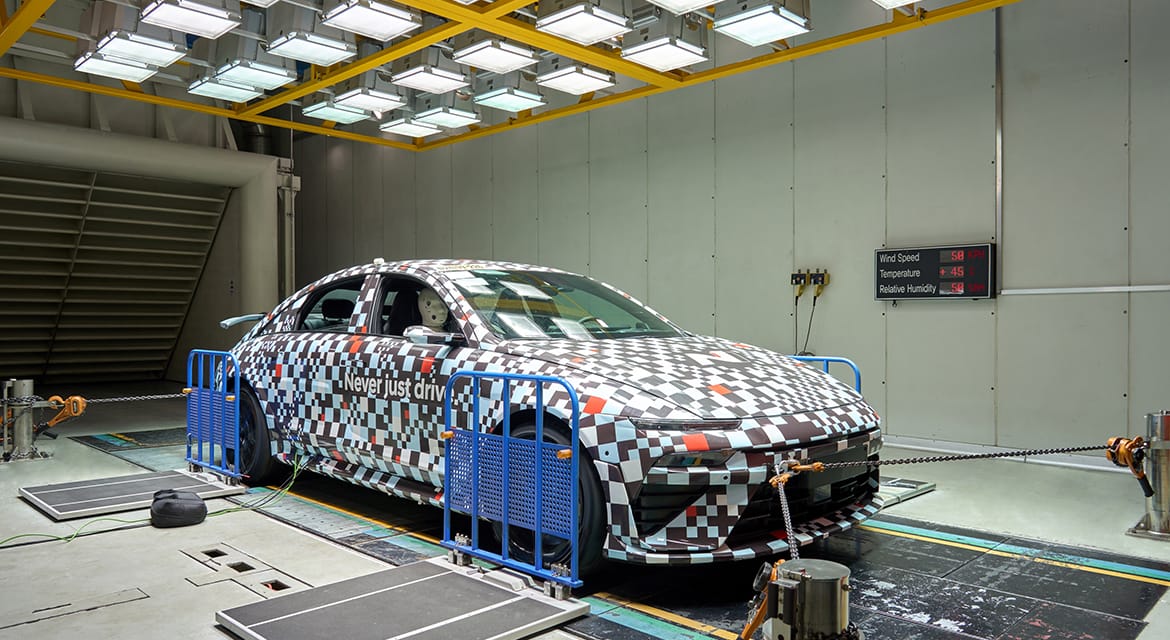
Hyundai flagship all-electric three-row SUV, the IONI 9, is put through its paces in the climactic chamber
Added to
Media Cart
Hyundai IONIQ 9
Hyundai IONIQ 9
Hyundai IONIQ 9
Hyundai IONIQ 9
Hyundai flagship all-electric three-row SUV, the IONI 9, is put through its paces in the climactic chamber
4 photos
Hyundai flagship all-electric three-row SUV, the IONI 9, is put through its paces in the climactic chamber Hyundai flagship all-electric three-row SUV, the IONI 9, is put through its paces in the climactic chamber Hyundai flagship all-electric three-row SUV, the IONI 9, is put through its paces in the climactic chamber Hyundai flagship all-electric three-row SUV, the IONI 9, is put through its paces in the climactic chamber
Added to
Media Cart

Environmental Testing Facility to Ensure Reliability in Extreme Conditions

Why It Matters


EVs must perform reliably across diverse climates – from the scorching desert heat to icy, snow-covered roads. Hyundai Motor Group’s environmental chambers simulate these extremes to test thermal systems, battery performance, and cabin comfort.


Highlights


  • Temperature range: -30°C to 50°C
  • Simulation conditions: Snow, rain, humidity, solar radiation
  • Focus areas: Battery and power electronics, heating and ventilation efficiency, energy consumption, cabin comfort


Inside the Chambers


  • High-temperature simulation: Simulates desert-like conditions with ambient temperatures up to 50°C. Artificial sunlight (1,200 W/m²) replicates intense solar radiation. Thermal manikins assess cabin comfort and climate control efficiency
  • Low-Temperature Simulation: Recreates sub-zero environments down to -30°C. Evaluates battery and motor cold-start performance, and tests energy-efficient heating systems, such as heat pumps
  • Snow & Rain Simulation: Adds artificial snowfall and rainfall in low-temperature conditions. Assesses water and snow ingress in charging ports, frunk/trunk, and seals to ensure system durability in harsh winter climates
Advanced testing techniques ensure all Hyundai Motor Group products exceed customer expectations
Added to
Media Cart
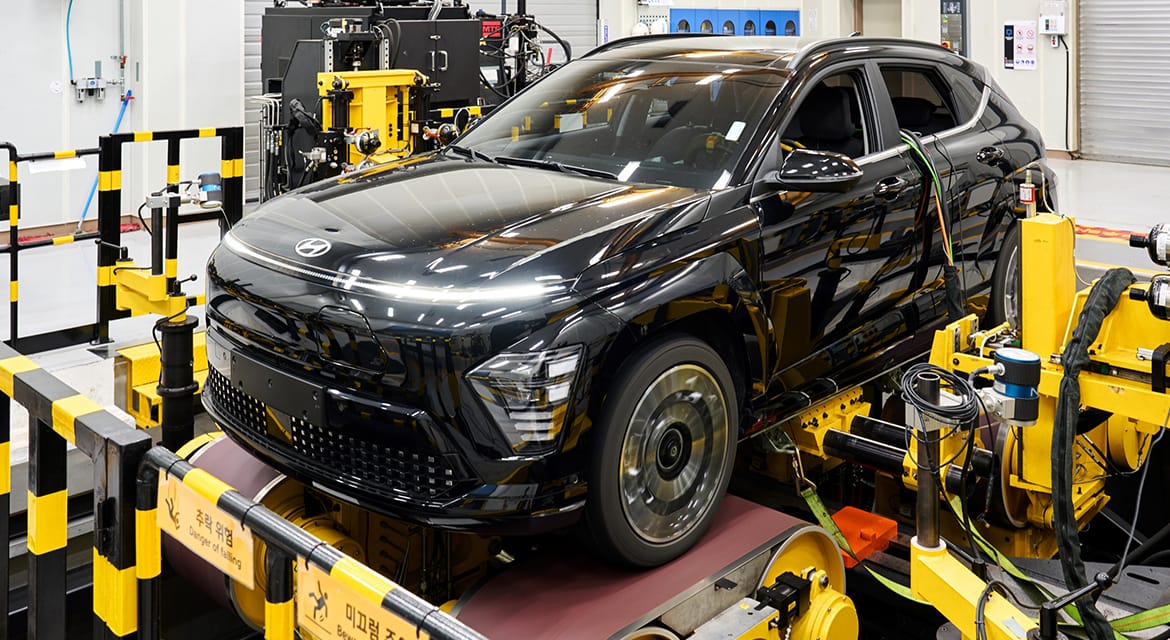
Ride and handling
Ride and handling
Ride and handling
Advanced testing techniques ensure all Hyundai Motor Group products exceed customer expectations
3 photos
Advanced testing techniques ensure all Hyundai Motor Group products exceed customer expectations Advanced testing techniques ensure all Hyundai Motor Group products exceed customer expectations Advanced testing techniques ensure all Hyundai Motor Group products exceed customer expectations
Added to
Media Cart

Engineering World-Class EV Driving Dynamics

Why It Matters


Ride and handling are critical to overall vehicle quality, and in the EV era this is more important than ever. EVs require precise suspension and tire tuning due to factors including their instant torque delivery, which makes this another key area of development.


Highlights


  • Focus areas: Tire behavior, suspension tuning and testing, full-vehicle simulations
  • Methodology: Combines mechanical testing with virtual modeling to optimize driving feel and reduce development times


Inside the Lab


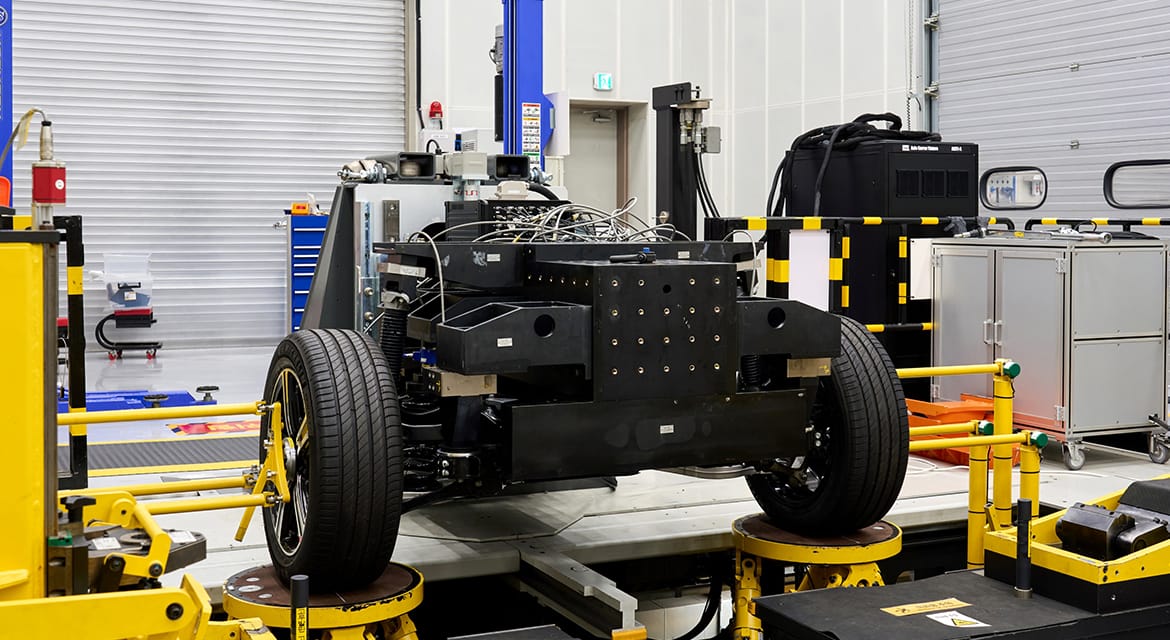
  • Tire and road impact testing: Evaluates vibration and ride comfort at speeds of up to 320 km/h. Simulates road bumps using cleats and evaluates tire stiffness and grip on flat belt surfaces
  • Handling simulation: Full-vehicle simulator replicates steering, acceleration, and cornering. Uses a 120-inch display to recreate virtual road scenarios and analyze slip angle and steering response
  • Ride comfort evaluation: Tests suspension modules on ‘rolling road’ belts that feature hydraulic actuators to simulate different road textures, evaluating ride quality under controlled conditions. Incorporates global road data to replicate real-world driving environments for different markets around the world.
Ultra-quiet EV powertrains mean refinement is an even bigger focus for Hyundai
Added to
Media Cart
Silence is golden
Silence is golden
Silence is golden
Silence is golden
Ultra-quiet EV powertrains mean refinement is an even bigger focus for Hyundai
4 photos
Ultra-quiet EV powertrains mean refinement is an even bigger focus for Hyundai Ultra-quiet EV powertrains mean refinement is an even bigger focus for Hyundai Ultra-quiet EV powertrains mean refinement is an even bigger focus for Hyundai Ultra-quiet EV powertrains mean refinement is an even bigger focus for Hyundai
Added to
Media Cart

Developing Quiet and Refined EV Experiences

Why It Matters


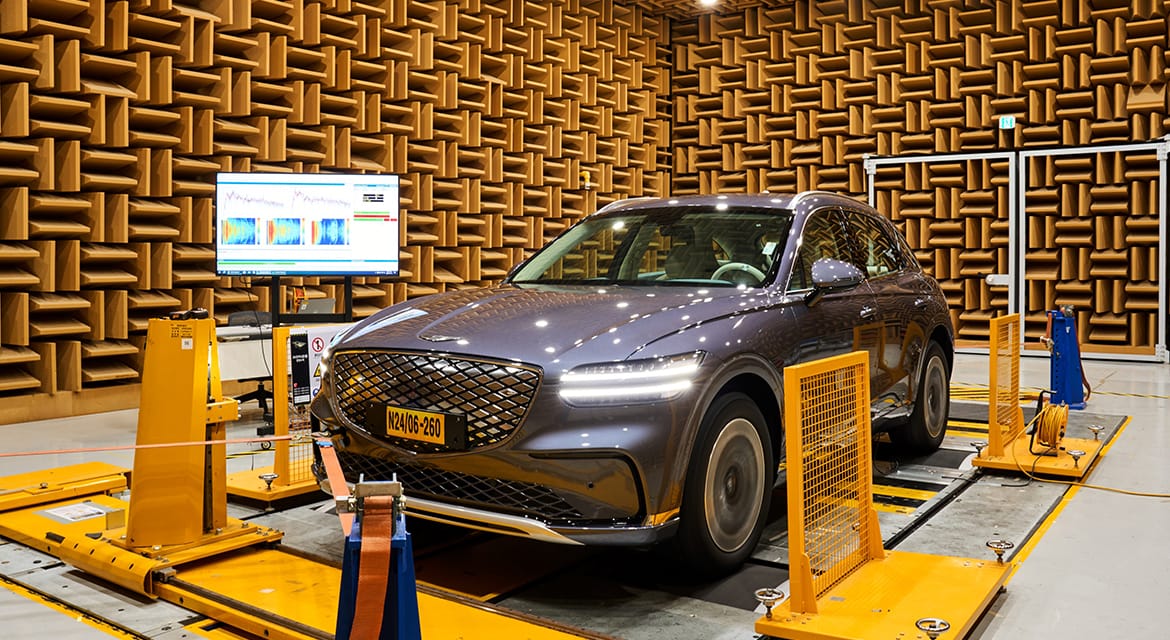
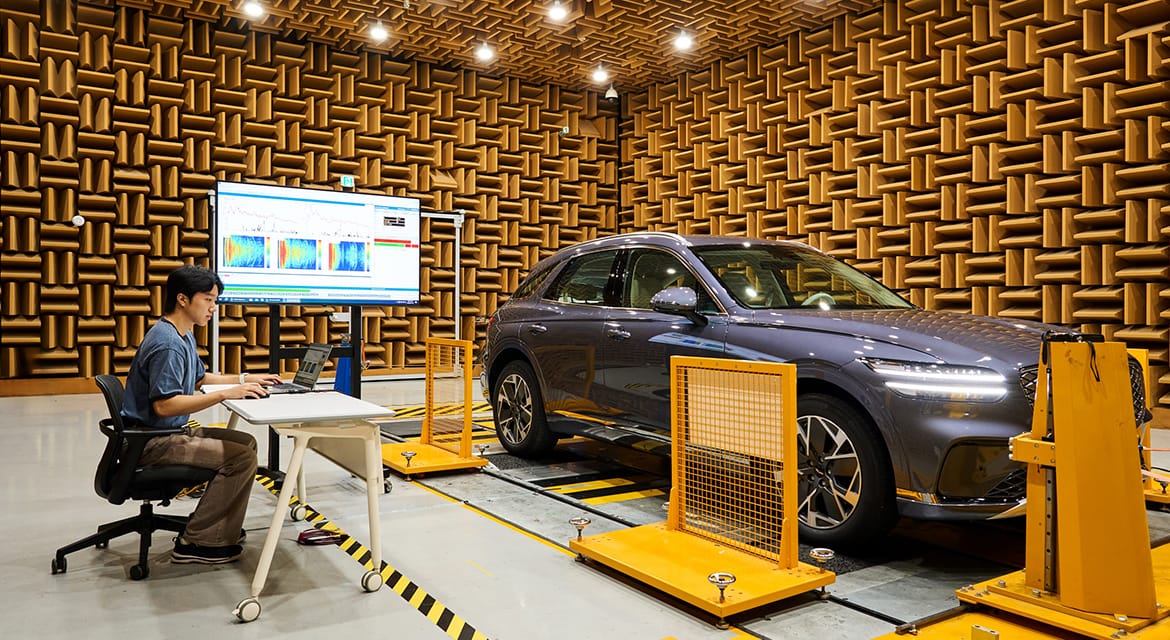
With EVs eliminating engine noise, even subtle sounds and vibrations become more noticeable by vehicle occupants. Noise, Vibration and Harshness (or simply ‘refinement’ to many) performance is a key factor in customer satisfaction and perceived quality, which is why the Group goes to great length in these areas.


Highlights


  • Focus areas: Road noise, vibration sources, immersive sound design
  • Methodology: Physical testing combined with virtual acoustic environments


Inside the Lab


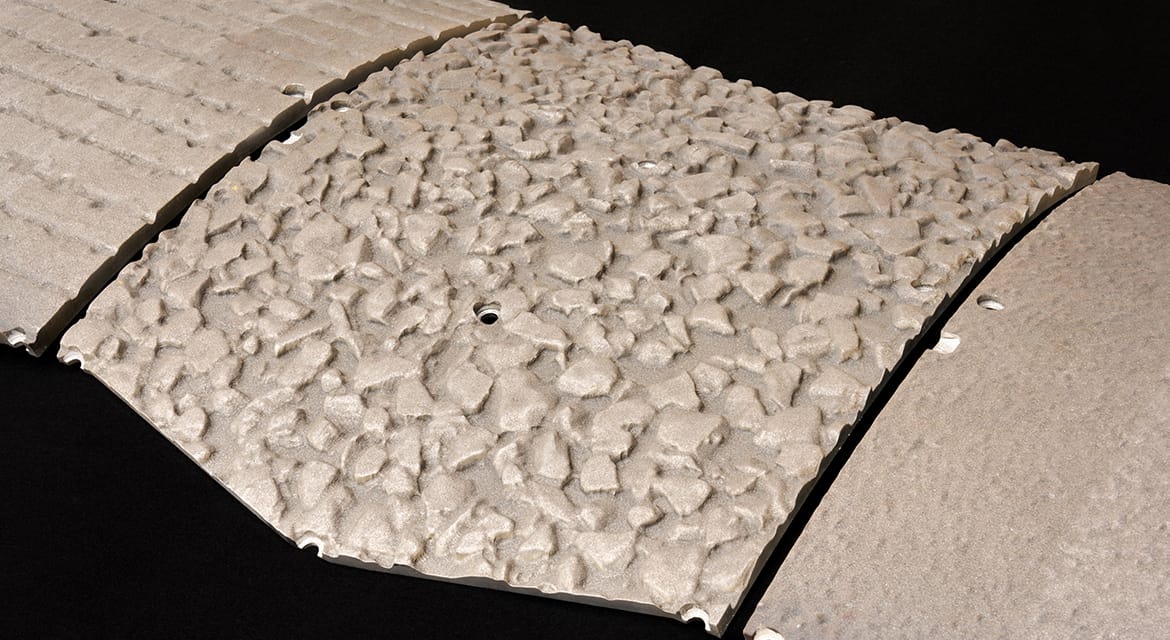
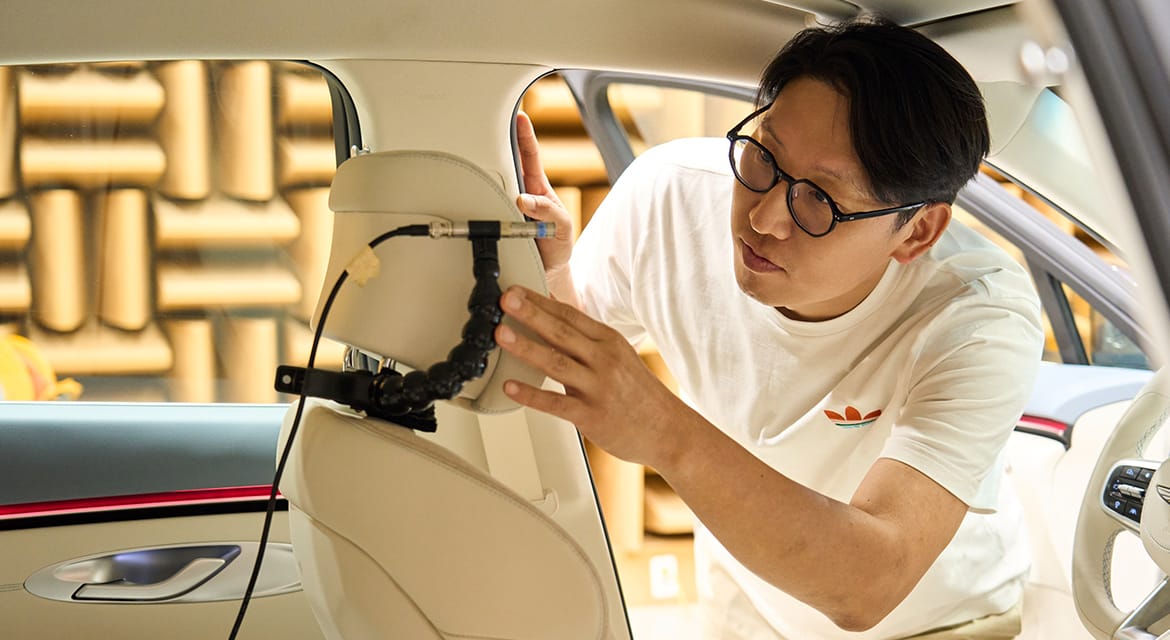
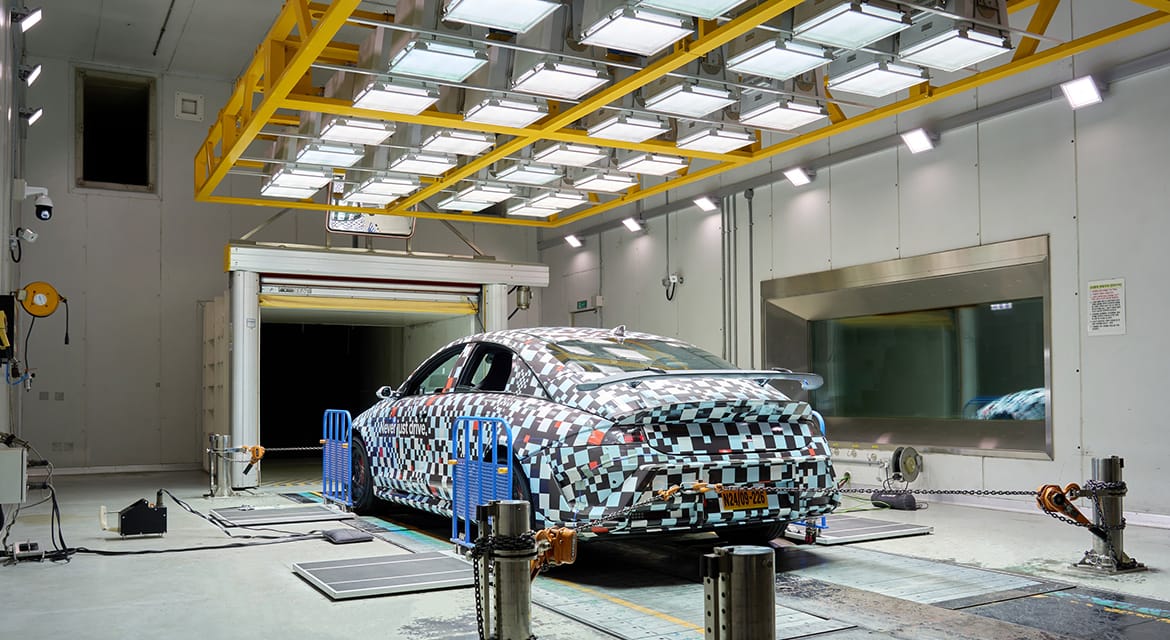
  • Road noise testing: Conducted in an anechoic chamber (ultra-low-echo environment) with a chassis dynamometer – a piece of equipment that simulates real driving conditions. Road surface patches simulate asphalt, concrete, and rough terrain. Microphones capture frequency-specific noise inside the cabin to identify and reduce noise amplification
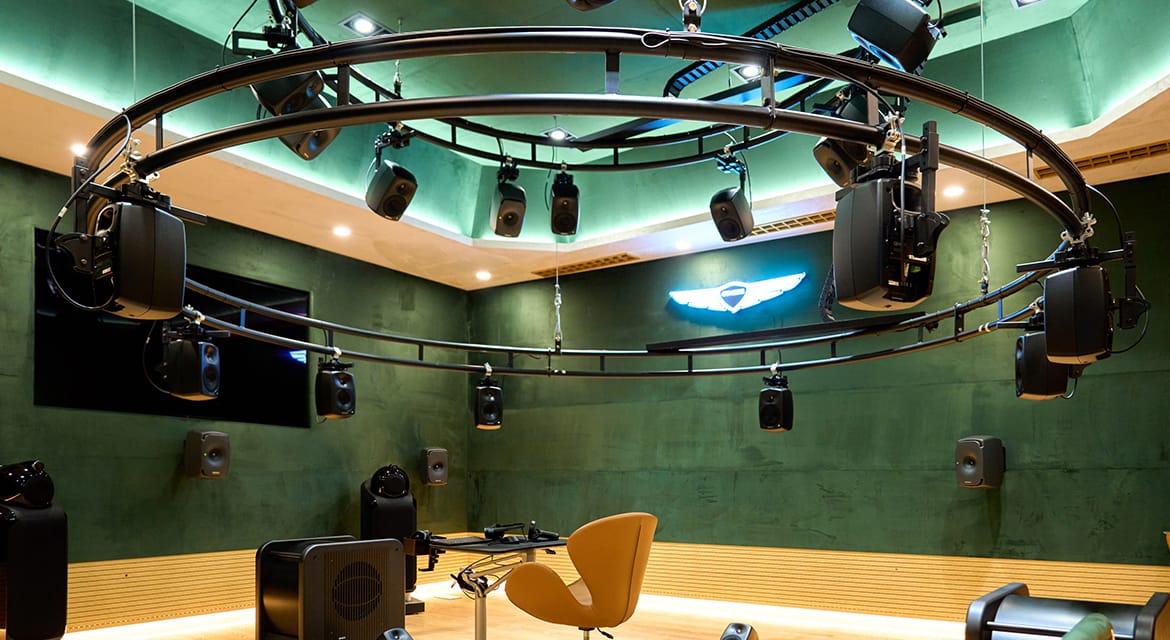
  • Immersive sound studio: Evaluates cabin acoustics across a variety of realistic driving scenarios
  • Virtual evaluation zone: Uses VR to recreate intersections, tunnels, and parking lots. Evaluates Acoustic Vehicle Alerting Systems (AVAS) and directional sound perception. Enables real-time collaboration with global R&D teams via Unreal Engine-based simulation
  • Sound listening zone: Equipped with Dolby Atmos (7.1.4) and Ambisonic (25-channel) systems. Reproduces realistic in-cabin sound environments and supports fine-tuning of infotainment audio and overall sound comfort
Hyundai Motor Group's in-depth testing and development methods has resulted in global recognition - and the Group will continue to advance its methods for its customers
Added to
Media Cart
The future is bright
Hyundai Motor Group's in-depth testing and development methods has resulted in global recognition - and the Group will continue to advance its methods for its customers
2 photos
Hyundai Motor Group's in-depth testing and development methods has resulted in global recognition - and the Group will continue to advance its methods for its customers Hyundai Motor Group's in-depth testing and development methods has resulted in global recognition - and the Group will continue to advance its methods for its customers
Added to
Media Cart

Shaping the Future of Mobility

Hyundai Motor Group’s Namyang R&D Center represents the commitment to innovation and excellence in electrification that has seen Group brands secure an incredible level of recognition globally – none more important that from our customers.


Equipped with state-of-the-art testing infrastructure and the latest, most in-depth development processes, the center plays a critical role in exceeding our customers’ requirements.


Hyundai Motor Group engineers are pushing the boundaries of vehicle performance while elevating the driving experience and customers’ emotional connections with their cars. Their dedication and relentless pursuit of excellence – powered by cutting-edge facilities and extensive data resources – continues to strengthen the Group’s position as a global leader in EV innovation. What the Namyang R&D Center is working on today will shape the future of mobility.

Sean Carson
sean.carson@hyundai.com
Global PR Team 1 · Hyundai Motor Company


Disclaimer: Hyundai Motor Company believes the information contained herein to be accurate at the time of release. However, the company may upload new or updated information if required and assumes that it is not liable for the accuracy of any information interpreted and used by the reader.

About Hyundai Motor Company

Established in 1967, Hyundai Motor Company is present in over 200 countries with more than 120,000 employees dedicated to tackling real-world mobility challenges around the globe. Based on the brand vision ‘Progress for Humanity,’ Hyundai Motor is accelerating its transformation into a Smart Mobility Solution Provider. The company invests in advanced technologies such as robotics and Advanced Air Mobility (AAM) to bring about revolutionary mobility solutions while pursuing open innovation to introduce future mobility services. In pursuit of a sustainable future for the world, Hyundai will continue its efforts to introduce zero-emission vehicles with industry-leading hydrogen fuel cell and EV technologies.


More information about Hyundai Motor and its products can be found at:

https://www.hyundai.com/worldwide/en/ or Newsroom: Media Hub by Hyundai


Follow our Hyundai Global Newsroom Instagram channel @hyundai_mediahub

Back to the list Editorials
Next topic Teaser

Continue reading