

‘The Forests Beneath the Waves’ by David de Rothschild
5 minute read
April 22, 2026
For much of our lives, we think we know what a forest is. Trees, canopies, roots, and names that have echoed throughout history. But beneath the ocean’s surface, entire forests exist with no signposts, no names, and until recently, little place in our collective imagination.
I was reminded of this years ago, far from land in the middle of the Pacific Ocean, a moment that changed how I saw the ocean entirely.
This Earth Month, Hyundai is working to change that through its “Forests Without Names” initiative by giving these underwater ecosystems something they have long lacked: recognition.
When the ocean revealed itself
I was sailing aboard the Plastiki, a boat built from reclaimed plastic bottles, across the Pacific from San Francisco to Sydney. Months at sea change how you see the ocean. From land, it often feels like empty space. But when you live on it, day after day, that illusion dissolves. You begin to sense movement, structure, and life everywhere beneath you.
One night, in total darkness, two lights appeared ahead, red and green. Navigation lights. Both visible. A ship heading straight toward us. For over an hour, we tried to make contact. Then, a massive container ship passed just meters away, its hull rising beside us like a moving cliff. Painted along its side was a name I’ll never forget: Forest Harmony.
It was an irony that lingered. A forest, moving through the open ocean, while real forests beneath the waves remained unseen.
It is a paradox we are only beginning to confront. Because what cannot be named or located rarely enters the systems that protect it. Through its “Forests Without Names” initiative, Hyundai is beginning to address this, building a global naming and mapping framework that brings these Sea Forests into view. Not just in stories but in the structures that shape how we study, manage, and protect them.
A world beneath the surface
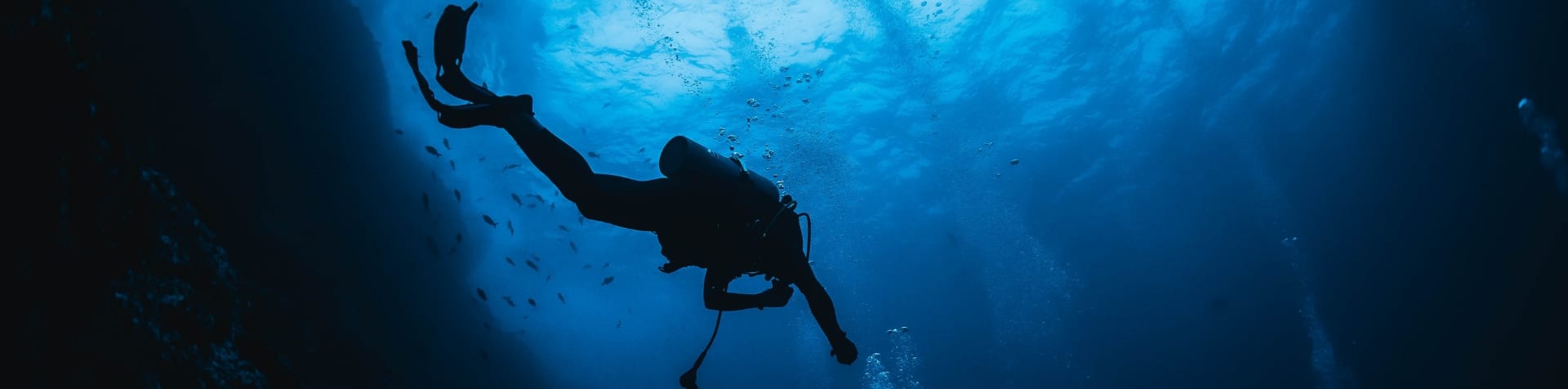
My understanding of these underwater ecosystems deepened years later along the California coast. Diving into a Sea Forest is like entering another world. Giant stalks rise like underwater redwoods and light filters through the canopy. Fish, seals, and sea lions move through the spaces between, not chaotically, but rhythmically.
You feel part of something vast, ancient, and alive.
In research submersibles near Monterey Bay, I’ve seen this from even deeper perspectives; forests, valleys, and systems that rival anything on land, yet remain largely absent from our maps and language.
Among the most productive ecosystems on Earth, Sea Forests play a vital role in blue carbon systems, absorbing carbon and supporting marine life. And yet, many remain unnamed, unmapped, and unprotected.
When they are identified and named, these forests become places that can be located, shared, and returned to, an approach Hyundai is helping to advance through its ‘Forests Without Names’ program, forming a basis for long-term research and conservation.
From names to recognition
What struck me about this campaign wasn’t scale or spectacle, but intention. The decision to give Sea Forests something profoundly simple: an identity.
A name is not just a label. It is recognition. It anchors a place in memory, language, and responsibility. What is named becomes harder to ignore, and easier to protect.
Through collaboration with scientists, local communities, and environmental organizations, Hyundai is helping to identify and name Sea Forests across Korea, Argentina, and Australia. These are no longer abstract ecosystems, but places that can be returned to, studied, and restored.
Turning observation into action
In Ulsan, on Korea’s southeastern coast, Sea Forests are not only being named but actively restored as part of a long-term commitment to marine ecosystems that includes cleanup, regeneration and circular solutions. Since 2024, Hyundai has been creating and restoring Sea Forests in partnership with Korea’s Ministry of Oceans and Fisheries. This work represents a quiet shift: from simply observing nature, to accounting for it.
These forests are projected to absorb around *1,300 tons of CO₂ each year. Restoration efforts have been designed not just to increase biomass, but to rebuild the ecological networks that sustain marine life.
Through my work with the Voice for Nature Foundation, we often talk about “rewilding” ourselves. That is, remembering that we are not separate from nature, but sustained by it. Work like this is a step in that direction.
*Source : Korea Fisheries Resources Agency (FIRA), sea forest carbon absorption estimates
Bringing the unseen into view
One evening at sea, weeks from land, I leaned over the side of the boat as the sun disappeared. The water began to glow. A flicker of bioluminescence sparked by movement. In moments like that, the ocean has revealed itself to me in fragments over the years, beautiful details that remind you just how much exists beyond what we can see.
Sea Forests are like that. Sustaining life. Supporting structures we depend on every day.
They didn’t need to be created.
They needed to be seen.
Hyundai is helping to make that visibility lasting, creating a sustainable framework that ensures they are understood, protected and sustained over time.
And perhaps that is where meaningful change begins. Not in doing more, but in bringing to light what we have overlooked. Once these ecosystems are seen and named, they are far harder to ignore.
*David de Rothschild is an environmentalist, explorer, film producer, global citizen and the Founder of Voice for Nature.