Hyundai Motor Company Joins Forces with HD KSOE and PNU to Develop Maritime Fuel Cell System

Page sharing

Corporate Information Hyundai Motor Company Joins Forces with HD KSOE and PNU to Develop Maritime Fuel Cell System

  • Hyundai Motor Company Joins Forces with HD KSOE and PNU to Develop Maritime Fuel Cell System
    DOCX / 68 KB HMC Joins Forces with HD KSOE and PNU to Develop Hybrid Electrified Propulsion System
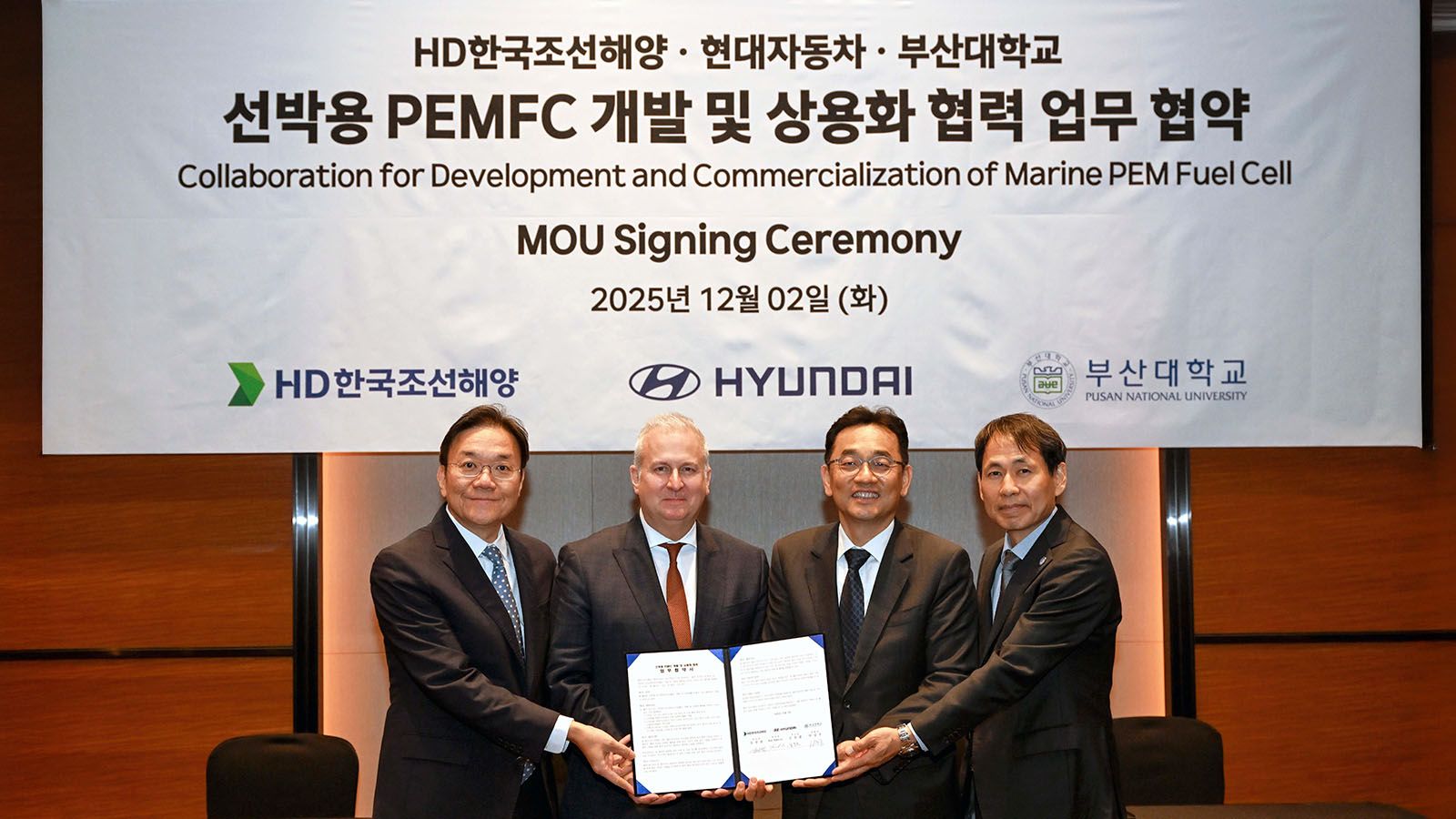
  • (from left) Chang Hwan Kim, Executive Vice President and Head of Electrification Energy Solutions Tech Unit at Hyundai Motor Company / Ken Ramirez, Executive Vice President and Head of Energy & Hydrogen Business Division at Hyundai Motor Group / Kwang Pil Chang, Executive Vice President and Head of Advance Research Center at HD KSOE / Sang Hu Park, Executive Vice President of Pusan National University
    JPG / 2 MB (Photo 1) HMC Joins Forces with HD KSOE and PNU to Develop Hybrid Electrified Propulsion System
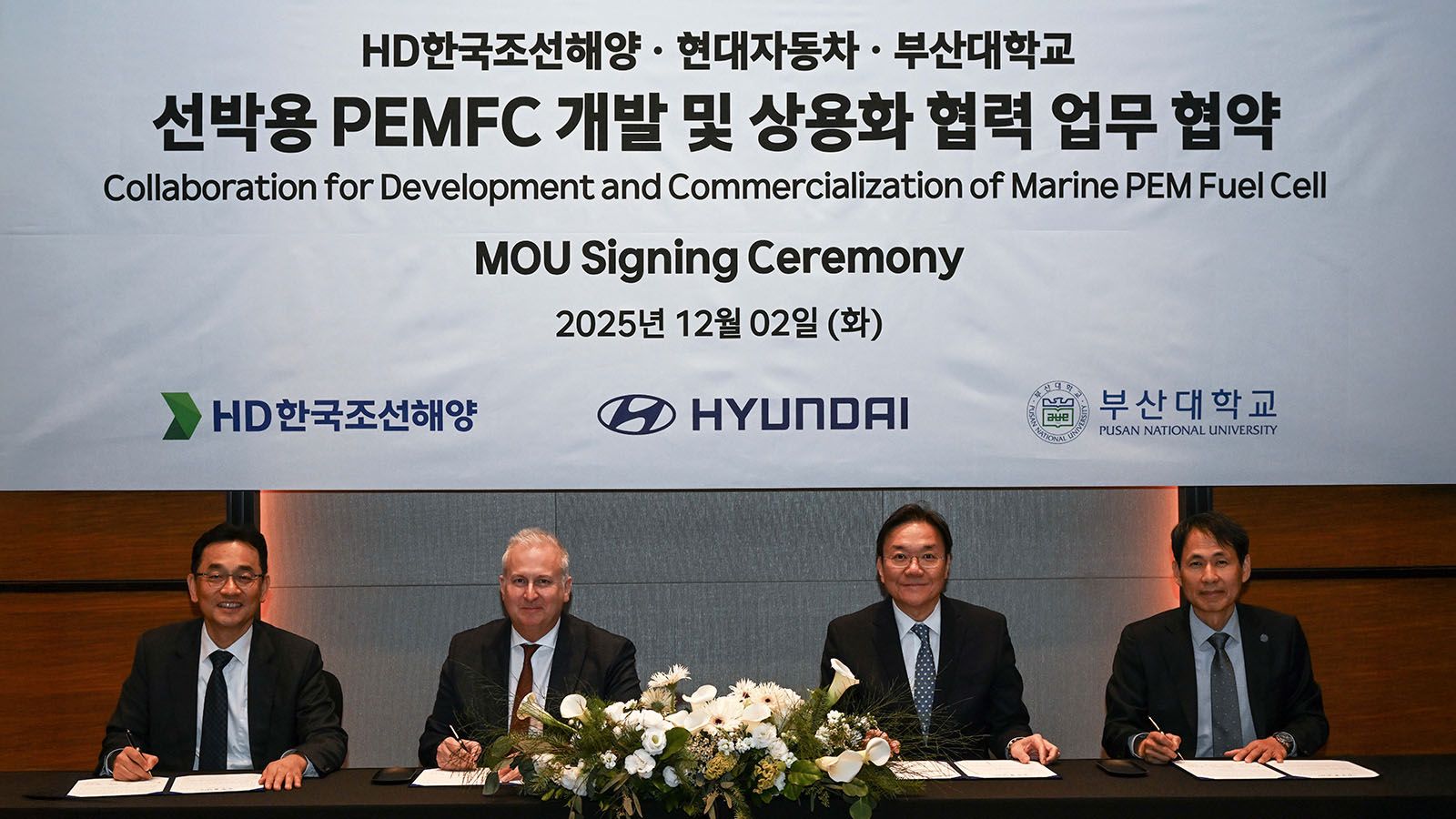
  • (from left) Kwang Pil Chang, Executive Vice President and Head of Advance Research Center at HD KSOE / Ken Ramirez, Executive Vice President and Head of Energy & Hydrogen Business Division at Hyundai Motor Group / Chang Hwan Kim, Executive Vice President and Head of Electrification Energy Solutions Tech Unit at Hyundai Motor Company / Sang Hu Park, Executive Vice President of Pusan National University
    JPG / 2.3 MB (Photo 2) HMC Joins Forces with HD KSOE and PNU to Develop Hybrid Electrified Propulsion System

Please use Safari to download the files.

Empty cart?

Corporate Information Hyundai Motor Company Joins Forces with HD KSOE and PNU to Develop Maritime Fuel Cell System

Hyundai Motor Company Joins Forces with HD KSOE and PNU to Develop Maritime Fuel Cell System
HMC Joins Forces with HD KSOE and PNU to Develop Hybrid Electrified Propulsion System

Corporate Information Hyundai Motor Company Joins Forces with HD KSOE and PNU to Develop Maritime Fuel Cell System

(from left) Chang Hwan Kim, Executive Vice President and Head of Electrification Energy Solutions Tech Unit at Hyundai Motor Company / Ken Ramirez, Executive Vice President and Head of Energy & Hydrogen Business Division at Hyundai Motor Group / Kwang Pil Chang, Executive Vice President and Head of Advance Research Center at HD KSOE / Sang Hu Park, Executive Vice President of Pusan National University
(Photo 1) HMC Joins Forces with HD KSOE and PNU to Develop Hybrid Electrified Propulsion System
  • Description (from left) Chang Hwan Kim, Executive Vice President and Head of Electrification Energy Solutions Tech Unit at Hyundai Motor Company / Ken Ramirez, Executive Vice President and Head of Energy & Hydrogen Business Division at Hyundai Motor Group / Kwang Pil Chang, Executive Vice President and Head of Advance Research Center at HD KSOE / Sang Hu Park, Executive Vice President of Pusan National University
  • File Info. JPG / 2 MB / Dec 2, 2025 / mk01.jpg
  • Link Hyundai Motor Company Joins Forces with HD KSOE and PNU to Develop Maritime Fuel Cell System

Corporate Information Hyundai Motor Company Joins Forces with HD KSOE and PNU to Develop Maritime Fuel Cell System

(from left) Kwang Pil Chang, Executive Vice President and Head of Advance Research Center at HD KSOE / Ken Ramirez, Executive Vice President and Head of Energy & Hydrogen Business Division at Hyundai Motor Group / Chang Hwan Kim, Executive Vice President and Head of Electrification Energy Solutions Tech Unit at Hyundai Motor Company / Sang Hu Park, Executive Vice President of Pusan National University
(Photo 2) HMC Joins Forces with HD KSOE and PNU to Develop Hybrid Electrified Propulsion System
  • Description (from left) Kwang Pil Chang, Executive Vice President and Head of Advance Research Center at HD KSOE / Ken Ramirez, Executive Vice President and Head of Energy & Hydrogen Business Division at Hyundai Motor Group / Chang Hwan Kim, Executive Vice President and Head of Electrification Energy Solutions Tech Unit at Hyundai Motor Company / Sang Hu Park, Executive Vice President of Pusan National University
  • File Info. JPG / 2.3 MB / Dec 2, 2025 / mk02.jpg
  • Link Hyundai Motor Company Joins Forces with HD KSOE and PNU to Develop Maritime Fuel Cell System
Next
Prev
이전 페이지

Hyundai Motor Company Joins Forces with HD KSOE and PNU to Develop Maritime Fuel Cell System

Added to
Media Cart
Copied to
clipboard
URL copied to clipboard

Share via email We do not collect email addresses.

Corporate Information 202512030830
Hyundai Motor Company Joins Forces with HD KSOE and PNU to Develop Maritime Fuel Cell System

4 minutes read
Added to
Media Cart
Copied to
clipboard

Share via email We do not collect email addresses.

  • Project to integrate hydrogen dual fuel engines with fuel cell system, developing an advanced hybrid electrified propulsion system
  • Focus on strengthening maritime business competitiveness through innovation, leveraging the industry network and expertise of HD KSOE and PNU
  • Three partners’ collaboration drives development of cleaner propulsion solutions for the maritime sector

SEOUL, December 3, 2025 – Hyundai Motor Company has signed a landmark Memorandum of Understanding (MoU) to co-develop a maritime fuel cell system. This initiative marks Hyundai Motor’s effort to extend its clean energy expertise beyond automobiles into new sectors.


The MoU brings together leading shipbuilders HD Korea Shipbuilding & Offshore Engineering (HD KSOE), along with Pusan National University (PNU), to develop and integrate key technologies for liquefied hydrogen carriers (LH2Cs1).


This innovative maritime fuel cell system is aiming to set a benchmark for reducing maritime emissions in compliance with International Maritime Organization (IMO) carbon regulations. It will also harness Hyundai Motor’s proven fuel cell technology for the specific demands of marine applications.


The partnership lays the groundwork for Hyundai Motor to expand beyond automobiles into new sectors. The consortium will co-develop key technologies for liquefied hydrogen carriers, with a shared focus on sustainability and innovation.


“This collaboration marks an important first step toward achieving carbon neutrality and expanding a sustainable global maritime industry. By combining Hyundai Motor Company’s hydrogen fuel cell technology, HD Korea Shipbuilding & Offshore Engineering’s expertise in shipbuilding and maritime sectors, and Pusan National University’s research capabilities in hydrogen-powered vessels, we aim to set a new standard for future marine mobility.”Ken Ramírez, Executive Vice President and Head of Hyundai Motor Group’s Energy and Hydrogen Business Division.

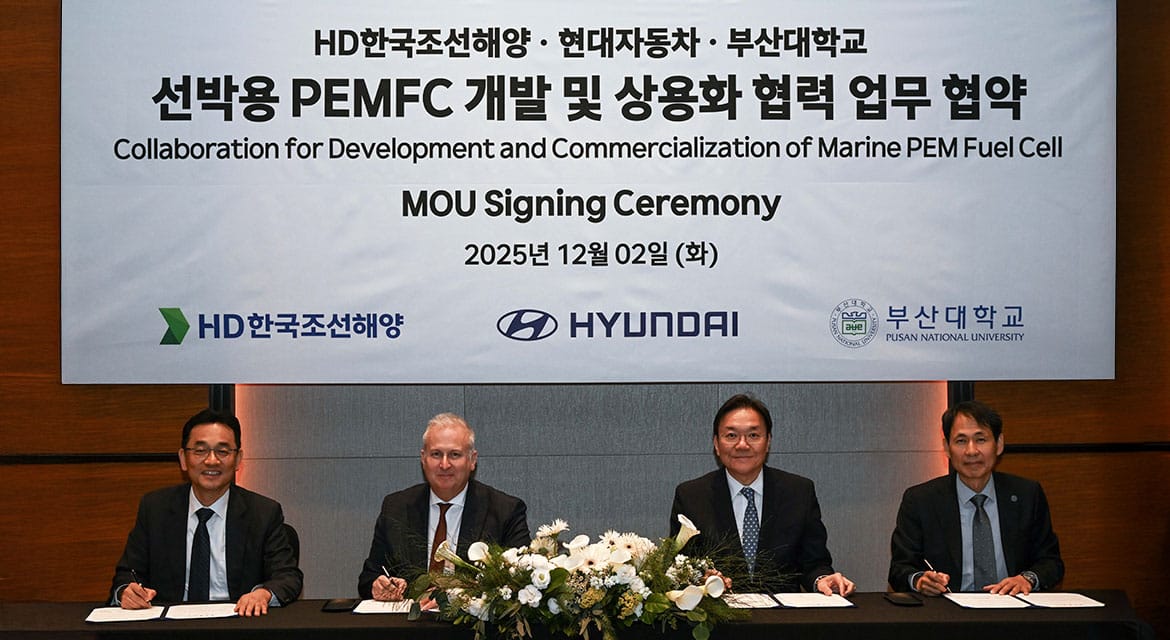
(from left) Kwang Pil Chang, Executive Vice President and Head of Advance Research Center at HD KSOE / Ken Ramirez, Executive Vice President and Head of Energy & Hydrogen Business Division at Hyundai Motor Group / Chang Hwan Kim, Executive Vice President and Head of Electrification Energy Solutions Tech Unit at Hyundai Motor Company / Sang Hu Park, Executive Vice President of Pusan National University
(from left) Kwang Pil Chang, Executive Vice President and Head of Advance Research Center at HD KSOE / Ken Ramirez, Executive Vice President and Head of Energy & Hydrogen Business Division at Hyundai Motor Group / Chang Hwan Kim, Executive Vice President and Head of Electrification Energy Solutions Tech Unit at Hyundai Motor Company / Sang Hu Park, Executive Vice President of Pusan National University 2.3 MB
Added to
Media Cart
Hyundai Motor Company Joins Forces with HD KSOE and PNU to Develop Maritime Fuel Cell System
(from left) Kwang Pil Chang, Executive Vice President and Head of Advance Research Center at HD KSOE / Ken Ramirez, Executive Vice President and Head of Energy & Hydrogen Business Division at Hyundai Motor Group / Chang Hwan Kim, Executive Vice President and Head of Electrification Energy Solutions Tech Unit at Hyundai Motor Company / Sang Hu Park, Executive Vice President of Pusan National University
1 photos Total 2.3 MB
(from left) Kwang Pil Chang, Executive Vice President and Head of Advance Research Center at HD KSOE / Ken Ramirez, Executive Vice President and Head of Energy & Hydrogen Business Division at Hyundai Motor Group / Chang Hwan Kim, Executive Vice President and Head of Electrification Energy Solutions Tech Unit at Hyundai Motor Company / Sang Hu Park, Executive Vice President of Pusan National University
Added to
Media Cart

What is the Focus of Hyundai’s Maritime Fuel Cell System Collaboration?


Under the MoU, the consortium will develop and demonstrate a maritime fuel cell system for mid- to large-scale liquefied hydrogen carriers. The key development goals include:

  • Hyundai Motor Company plans to develop a fuel cell system optimized for marine applications based on its existing fuel cell technology.
  • HD KSOE will carry out the integrated design of a hybrid electric propulsion system consisting of a hydrogen dual fuel engine and Hyundai Motor Company’s maritime hydrogen fuel cell.
  • PNU will conduct evaluation and demonstration of the system designed by HD KSOE.


Why is Hyundai’s Propulsion System Collaboration Significant?


The MoU paves the way for Hyundai Motor’s expansion into the maritime hydrogen fuel cell market. This partnership builds on Hyundai Motor’s established strength in hydrogen technology as the company takes its first step into the maritime sector, advancing cleaner and more sustainable marine mobility.


What are the Goals of Hyundai’s Propulsion System Collaboration?


The goal of this collaboration is to develop propulsion systems for the future shipping market that aligns with the carbon reduction targets set by the IMO. By adapting Hyundai Motor’s proven fuel cell technology for potential maritime applications, this partnership seeks to deliver practical hybrid propulsion solutions that help reduce emissions and support more sustainable shipping practices.


By collaborating with HD KSOE, one of the world’s top shipbuilders, Hyundai Motor can:


  • Establish a technical foundation for the maritime fuel cell system.
  • Gain valuable market references through mid- to large-scale projects.
  • Strengthen its position in the burgeoning hydrogen economy.


How Does the Collaboration Project Fit with Hyundai’s Vision?


This partnership reflects Hyundai Motor’s vision of ‘Progress for Humanity’ as it works toward cleaner mobility solutions. By combining expertise across industries and leveraging Hyundai Motor Group’s HTWO hydrogen brand and business platform, the MoU creates opportunities for future collaboration with governments, industry stakeholders, and shipping companies to support efforts that reduce emissions in maritime operations.


Get media kit

1)  LH2C: A liquefied hydrogen carrier, a vessel designed to transport hydrogen in its liquid form at cryogenic temperatures.


Jihyun Park
pjh85@hyundai.com
Global PR Strategy & Planning · Hyundai Motor Company


Disclaimer: Hyundai Motor Company believes the information contained herein to be accurate at the time of release. However, the company may upload new or updated information if required and assumes that it is not liable for the accuracy of any information interpreted and used by the reader.

About Hyundai Motor Company

Established in 1967, Hyundai Motor Company is present in over 200 countries with more than 120,000 employees dedicated to tackling real-world mobility challenges around the globe. Based on the brand vision ‘Progress for Humanity,’ Hyundai Motor is accelerating its transformation into a Smart Mobility Solution Provider. The company invests in advanced technologies such as robotics and Advanced Air Mobility (AAM) to bring about revolutionary mobility solutions while pursuing open innovation to introduce future mobility services. In pursuit of a sustainable future for the world, Hyundai will continue its efforts to introduce zero-emission vehicles with industry-leading hydrogen fuel cell and EV technologies.


More information about Hyundai Motor and its products can be found at:

https://www.hyundai.com/worldwide/en/ or Newsroom: Media Hub by Hyundai


Follow our Hyundai Global Newsroom Instagram channel @hyundai_mediahub

Prev topic Business
Back to the list Corporate Information
Next topic Annual Report

Continue reading