Editorials [Inside HMG’s Digital R&D Revolution ①] Driving Simulator: How Hyundai Motor and Kia Compressed Years of Track Testing into Hours of Simulation
Please use Safari to download the files.
[Inside HMG’s Digital R&D Revolution ①] Driving Simulator: How Hyundai Motor and Kia Compressed Years of Track Testing into Hours of Simulation
Hyundai Motor and Kia’s award-winning vehicle lineups are built on a foundation of rigorous testing and engineering, driven by the innovative minds at the Namyang R&D Center in South Korea. Here, we go behind the scenes to see how engineers are using a state-of-the-art virtual Driving Simulator to compress months of grueling physical track testing into just hours of high-precision simulation.
The sheer amount of validation required to develop modern vehicles has outpaced the limits of physical testing alone. Between electrification, autonomous driving, connected technologies and customer demands for superior driving dynamics, engineers face a paradox: more features require more testing, yet traditional physical prototyping can only evaluate so many configurations before threatening timelines and budgets.
At Hyundai Motor and Kia’s Namyang Research and Development (R&D) Center in South Korea, engineers have solved this through a facility that doesn’t just replicate the road — it transcends physical limitations entirely.
The technology builds on more than a decade of virtual vehicle validation research that began in 2014 and gained renewed importance during the COVID-19 pandemic, when travel restrictions limited overseas testing and local validation activities. The result is Hyundai Motor and Kia’s proprietary virtual validation platform, developed using Hyundai Motor Group’s own data, software and engineering expertise.
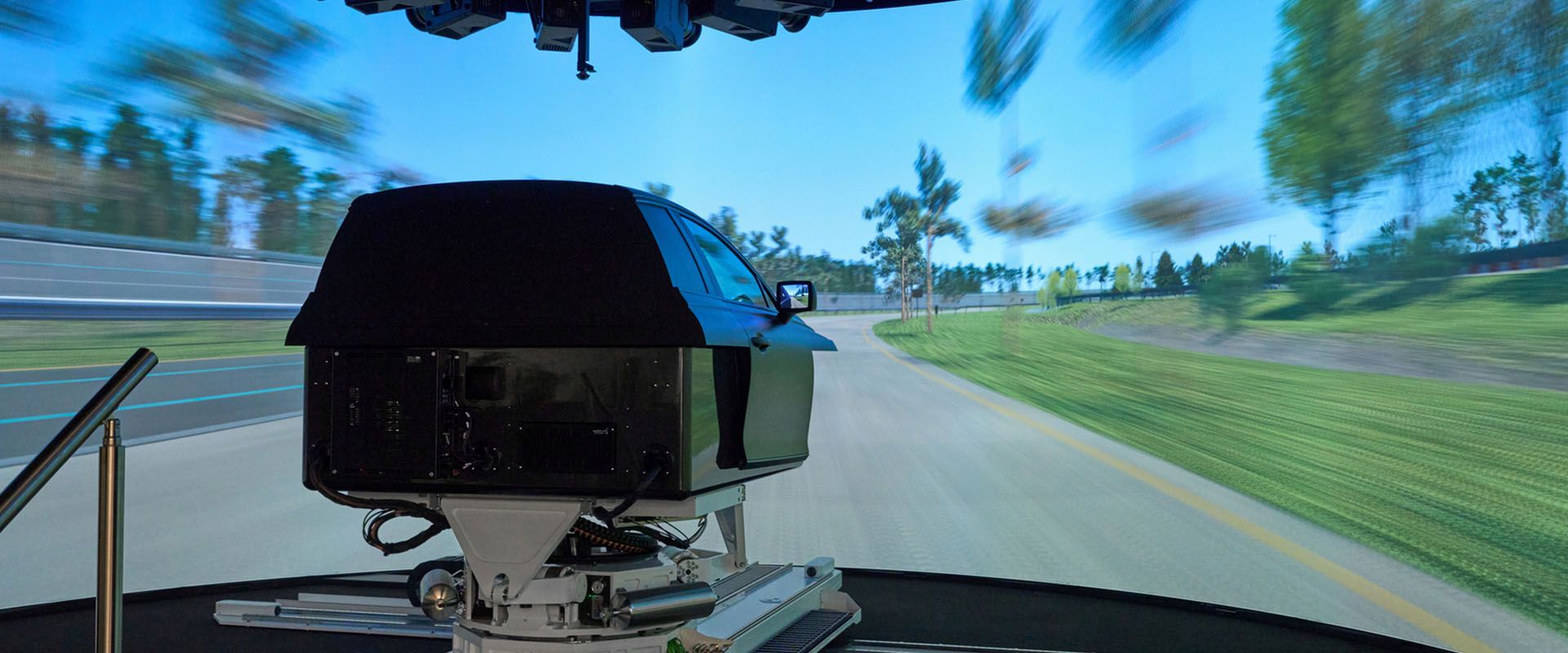
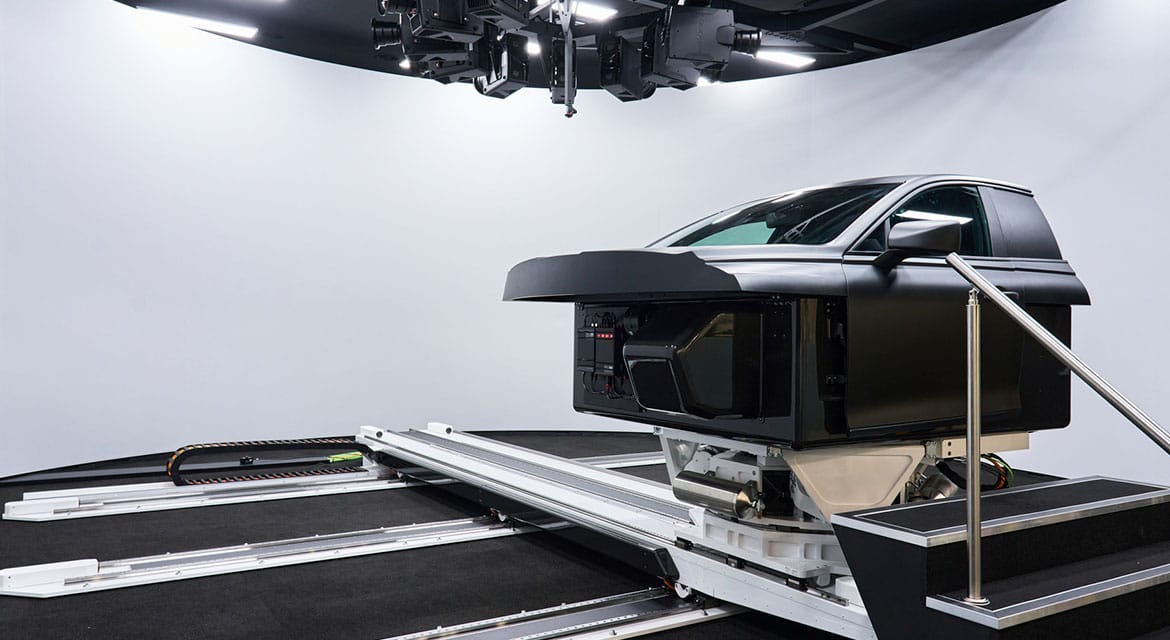
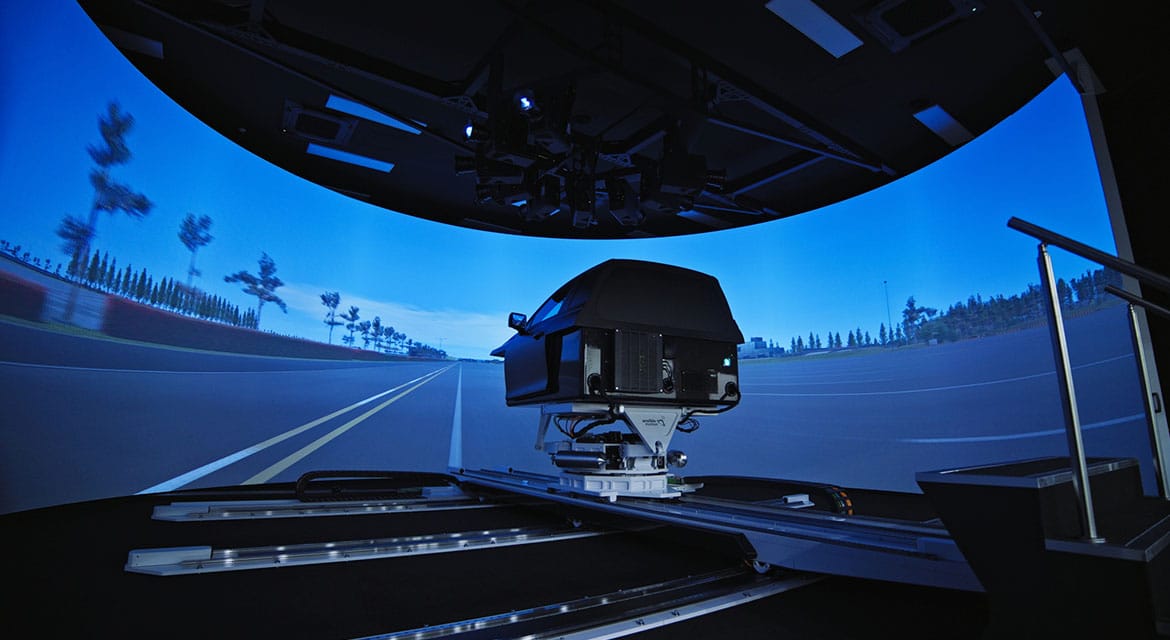
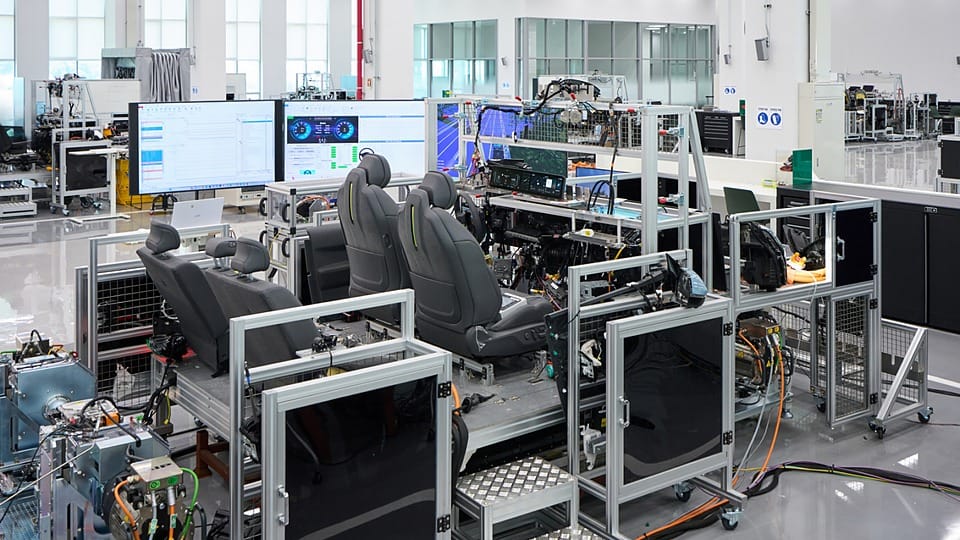
The R&D center’s Driving Simulator is a 270-degree curved-display environment where engineers virtually validate vehicle performance with such accuracy that drivers cannot distinguish it from actual highway driving. The result: performance testing that takes hours in simulation instead of days on test tracks, and the ability to validate dozens of configuration variants without building a single prototype.
Developing new vehicles with increasingly complex features traditionally required building numerous prototypes for real-world testing. This approach is becoming untenable as the volume of validation requirements now far exceeds what physical prototyping alone can efficiently handle. Virtual vehicle validation in highly realistic simulated environments offers a solution that accelerates development while maintaining rigorous performance standards.
Simulator Highlights
When a researcher settles into the Driving Simulator’s cockpit, the massive 270-degree curved screen submerges them in a photorealistic driving environment. Step on the accelerator, and the virtual landscape rushes across the display at speed. Turning the steering wheel causes the entire cockpit to tilt and sway — replicating the lateral g-forces, longitudinal acceleration and micro-vibrations that drivers experience on actual roads.
Achieving this level of sensory realism required an extraordinary mapping effort. The Group’s engineers precisely scanned the Namyang testing grounds in 1 mm increments, capturing every road surface detail, including asphalt texture, bumps, slope variations and drainage features. This data was then converted into a detailed and accurate 1:1 replica of the physical track.
Building the simulator presented multiple engineering challenges. The facility took approximately 10 months to develop, from initial construction in April 2025 through to final completion.
The biggest challenge was building the software environment. We had to reconfigure the vehicle dynamics analysis tools used at Namyang R&D Center for the simulator environment while ensuring real-time operation of the motion platform without latency. It was a highly complex integration process, but the simulator’s exceptional fidelity in replicating real vehicle behavior made the effort worthwhile.
Senior Research Engineer, Dynamics Functional Concept Development Team
The main challenge was managing the enormous volume of data. Traditional approaches would require loading tens of kilometers of road data simultaneously, overwhelming the simulator’s computing capacity.
The Group solved this through the Terrain Server, a proprietary technology deployed for the first time globally, that streams only the immediate surrounding road data needed for the vehicle’s current position. This ensures smooth, lag-free simulation even with ultra-high-resolution rendering. By loading only the road data required for the vehicle’s immediate position, the system can update terrain information in well under a second, enabling seamless operation despite the enormous volume of data.
The Driving Simulator validates far more than basic handling. Engineers use it not only to verify vehicle performance but also to actively develop and refine driving characteristics before physical prototypes are built. Its top-tier specifications support development of production vehicles as well as high-performance models including Genesis Magma, Hyundai N performance vehicles and even race cars that tackle the world’s most challenging circuit, Germany’s Nürburgring.
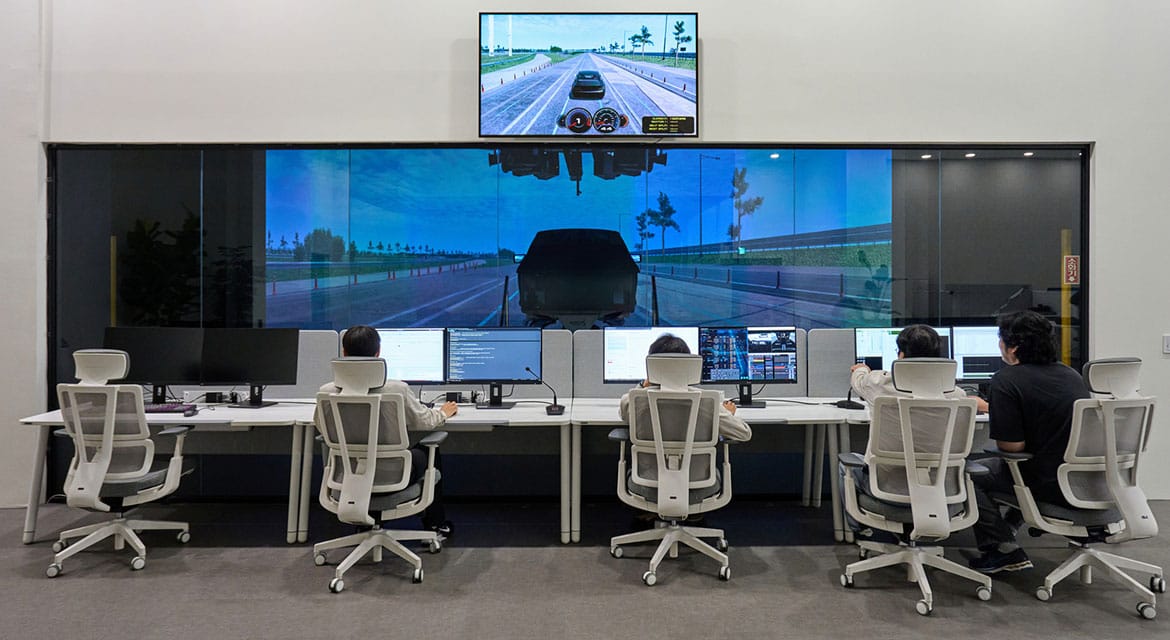
Engineers can instantly modify component characteristics and test multiple configurations without weather constraints, validating wet-road performance in seconds rather than requiring days of actual track testing. Crucially, the simulator cuts the time required to make engineering decisions.
The most important part is helping with faster decision-making. Automaker competitiveness means delivering better cars faster to customers. The simulator lets us verify performance improvements before and after changes easily and quickly, which speeds up decision-making and lets us put more effort into making better cars.
Senior Research Engineer, Dynamics Functional Concept Development Team
This acceleration directly translates to competitive advantage, allowing researchers to validate performance improvements and trade-offs instantly rather than waiting for new physical prototypes to be built and tested.
The Driving Simulator also enables global co-development through collaborative data sharing with Hyundai Motor and Kia’s international R&D facilities, bringing together the Group’s worldwide engineering teams. Engineers can evaluate regional vehicle settings and local road conditions within a common virtual environment, helping establish faster alignment across global development programs.
The simulator is already supporting validation activities across multiple vehicle and system development programs, with its role expected to expand as Hyundai Motor and Kia continue their digital R&D transformation.
The Driving Simulator exemplifies a fundamental shift in vehicle development: validating performance in virtual space before committing to physical builds. This approach — prioritizing virtual testing, data-driven refinement and measurable precision — defines the Group’s transformation at Namyang. But performance validation is only part of the equation.
Looking ahead, Hyundai Motor and Kia are exploring how driving simulation environments can support future autonomous driving development, AI-based validation and broader Physical AI applications by combining vehicle dynamics models with increasingly sophisticated virtual environments.
Currently, various vehicle types are undergoing validation, and the Group anticipates increased simulator usage as concurrent vehicle development expands.
“We’re reviewing plans for additional simulator construction and plan to upgrade with more precise hardware specifications,” says Jeong.
Next, we look inside the newly unified Advanced Mobility Solutions (AMS) building to see how the Digital Measuring Center (DMC) uses robotics and 1,000-point coordinate mapping to guarantee microscopic build quality on every production vehicle.
This article is part of a series on Hyundai Motor Group’s digital R&D infrastructure at the Namyang Research and Development Center. Four facilities — the Driving Simulator, Digital Measuring Center, Additive Manufacturing Solution Center and NOVA Lab — exemplify the Group’s transformation from prototype-intensive development to digital-first validation, accelerating innovation while elevating quality and performance standards.
Daehyun Shin
daehyun.shin@hyundai.com
Global PR Contents · Huyndai Motor Company
Disclaimer: Hyundai Motor Group believes the information contained herein to be accurate at the time of release. However, the company may upload new or updated information if required and assumes that it is not liable for the accuracy of any information interpreted and used by the reader.
About Hyundai Motor Group
Hyundai Motor Group is a global enterprise that has created a value chain based on mobility, steel, and construction, as well as logistics, finance, IT, and service. With about 250,000 employees worldwide, the Group’s mobility brands include Hyundai, Kia, and Genesis. Armed with creative thinking, cooperative communication and the will to take on any challenges, we strive to create a better future for all.
More information about Hyundai Motor Group can be found at: http://www.hyundaimotorgroup.com or Newsroom: Media Hub by Hyundai, Kia Global Newsroom, Genesis Newsroom