Technology & Innovation [Inside HMG’s Digital R&D Revolution ②] Digital Measuring Center: How Hyundai Motor and Kia Validate 1,000 Measurement Points on Every Vehicle
Please use Safari to download the files.
[Inside HMG’s Digital R&D Revolution ②] Digital Measuring Center: How Hyundai Motor and Kia Validate 1,000 Measurement Points on Every Vehicle
Hyundai Motor and Kia’s award-winning vehicle lineups are built on a foundation of rigorous testing and engineering, driven by the innovative minds at the Namyang R&D Center in South Korea. Here, we go behind the scenes to see how engineers are using a state-of-the-art Digital Measuring Center (DMC) where Hyundai Motor and Kia validate 1,000 measurement points on every vehicle.
A customer settles into their new vehicle and gently closes the door. It latches smoothly. Within weeks, water seeps through gaps they never noticed and wind noise emerges during highway driving. These seemingly minor irritations aren’t caused by major structural failures but by seemingly imperceptible issues in dimensional precision that are critical to the car’s integrity.
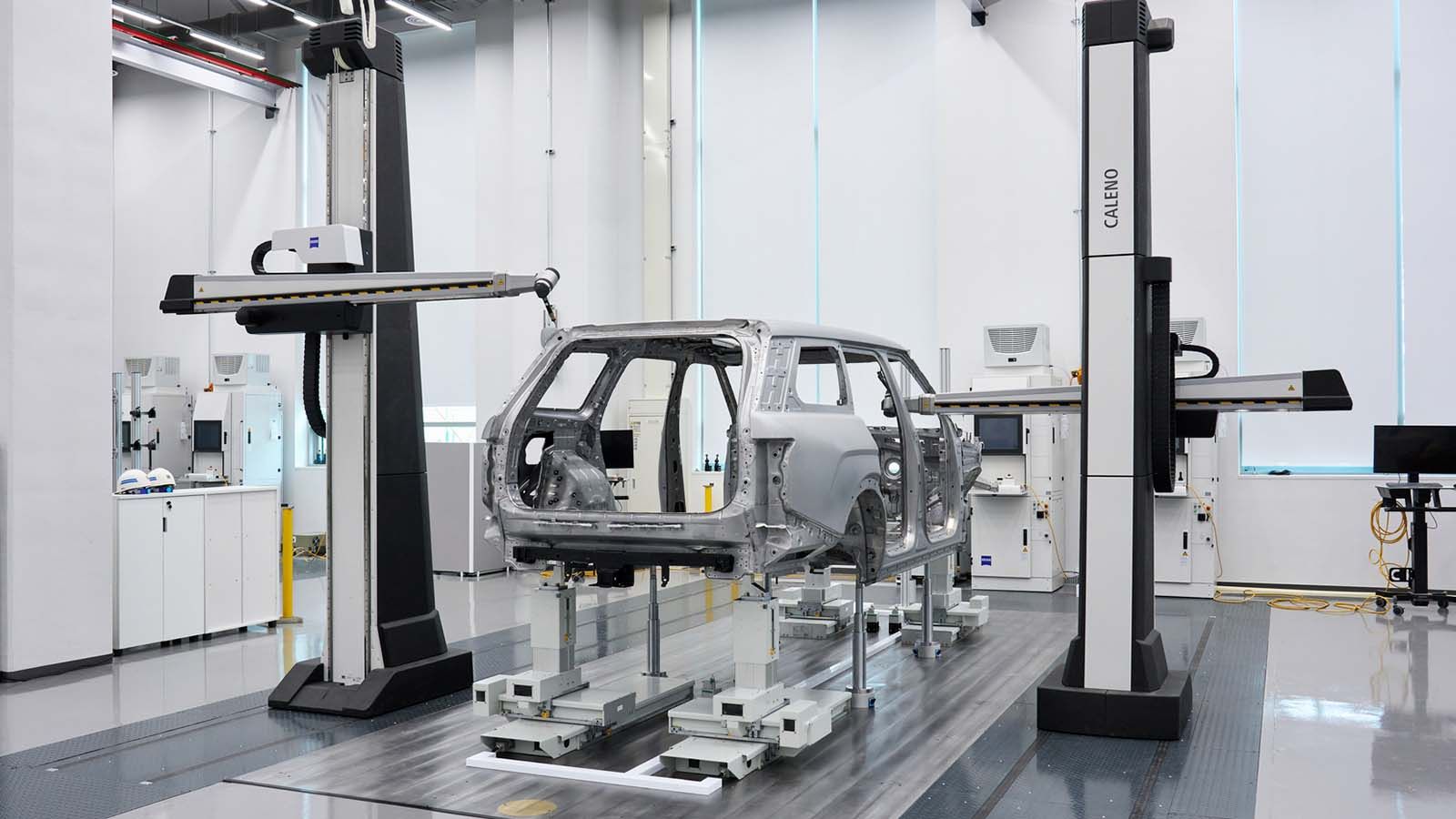
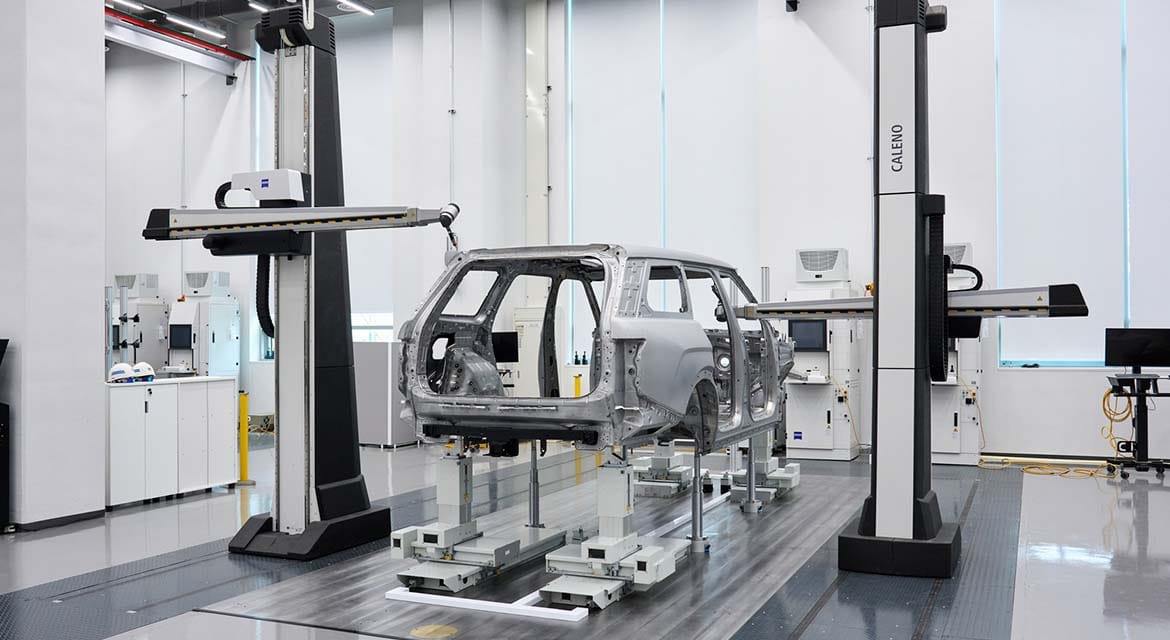
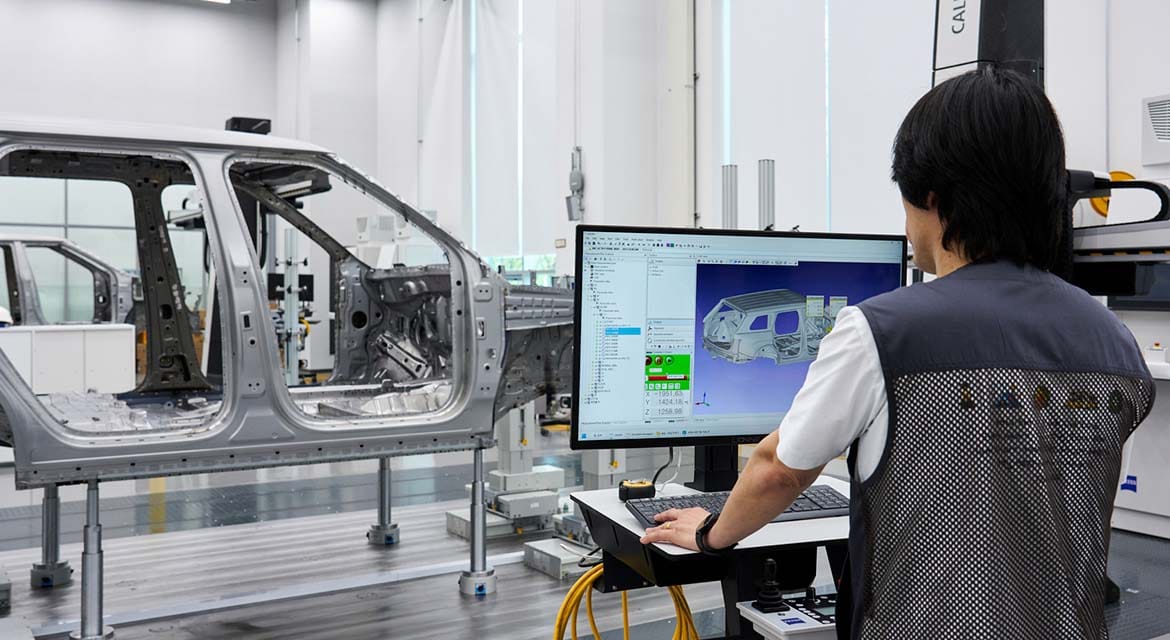
To combat such issues and revolutionize quality standards, Hyundai Motor and Kia operate their Digital Measuring Center (DMC) at the Namyang Research and Development (R&D) Center. Here, Coordinate Measuring Machine (CMM) systems measure up to 1,000 points on a single vehicle body structure across 600 parametric quality criteria.
The DMC monitors four key quality verification areas with data: exterior quality, NVH, water tightness, function and assembly feasibility. It targets small variances and gaps often missed during casual inspection and deformations often only detectable by sensors. By doing so, the facility transforms quality management from reactive problem-solving into data-driven refinement.
Dimensional precision — how accurately a vehicle’s parts fit together — directly impacts customer satisfaction. Even minute gaps between panels, or subtle inconsistencies in surface alignment can compromise quality and trigger problems including water leaks, unwanted noise and assembly issues. Yet many of these dimensional challenges occur in areas invisible to casual inspection. Hyundai Motor and Kia’s solution is a comprehensive, data-driven approach to quality management that captures and analyzes every critical measurement throughout the vehicle’s development.
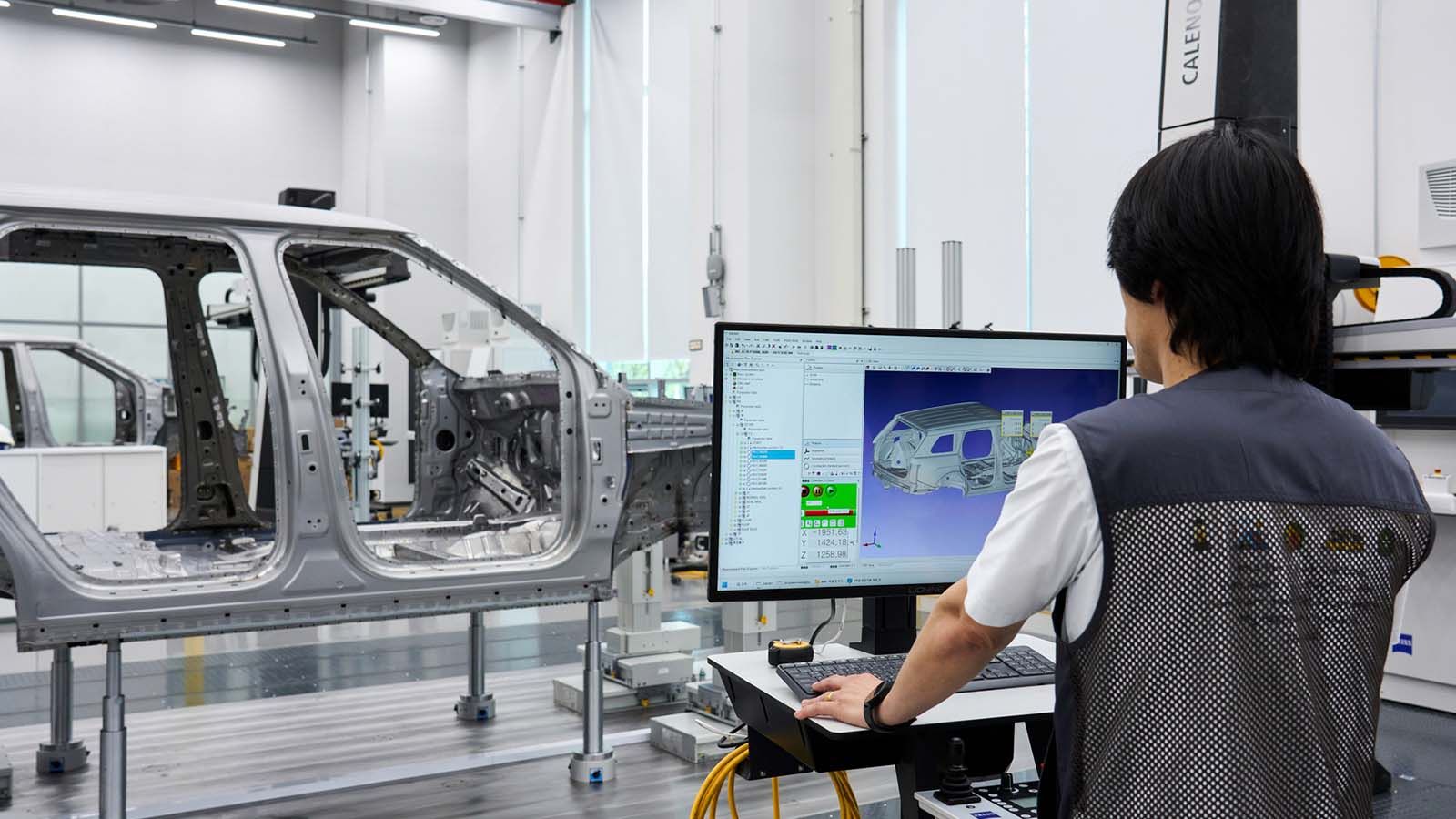
The DMC begins its work at the vehicle’s foundation — the body structure. Coordinate Measuring Machines (CMM) equipped with precision contact sensors methodically scan 1,000 specific points per vehicle, reading three-dimensional coordinates with extraordinary accuracy. Engineers calculate the deviation and distance between related points, assess parallelism, and derive actionable quality insights across approximately 600 quality evaluation criteria. These measurement standards are then transferred directly to manufacturing plants, ensuring production vehicles meet identical quality benchmarks.
The goal of DMC is to elevate the entire Hyundai Motor Group’s digital measurement capabilities to the next level. By integrating measurement, analysis and data management capabilities, we are raising vehicle quality standards, through this, we are strengthening dimensional quality verification related to functionality to further refine the driving quality, quietness and durability that customers actually experience.
Part Leader of the Pilot Quality Verification Team
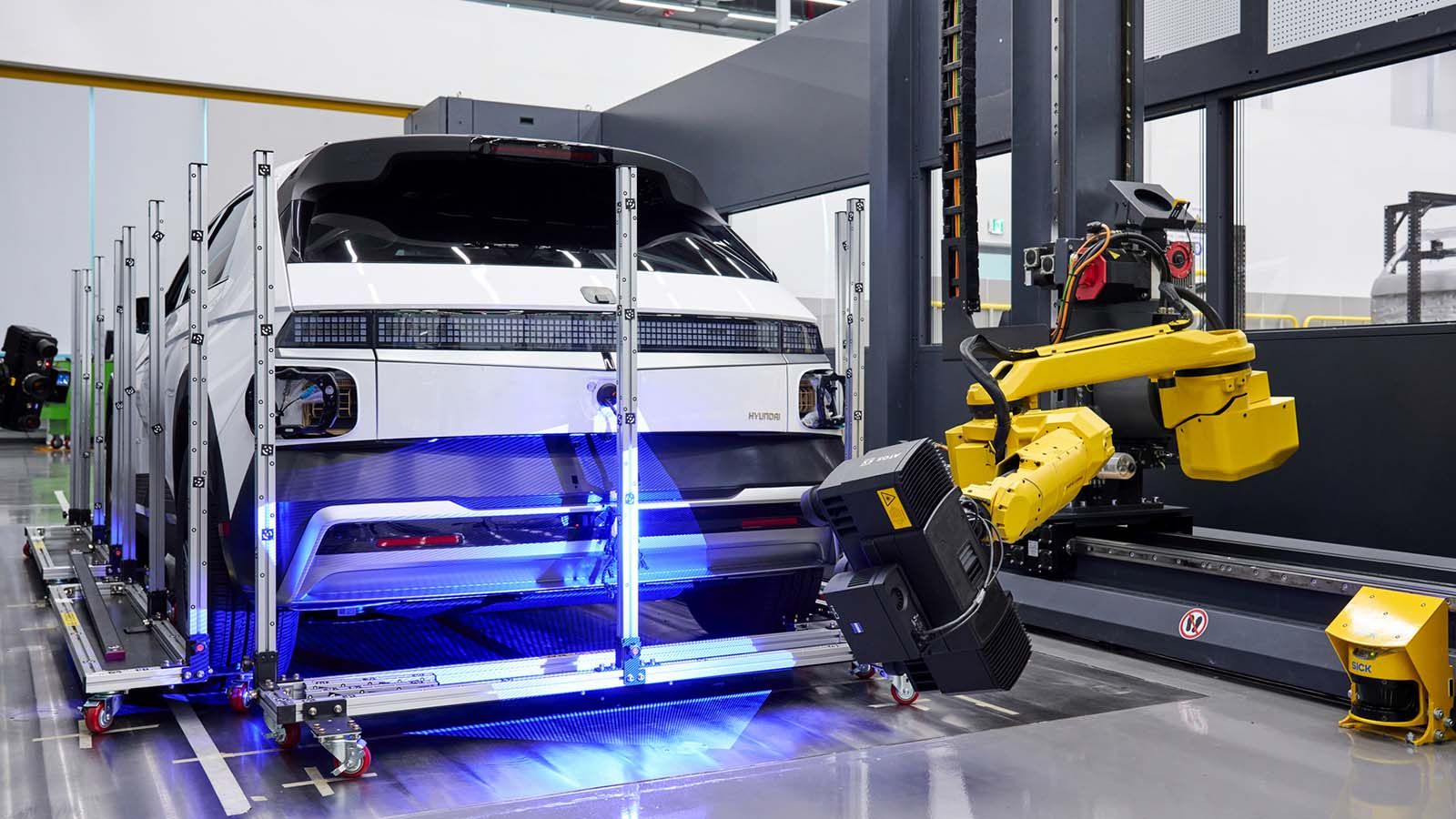
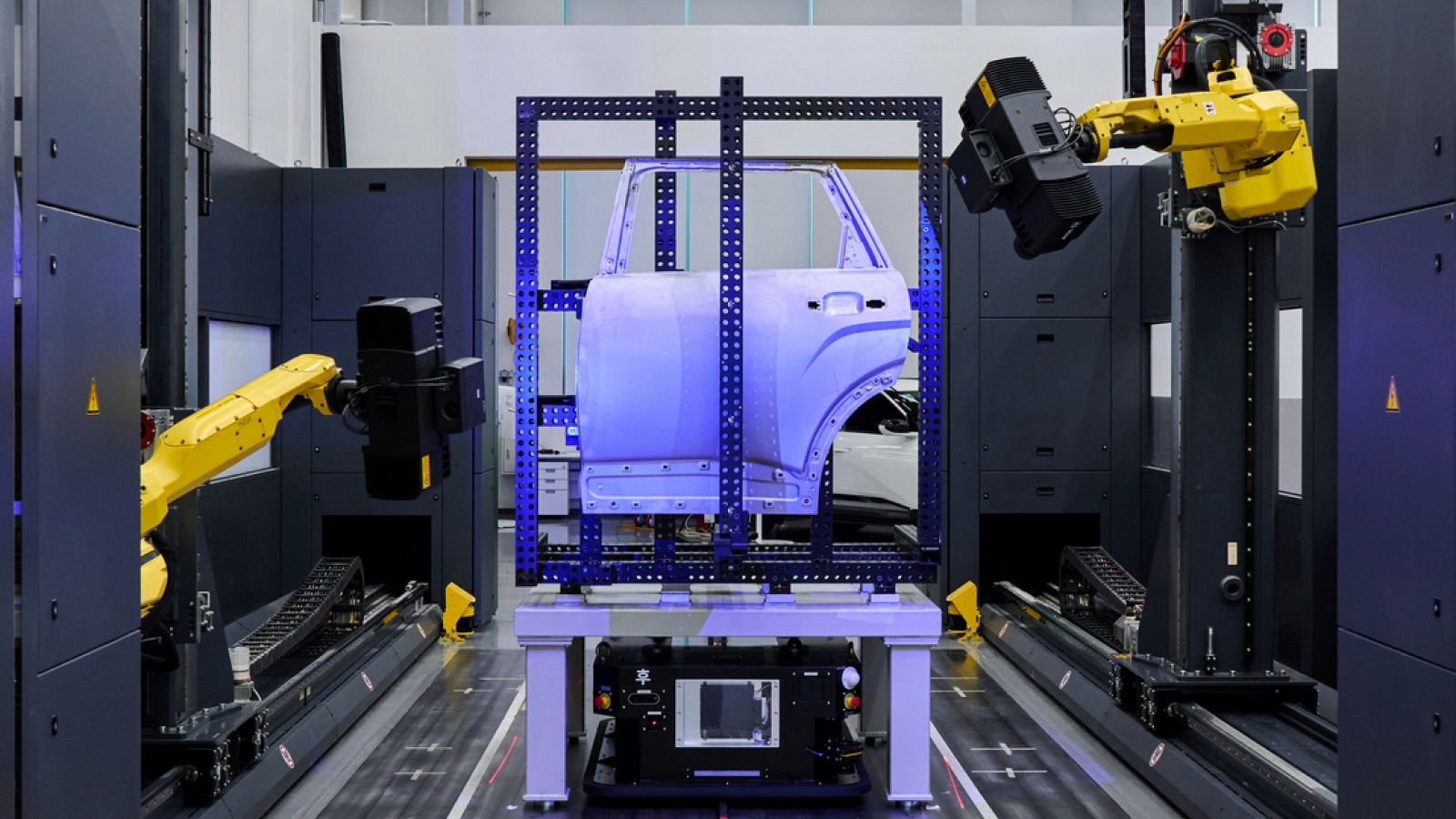
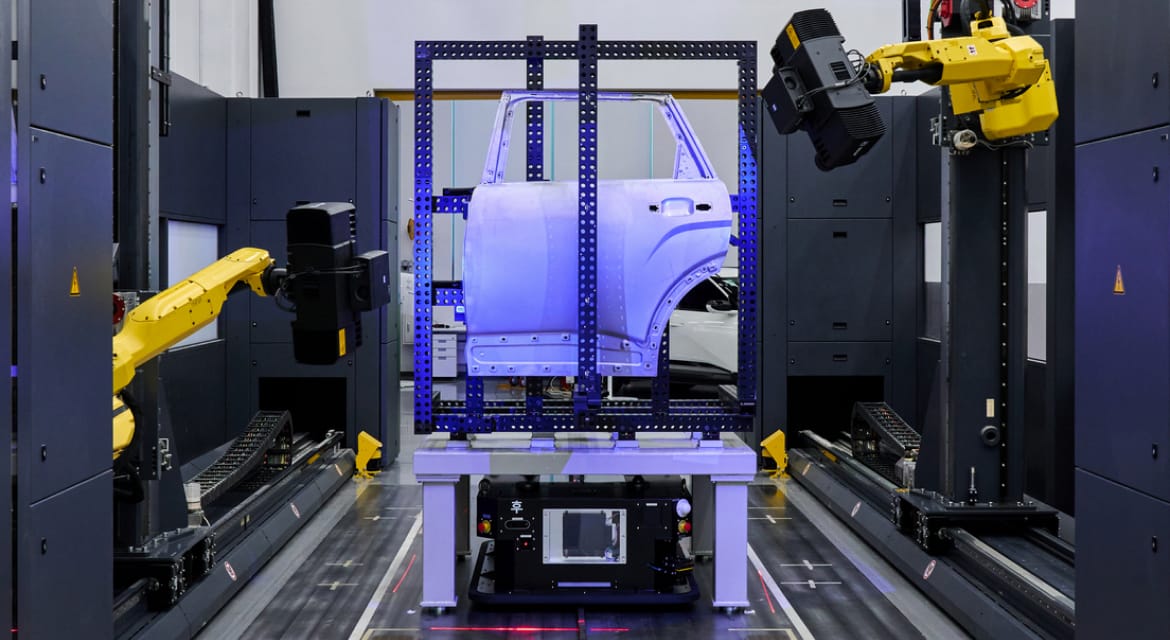
For movable components such as doors and liftgates, optical 3D scanners mounted on robotic arms perform rapid full-geometry measurements. Autonomous mobile robots (AMRs) automatically transport the components, while robotic-arm-mounted scanners conduct precise inspections with minimal operator intervention. The resulting data helps engineers verify whether components meet design intent and function properly when integrated into the vehicle body.
In the assembly verification laboratory, components are first mounted onto inspection fixtures that replicate actual body geometry. Engineers use portable 3D scanners to validate assembly quality before final vehicle assembly, helping identify issues early and prevent downstream defects. While scanning is performed manually, software automatically establishes a virtual measurement environment using reference markers, significantly improving efficiency while maintaining precision.
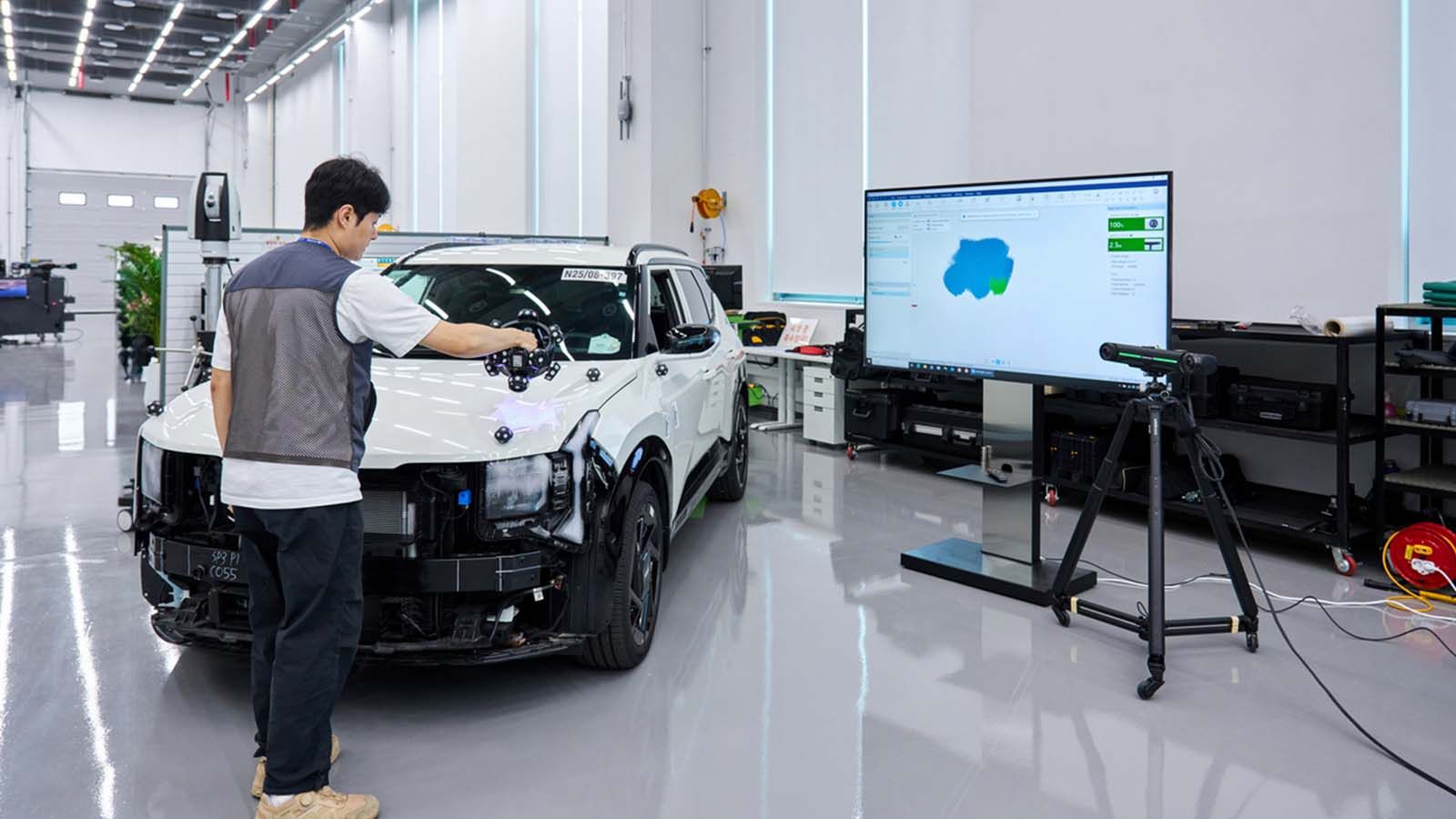
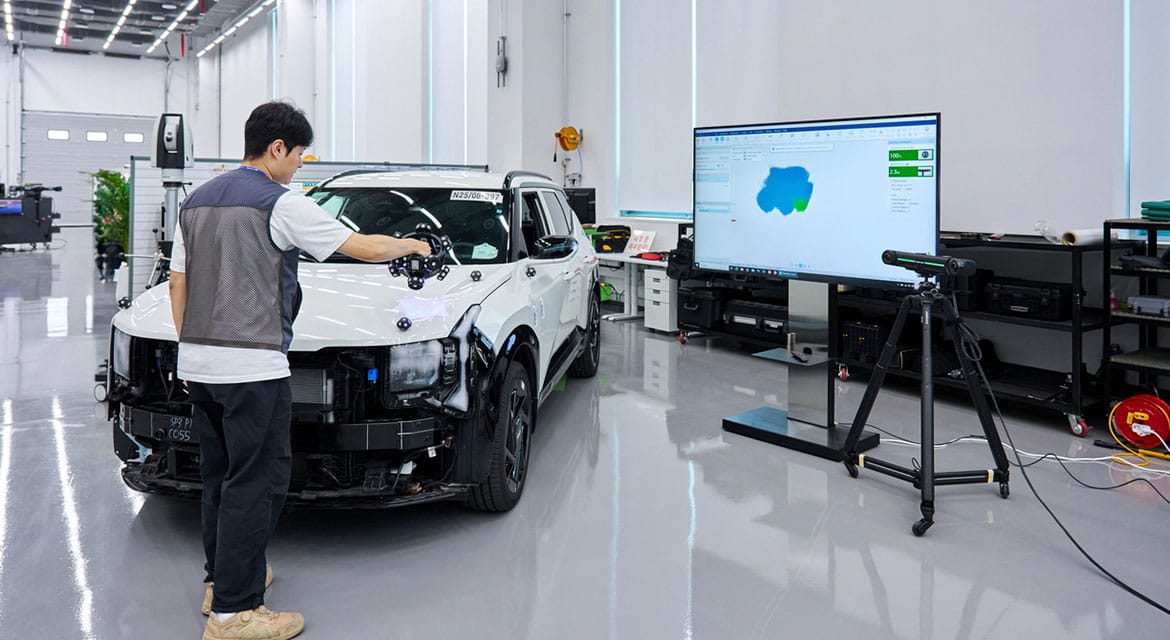
The final validation stage assesses the complete vehicle. Engineers scan the entire vehicle and analyze accumulated dimensional variation across body structures, moving components, installed parts and trim. Exterior quality issues in finished vehicles can stem from multiple factors and accumulated dimensional deviations throughout the assembly process, making them difficult to diagnose through visual inspection alone. Because the DMC maintains measurement data from every stage of development and assembly, engineers can quickly trace any issue back to its origin and implement targeted corrective actions.
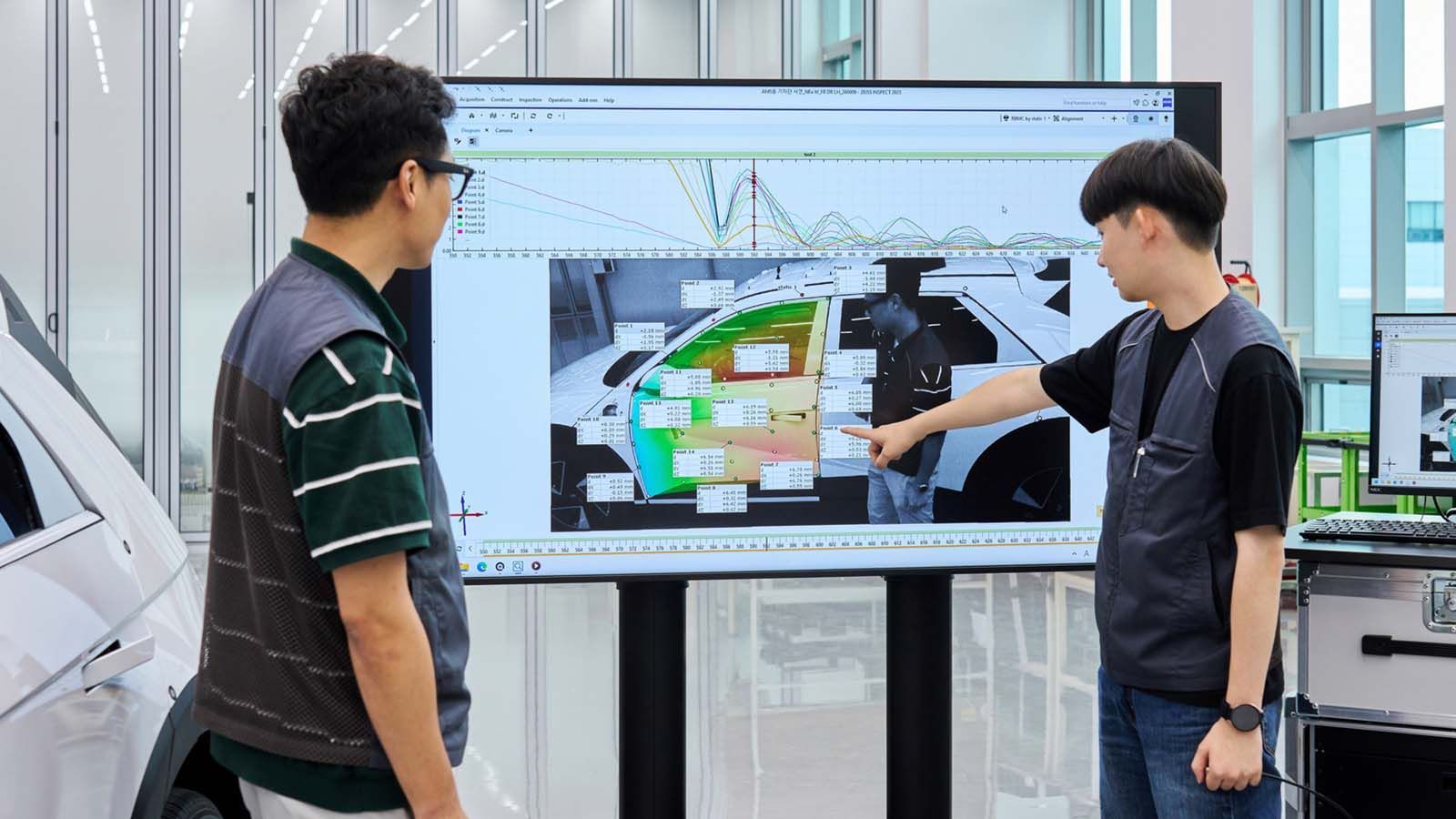
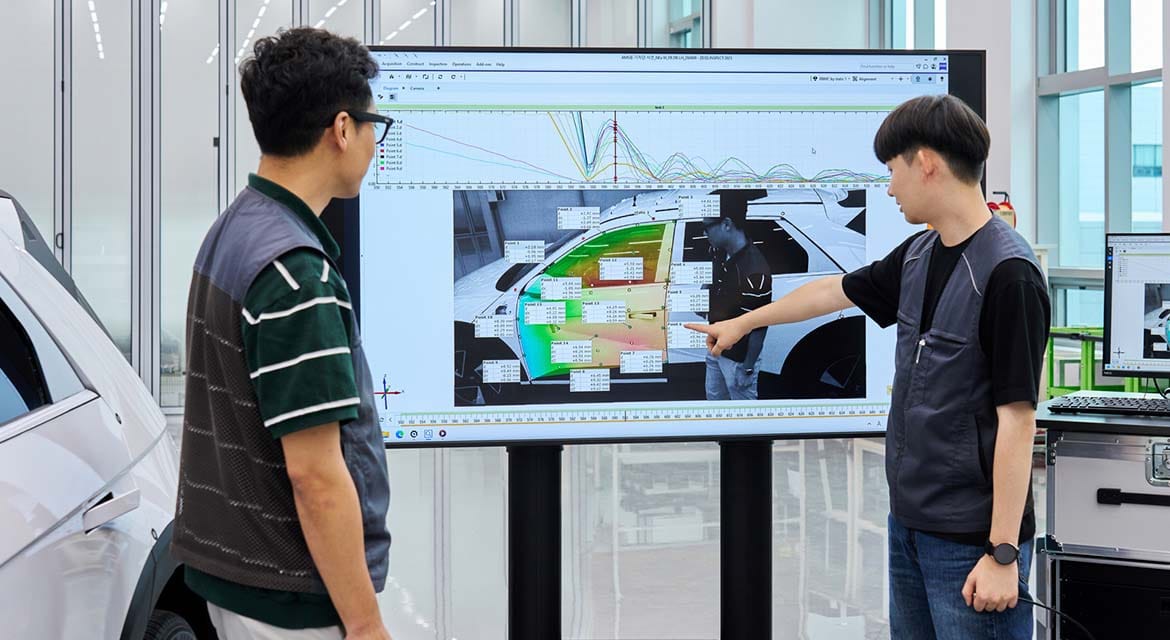
The dynamic motion validation lab evaluates doors, liftgates and other movable components under real-world operating conditions. As engineers open and close doors and liftgates, ultra-high-speed cameras and sensors capture deformation data at 500 measurements per second, revealing movements imperceptible to the human eye. The facility also evaluates the effects of increased component weight and residual deformation caused by external loads.
At the heart of the DMC is a centralized data center that consolidates measurement data collected throughout vehicle development. By bringing together dimensional data from multiple stages, systems and suppliers, engineers can analyze quality issues more efficiently and identify root causes with greater accuracy. The centralized approach enables faster access to information, supports cross-functional collaboration and strengthens data-driven decision-making across the development process.
All DMC data flows into an integrated analytical framework. The DATA-FIT algorithm uses measurement data to identify optimal assembly configurations in virtual space, while DATA-AUDIT generates improvement recommendations by highlighting potential sources of dimensional variation and quality concerns. The DMC also plans to leverage accumulated measurement data to build AI-based data infrastructure that can further support vehicle development.
The DMC transforms quality management from reactive inspection to data-driven analysis and validation. Every measurement, every quality criterion and every dimensional assecsment feeds into a more comprehensive understanding of vehicle integrity and customer-perceived quality.
It is our hope that quality, meticulously managed down to the smallest detail, leads to a sense of psychological stability and satisfaction for our customers, the value that DMC pursues is for quality — precisely managed not only in the visible exterior but also in the unseen — to be naturally conveyed within the customer's experience.
Part Leader of the Pilot Quality Verification Team
Precision measurement ensures that every component meets exacting standards. Next, we explore the Additive Manufacturing Solution Center (AMSC), where Hyundai Motor Group is using advanced 3D printing technologies to rethink how those components are designed, developed and brought to life.
This article is part of a series on Hyundai Motor Group’s digital R&D infrastructure at the Namyang Research and Development Center. Four facilities — the Driving Simulator, Digital Measuring Center, Additive Manufacturing Solution Center and NOVA Lab — exemplify the Group’s transformation from prototype-intensive development to digital-first validation, accelerating innovation while elevating quality and performance standards.
Daehyun Shin
daehyun.shin@hyundai.com
Global PR Contents · Hyundai Motor Company
Disclaimer: Hyundai Motor Group believes the information contained herein to be accurate at the time of release. However, the company may upload new or updated information if required and assumes that it is not liable for the accuracy of any information interpreted and used by the reader.
About Hyundai Motor Group
Hyundai Motor Group is a global enterprise that has created a value chain based on mobility, steel, and construction, as well as logistics, finance, IT, and service. With about 250,000 employees worldwide, the Group’s mobility brands include Hyundai, Kia, and Genesis. Armed with creative thinking, cooperative communication and the will to take on any challenges, we strive to create a better future for all.
More information about Hyundai Motor Group can be found at: http://www.hyundaimotorgroup.com or Newsroom: Media Hub by Hyundai, Kia Global Newsroom, Genesis Newsroom

2 MB
1.8 MB
1.9 MB
1017 KB
1.7 MB