Hyundai Motor Group Accelerates AI Transformation Across Its Business, Advancing Toward the Physical AI Era

Page sharing

Technology & Innovation Hyundai Motor Group Accelerates AI Transformation Across Its Business, Advancing Toward the Physical AI Era

  • Hyundai Motor Group Accelerates AI Transformation Across Its Business, Advancing Toward the Physical AI Era
    DOC / 85 KB Hyundai Motor Group Accelerates AI Transformation Across Its Business, Advancing Toward the Physical AI Era.docx

Please use Safari to download the files.

Empty cart?

Technology & Innovation Hyundai Motor Group Accelerates AI Transformation Across Its Business, Advancing Toward the Physical AI Era

Hyundai Motor Group Accelerates AI Transformation Across Its Business, Advancing Toward the Physical AI Era
Hyundai Motor Group Accelerates AI Transformation Across Its Business, Advancing Toward the Physical AI Era.docx
Next
Prev
이전 페이지

Hyundai Motor Group Accelerates AI Transformation Across Its Business, Advancing Toward the Physical AI Era

Added to
Media Cart
Copied to
clipboard
URL copied to clipboard

Share via email We do not collect email addresses.

Technology & Innovation 202608120940
Hyundai Motor Group Accelerates AI Transformation Across Its Business, Advancing Toward the Physical AI Era

5 minutes read
Added to
Media Cart
Copied to
clipboard

Share via email We do not collect email addresses.

  • Hyundai Motor Group presents its Digital Transformation (DX) and AI transformation (AX) journey, key achievements and future vision, highlighting its preparation for the AI era and innovation across business functions
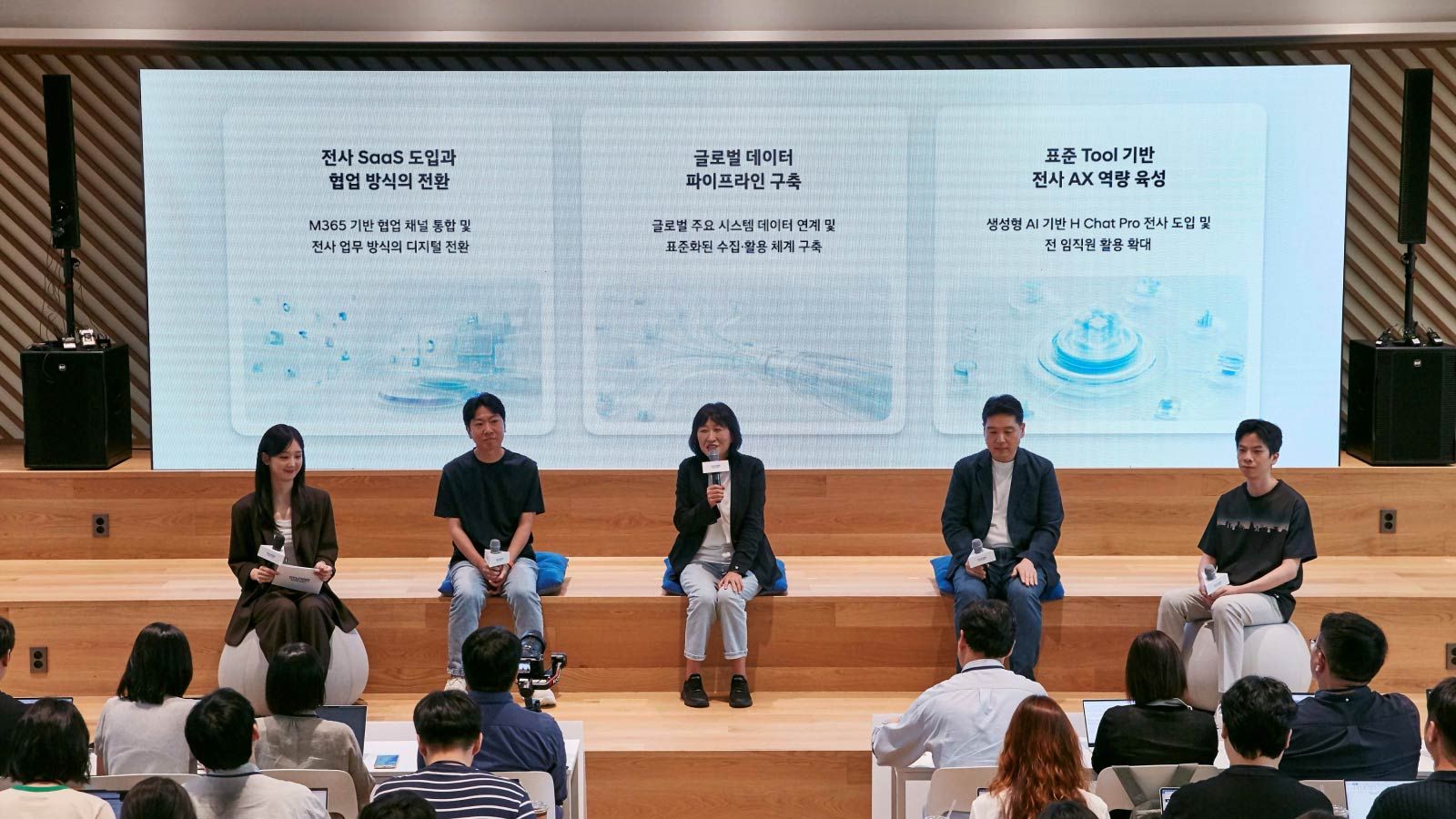
  • Establishes the foundation for organization-wide AI transformation (AX) through transformed ways of working and a data-driven business environment
    ⋯Enhanced collaboration and knowledge sharing across the organization, while building a global data foundation through the Global One Data Pipeline
  • Expands AI adoption across the organization through H Chat Pro and broad access to generative AI tools
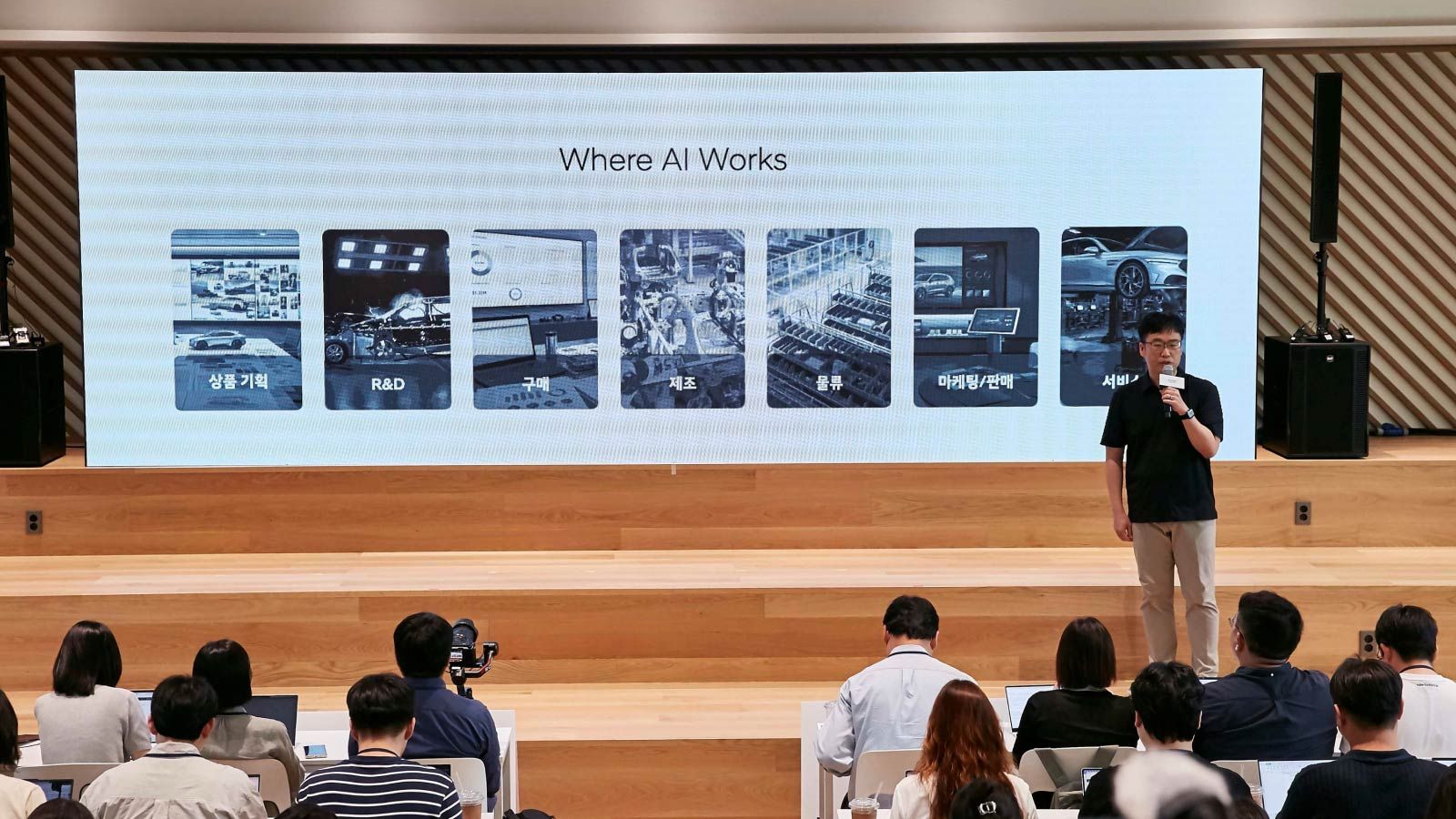
  • Delivers AI-powered innovation across R&D, manufacturing and service operations to enhance productivity and customer value
    ⋯Showcases applications including Crash Safety AI Assistant, AI Automated Recognition Service, E-FOREST: POLARIS and customer support solutions
  • Prepares for the Physical AI era by leveraging data and operational expertise across vehicles, robotics and manufacturing
Hyundai Motor Group Accelerates AI Transformation Across Its Business, Advancing Toward the Physical AI Era

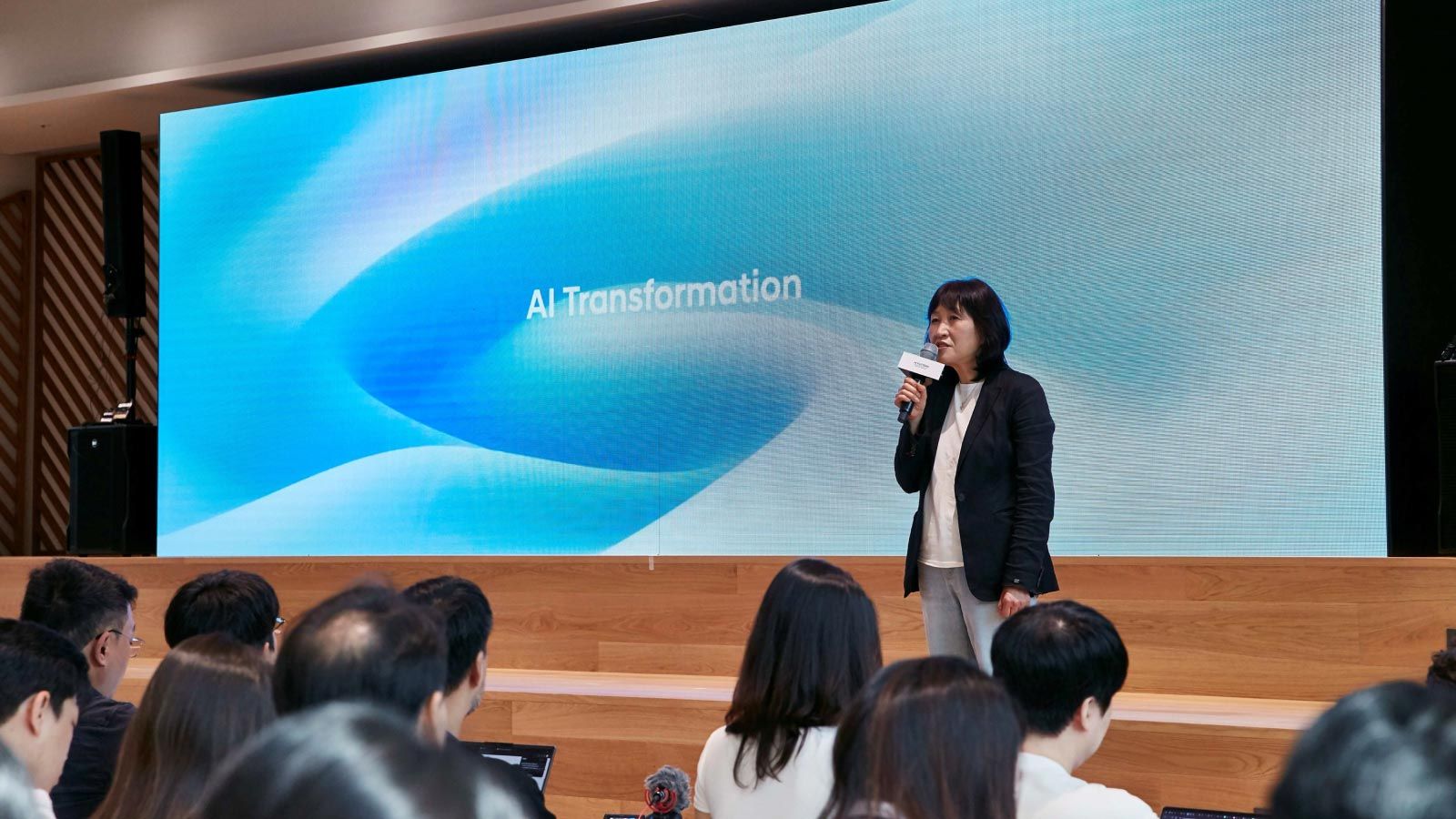
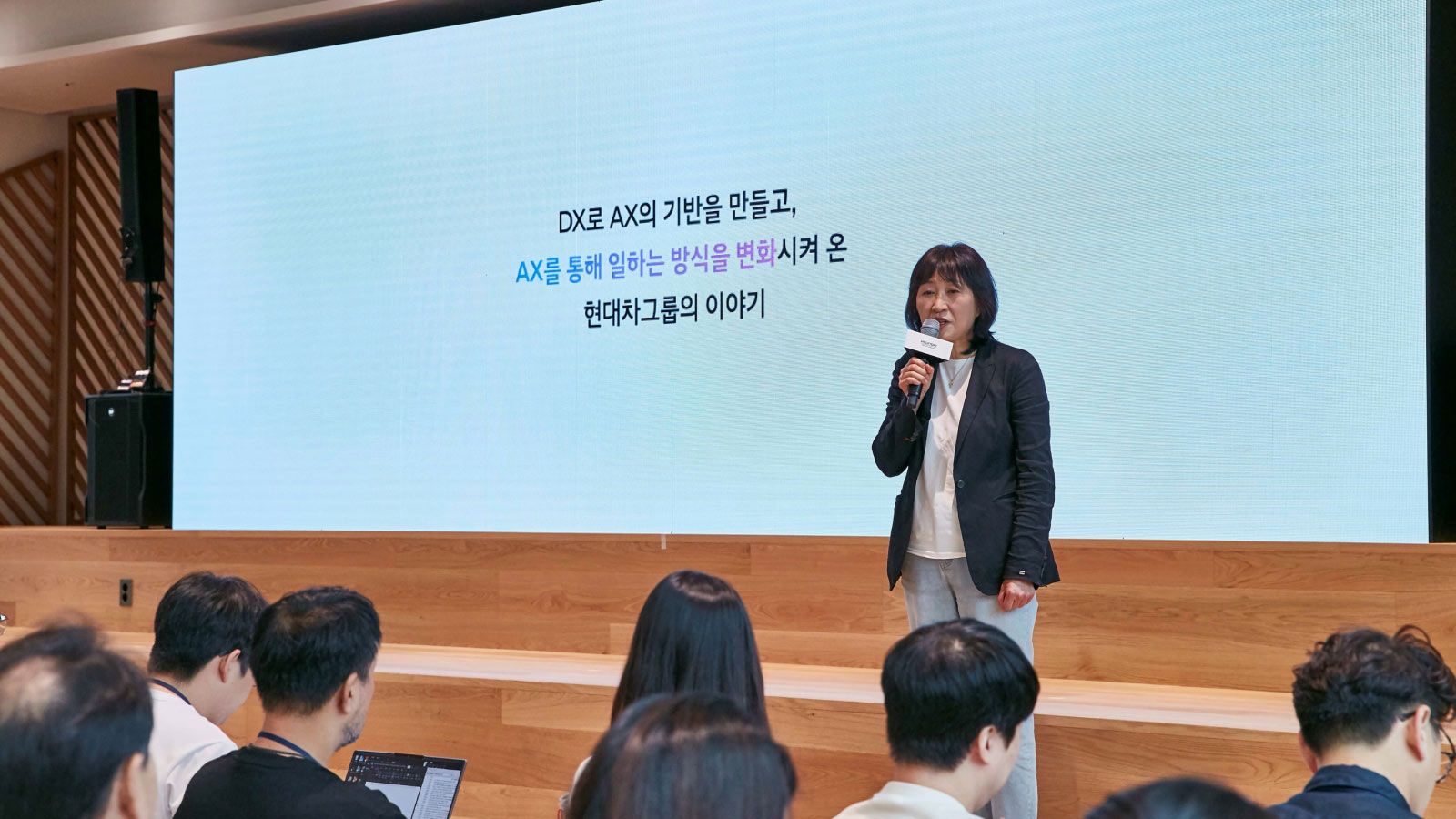
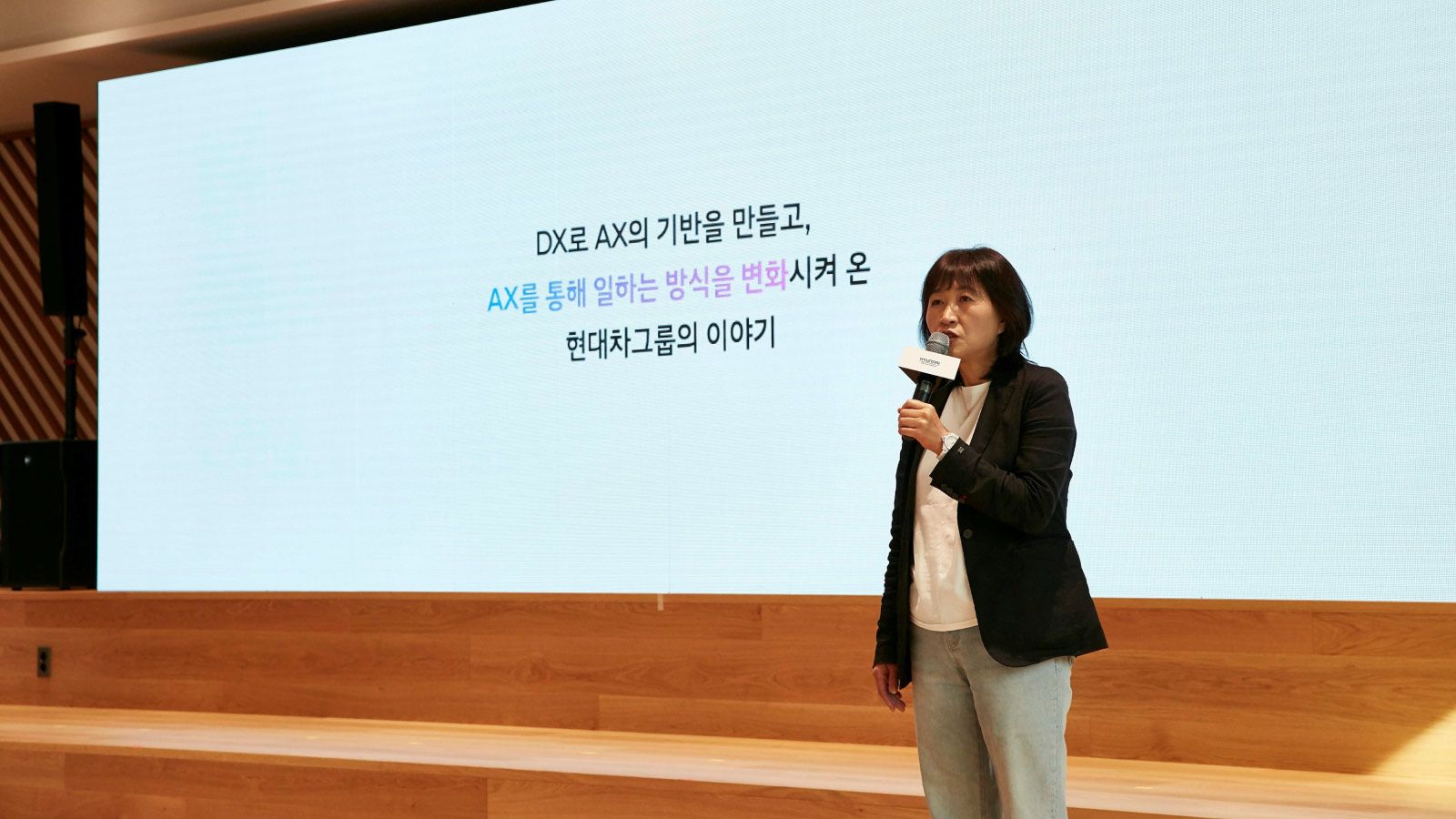
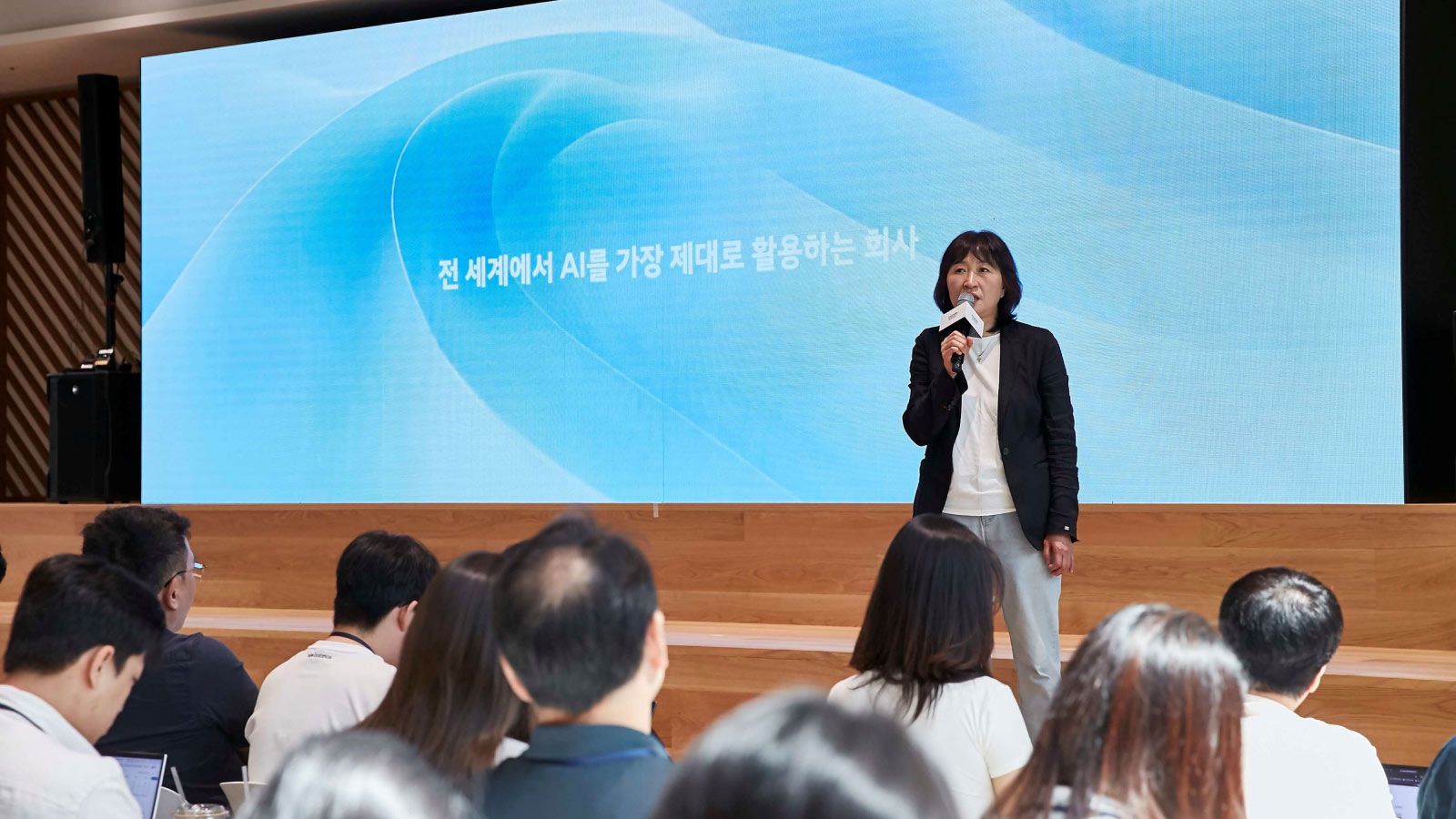
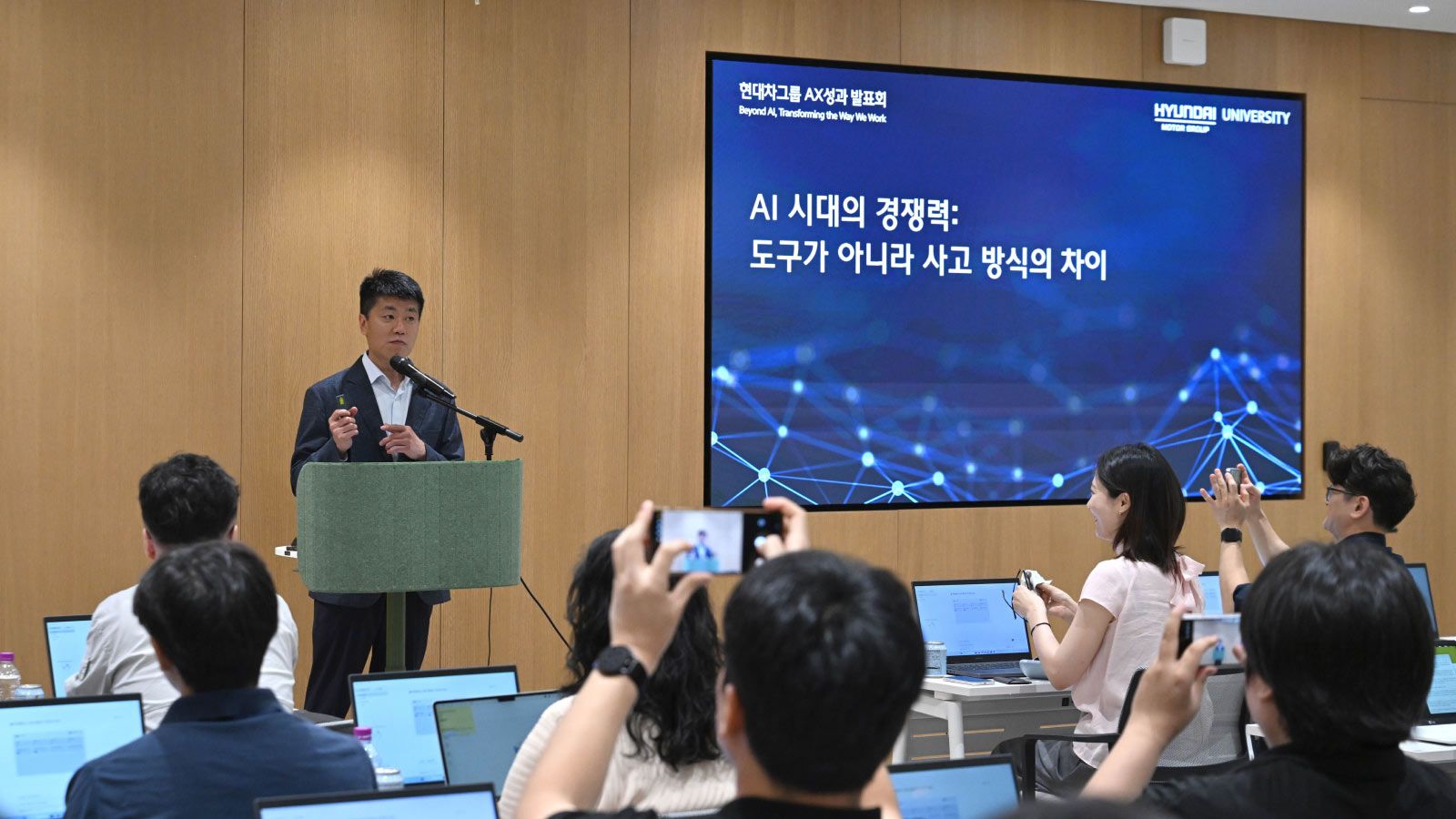
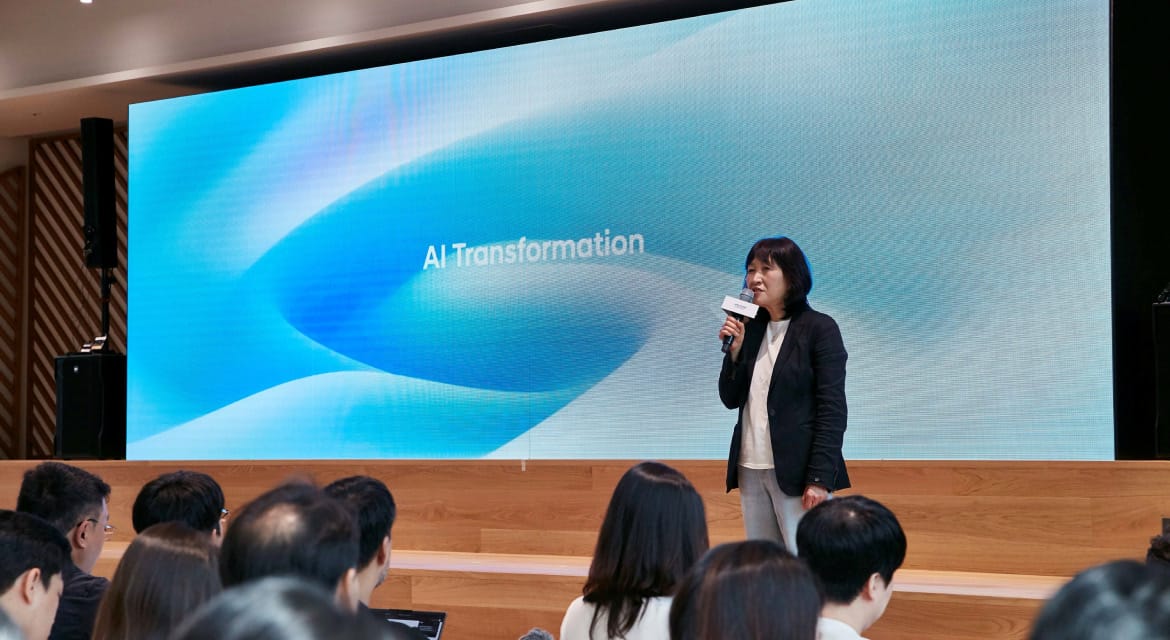
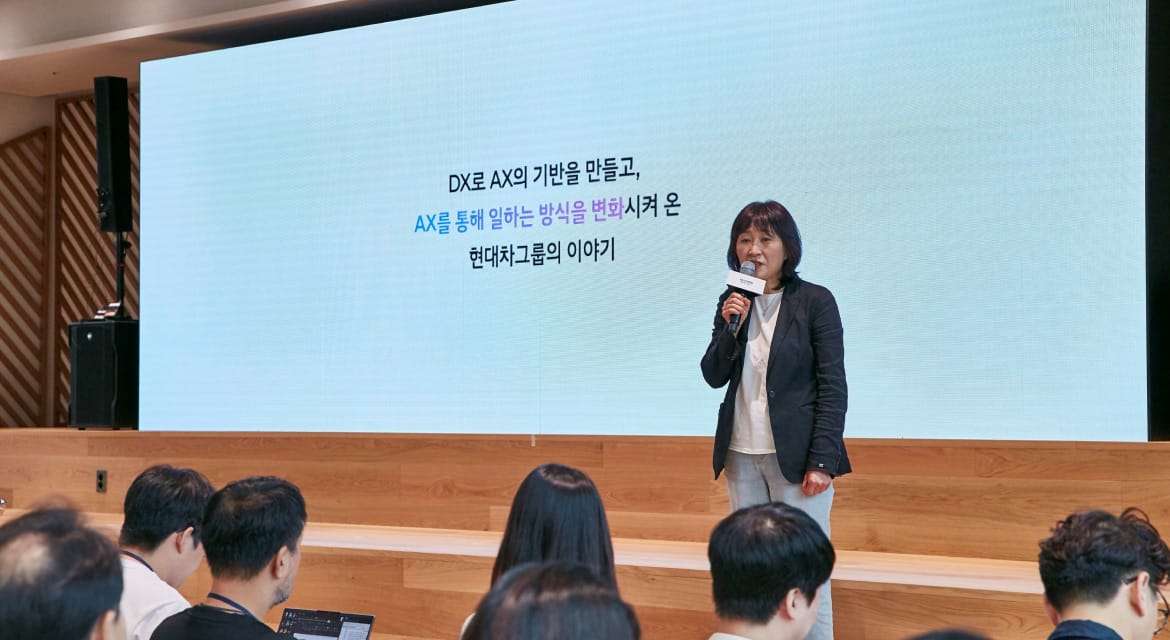
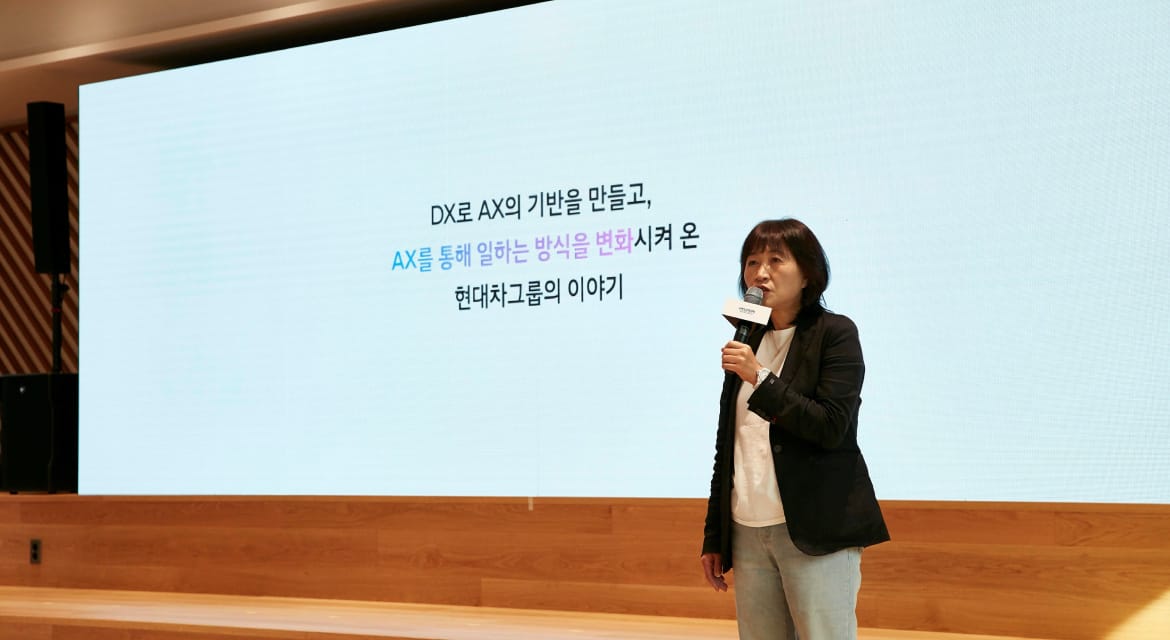
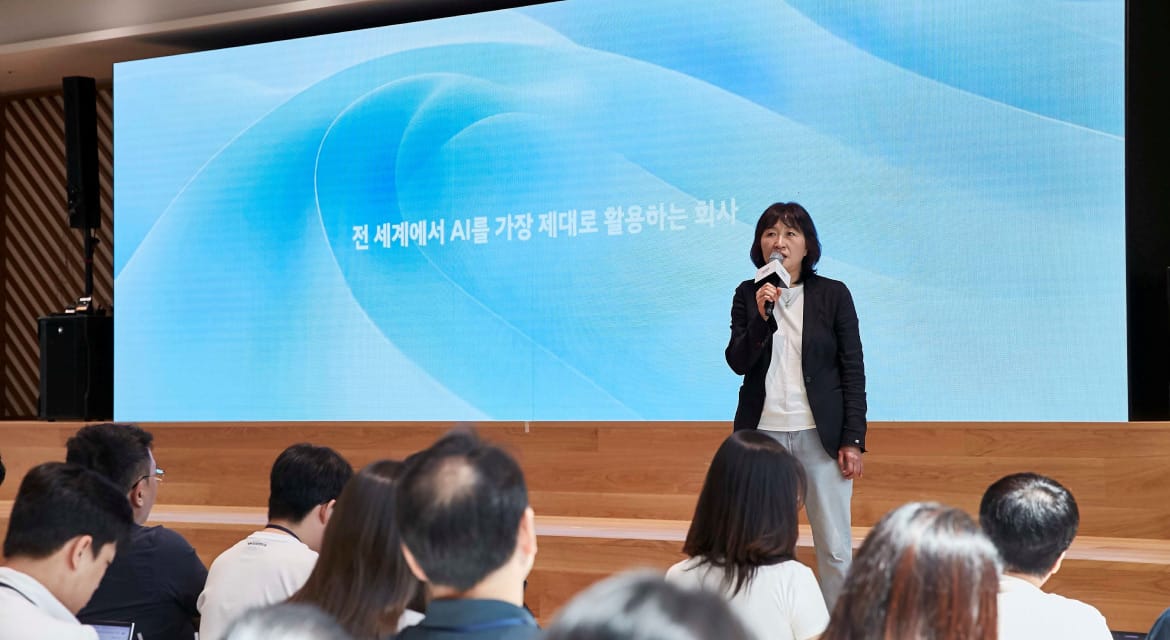
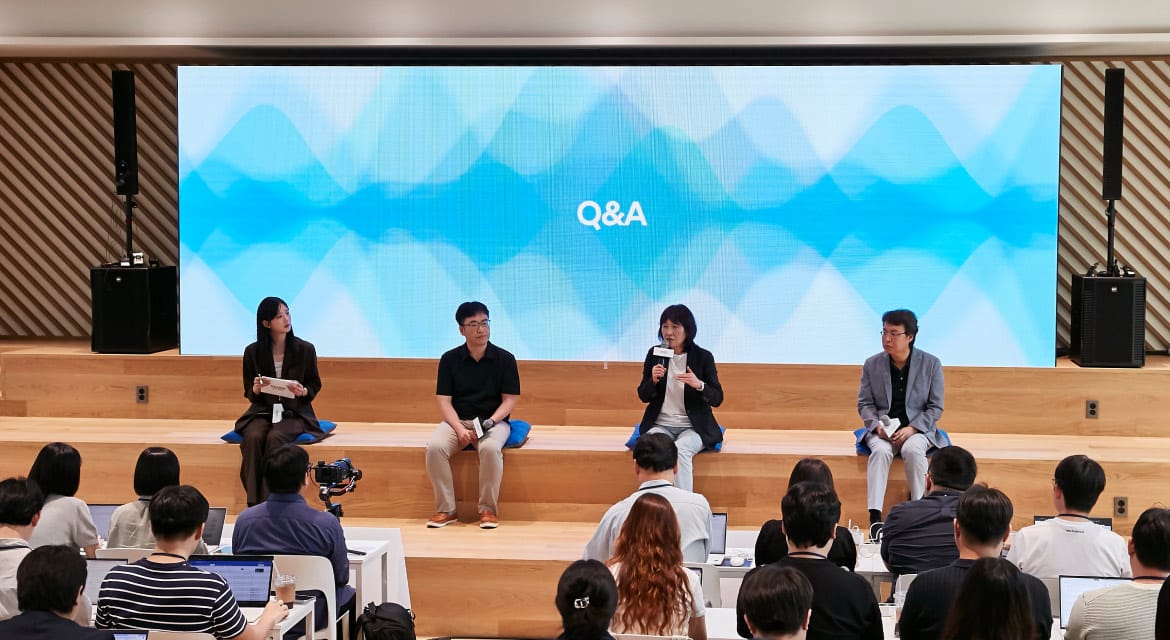
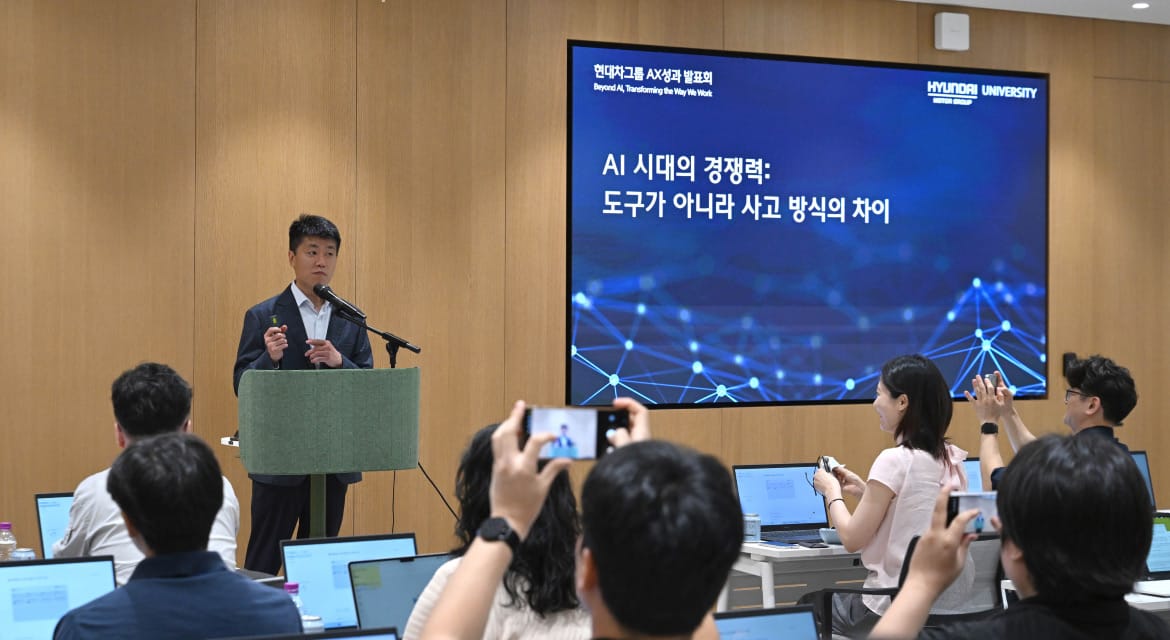
SEOUL, August 12, 2026 – Hyundai Motor Group (the Group) today shared its digital transformation (DX) and AI transformation (AX) journey, key achievements and future plans at the Hyundai Motor Group AX Achievement Showcase (‘Beyond AI, Transforming the Way We Work’) — held at its headquarters in Seoul.


The event highlighted how the Group has prepared the foundation for AI transformation through its digital transformation efforts since 2019 and showcased the progress, key achievements and future direction of its enterprise-wide AI transformation initiatives.


As the mobility industry rapidly evolves from a manufacturing-centered industry to one where data and software capabilities define competitiveness, the Group has proactively advanced its digital transformation efforts since 2019. Building on accumulated data and a digitally enabled working environment, the Group is now accelerating AI transformation across the organization.

AI is undoubtedly an important technology, but ultimately it is a tool that companies must utilize. What matters is not the technology itself, but how quickly an organization can understand new technologies, including AI, apply them to its work and business, and internalize them as a source of competitive advantage. Building on our ongoing digital transformation efforts, Hyundai Motor Group is expanding AI transformation through the integration of AI and other intelligent technologies.

Eunsook Jin

President and Head of ICT Management Division, Hyundai Motor Group

How Did the Group Prepare for Enterprise AI Adoption?

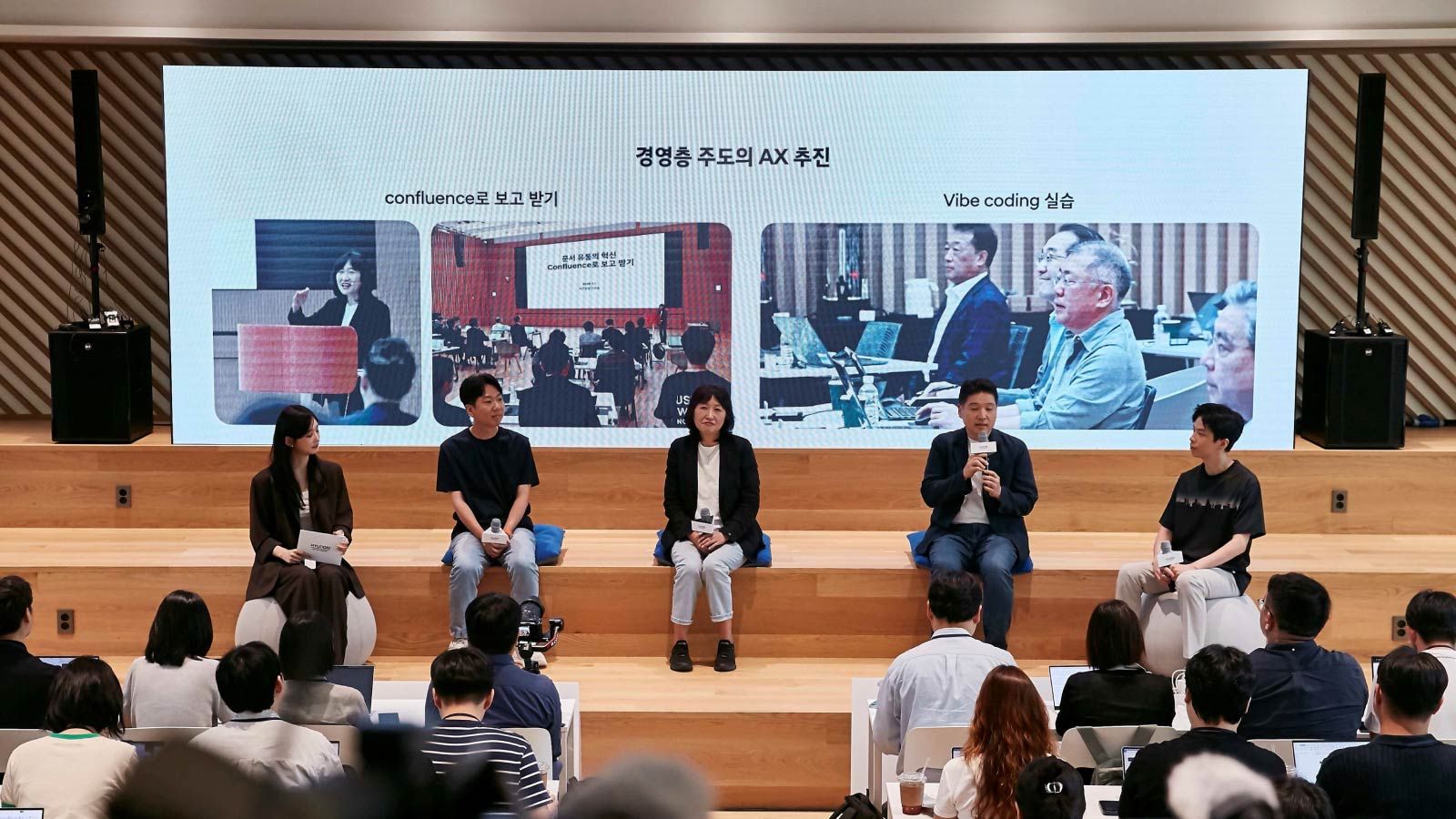
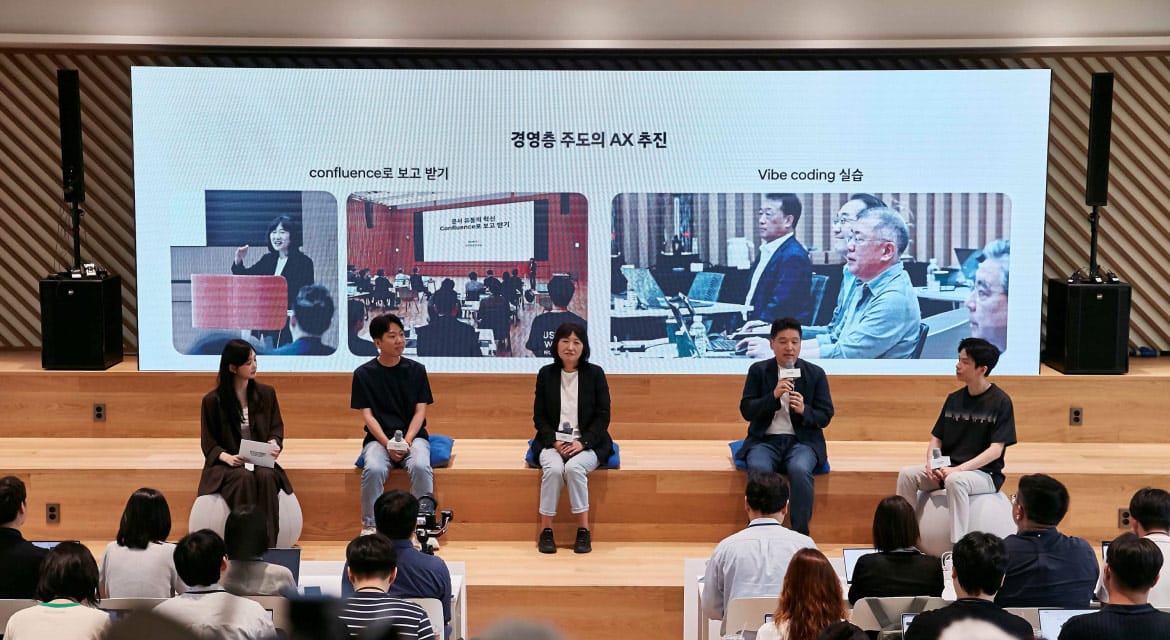
Hyundai Motor Group began preparing the foundation for AI transformation well before the rise of AI technologies, focusing on collaboration and data-driven operations as key pillars of its digital transformation strategy. The commitment originated at the executive level. In 2018, Executive Chair Euisun Chung (then Executive Vice Chairman of Hyundai Motor Group) declared the Group would become “a company more IT-like than IT companies themselves,” accelerating the Group’s digital transformation effort.


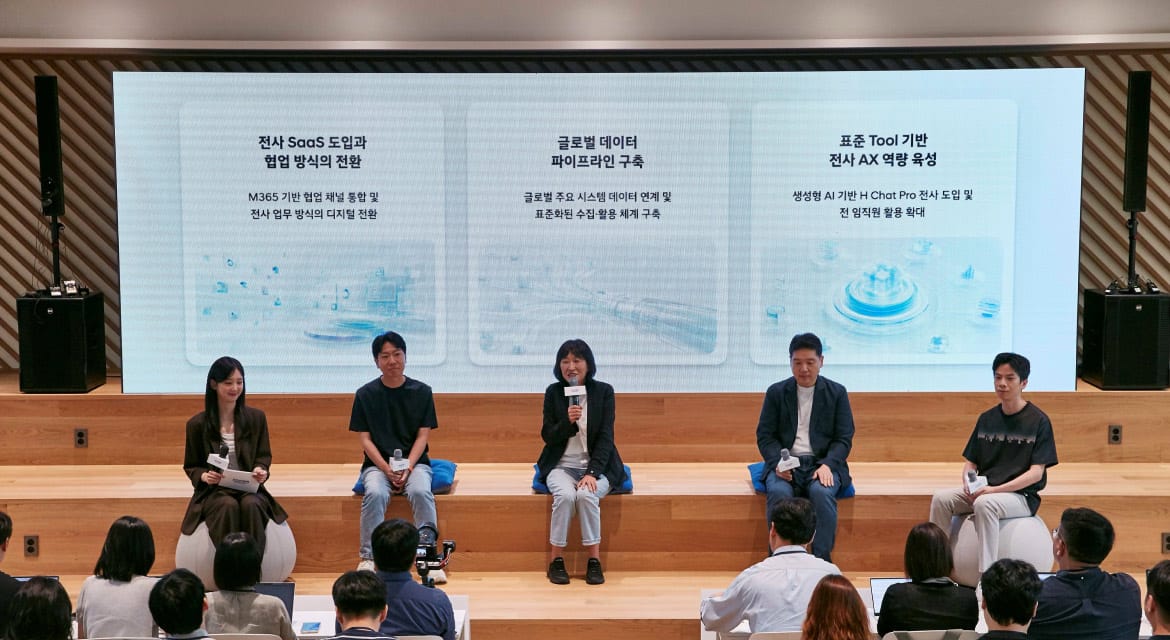
In 2022, the Group deployed JIRA, Dooray and Confluence platforms to standardize project management, decision-tracking and knowledge-sharing across the global enterprise. These systems transformed how employees collaborate across the organization. Through these platforms, employees gained greater visibility into Group-wide operations and key project progress, while work processes and outcomes could be systematically accumulated as organizational assets. Collaboration and information-sharing transparency across teams were also significantly enhanced.


The Group simultaneously implemented Microsoft 365 across its global business operations, creating a unified cloud-based collaboration environment. In particular, research and development (R&D) organizations working on technologies such as autonomous driving and hydrogen, which had previously been unable to use external collaboration tools due to security regulations governing national core technologies, were able to safely adopt SaaS solutions as relevant government authorities swiftly established guidelines for SaaS usage.


As a result, information and knowledge previously dispersed across the organization could be shared and accumulated within a single collaboration environment, while establishing a foundation for continuously securing digital assets that can be utilized by AI.


In parallel, the Group established its Global One Data Pipeline, which standardized and connected data dispersed across research, production, quality and sales functions across the value chain.


Through this initiative, information generated during development can be utilized in production and quality management, while data collected from sales operations can be reflected in product development and process improvement. By enabling integrated use of data across the value chain, the Group has established a foundation for AI-driven decision-making and business innovation.

What Role Does H Chat Pro Play in the Group’s AI Strategy?

Building on the information and data infrastructure established through digital transformation, the Group is expanding AI adoption across the organization through H Chat Pro, its proprietary generative AI platform.


H Chat Pro enables employees to securely access and utilize various external generative AI models, including ChatGPT, Gemini and Claude, within a protected environment. Since 2025, the platform has been made available to all general employees rather than being limited to specific teams or functions.


As a result, employees are using generative AI in their daily work across a range of tasks, including document creation, information retrieval, data analysis and software development.


More recently, a growing number of employees with no software development background have begun creating and utilizing AI agents – custom tools configured for specific business problems – for their work using AI models available through H Chat Pro.


As of July 2026, H Chat Pro has surpassed 30,000 active users, representing approximately 80 percent of Hyundai Motor and Kia’s general employee population.


AI Platform Adoption Metrics
Active H Chat Pro Users (July 2026)30,000+
Percentage of General Employee BaseApprox. 80 percent
Rollout Timeline2025 – Present
Available AI ModelsChatGPT, Gemini, Claude


In addition, Hyundai Motor Group continues to provide AX education programs for employees, including senior leadership, while encouraging the sharing of AI utilization experiences through internal communities and various collaborative forums.

How Are Research Teams Applying AI to Accelerate Development?

One of the examples highlighted at the event was the Crash Safety AI Assistant, an AI-powered R&D knowledge-support system that helps engineers search, compare and review relevant cases across accumulated crash test data and research materials.


The system brings together crash test results, test images and engineering analysis data, allowing engineers to search, compare and review relevant cases.


In crash safety research, engineers combine physical crash tests, computer-based simulations and historical case studies to identify vehicle-safety improvement opportunities. Accessing and reusing accumulated research I sone important part of this work. However, relevant information has often been distributed across multiple systems or depended on individual engineering experience, making it difficult to quickly locate and use relevant materials.


By connecting and organizing research information through AI, the Group has created an environment where engineers can move beyond simple document searches and explore structured case knowledge, including:


  • Test conditions
  • Vehicle structures
  • Injury mechanisms
  • Improvement measures


As a result, engineers have reduced the time spent identifying relevant cases and reviewing analysis materials by approximately 90 percent compared with the previous workflow. The time saved can now be devoted to higher-value activities such as interpreting results, improving vehicle designs and establishing testing strategies.

What Manufacturing Innovations Has AI Enabled?

Hyundai Motor Group is also leveraging AI to improve quality management and operational efficiency across its manufacturing operations.


One example is the AI Automation Recognition Service, which uses vision AI and cameras installed on production lines to automatically read vehicle identification numbers (VINs) and verify that the vehicle on the line matches system records in real time. Previously, workers manually verified this information through visual checks or system records.


The service enables teams to identify and address potential errors at an early stage. The results are measurable: deployed across approximately 70 manufacturing processes at Hyundai Motor and Kia production operations in Korea, the United States, Europe, India and the Asia-Pacific region, generating annual cost savings of approximately KRW 5.24 billion (approximately $3.9 million).


Another example is Transfer Cart Sequencing Optimization Technology, which employs reinforcement learning-based AI to automatically calculate optimal routing for parts-transfer carts moving across production lines.


Previously, when equipment malfunctions disrupted cart sequencing, employees were required to manually determine and restore movement routes. The Group combined reinforcement learning-based AI technology with existing optimization algorithms to automatically identify the most efficient routes from numerous possible scenarios.


As a result, unnecessary production downtime has been reduced by approximately 86 percent, improving overall operational efficiency.


The Group has also established E-FOREST: POLARIS, a manufacturing-specialized AI platform that enables production engineers to build, test and deploy AI agents.


Engineers embed domain knowledge — from quality management, production scheduling, equipment maintenance and logistics — into AI agents that operate in actual production environments, not just trial environments.


By moving beyond proof-of-concept projects and implementing service-level AI agents for actual manufacturing environments, the platform helps capture individual experience and expertise as digital assets that can be shared across the organization.


How Is AI Improving Customer Service Delivery?

Service operations across Hyundai Motor, Kia and Genesis have deployed AI-powered support solutions that measurably improve both efficiency and customer outcomes:


At overseas service centers, technicians are using a large language model (LLM)-based Maintenance Support AI Service that helps them quickly identify vehicle issues and recommended countermeasures without manually searching through complex maintenance manuals and technical documentation. When vehicle fault codes or symptoms are entered in natural language, the AI analyzes relevant manuals and historical service records to provide optimized diagnostic recommendations.


As a result, maintenance response time has decreased by approximately 42 percent.


In the customer engagement channel, the Customer Review Response Automation Solution ingests reviews submitted via mobile applications by Hyundai Motor, Kia and Genesis customers globally.


The system:

  • Automatically categorizes reviews by topic and sentiment
  • Generates appropriate response tags based on review content
  • Drafts reply text that addresses specific customer concerns
  • Flags escalation-worthy issues for human review


Previously, employees were required to manually review, categorize and respond to customer feedback. Today, personnel can review AI-generated outputs before responding to customers, helping improve both operational efficiency and response quality.


As a result, average processing time per review has been reduced from 35 minutes to approximately 5 minutes, while response quality has also improved. By reducing repetitive tasks, the solution allows employees to focus on higher-value activities such as customer experience analysis and service improvement. The Group plans to automate the entire customer review response process starting in September 2026.


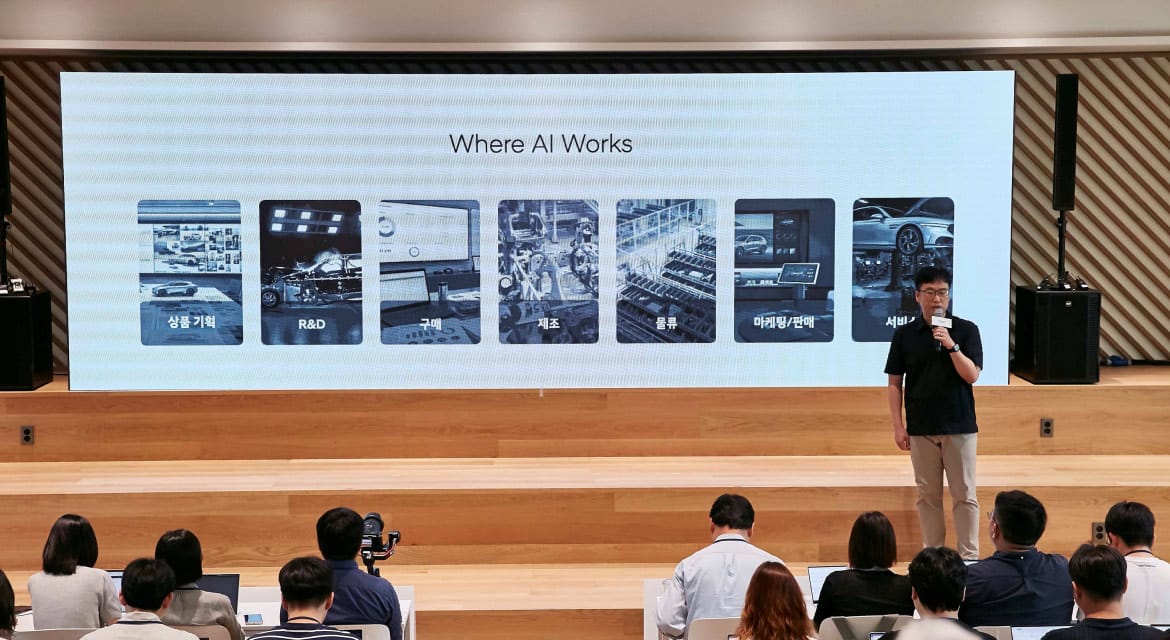
Through applications across R&D, manufacturing, service operations and customer channels, the Group is accelerating enterprise-wide AI transformation while improving productivity and transforming the way employees work.

How Is the Group Preparing for the Physical AI Era?

For Hyundai Motor Group, AI transformation extends beyond technology adoption. The Group views AX as a transformation of organizational culture and ways of working, and considers AI not as a future capability, but as a competitive advantage already embedded across the enterprise.


Underlying this transformation is the Group’s execution-oriented culture, which emphasizes the rapid adoption of new technologies and their application to real-world business innovation. Years of digital transformation efforts and a culture of continuous challenge have provided the foundation for enterprise-wide AI transformation.


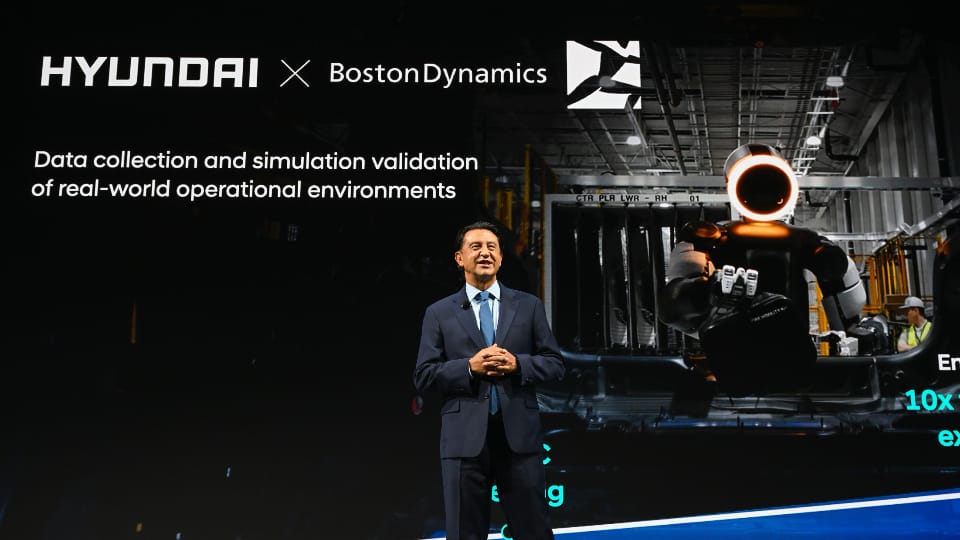
Building on its accumulated data, operational expertise and AI capabilities, the Group plans to expand innovation into the emerging field of Physical AI, where AI is combined with the physical world across vehicles, robotics, manufacturing and service operations.


Moving forward, the Group will continue driving workplace innovation through data and AI while translating the capabilities built through AX into greater customer value, helping lead innovation in the Physical AI era and beyond.

Get media kit

Seoyong Choi
syc@kia.com
Global PR Team 1 · Hyundai Motor Company


Disclaimer: Hyundai Motor Group believes the information contained herein to be accurate at the time of release. However, the company may upload new or updated information if required and assumes that it is not liable for the accuracy of any information interpreted and used by the reader.


About Hyundai Motor Group

Hyundai Motor Group is a global enterprise that has created a value chain based on mobility, steel, and construction, as well as logistics, finance, IT, and service. With about 250,000 employees worldwide, the Group’s mobility brands include Hyundai, Kia, and Genesis. Armed with creative thinking, cooperative communication and the will to take on any challenges, we strive to create a better future for all.


More information about Hyundai Motor Group can be found at: http://www.hyundaimotorgroup.com or Newsroom: Media Hub by Hyundai, Kia Global Newsroom, Genesis Newsroom

Prev topic Smart City
Back to the list Technology & Innovation

Continue reading