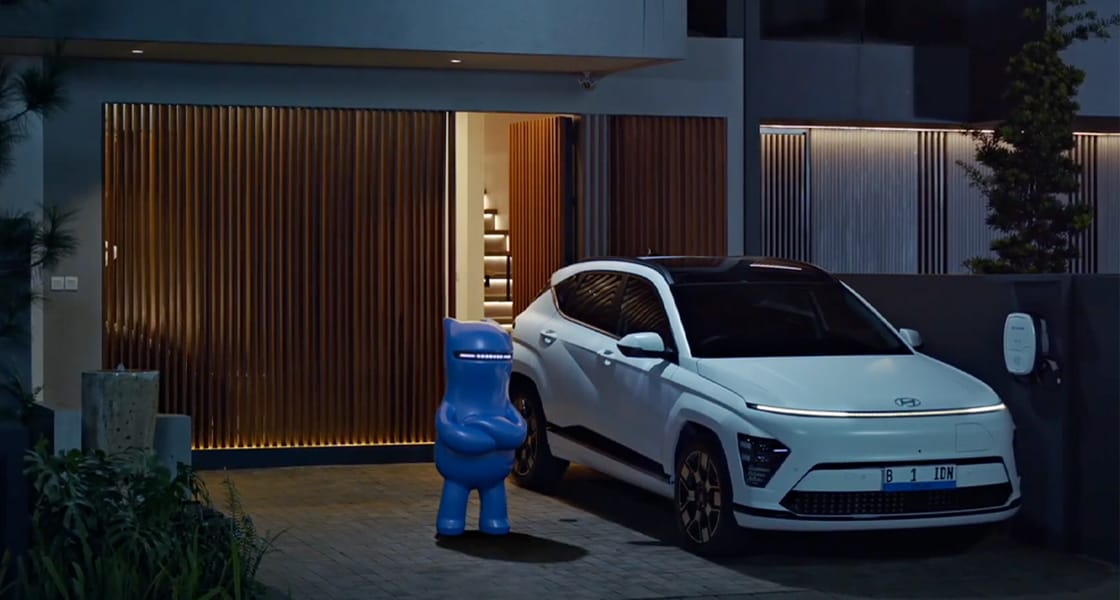
Electric cars have become a new lifestyle that benefits both the environment and modern society. Hyundai is also taking part by launching premium electric vehicles, such as the Hyundai Ioniq 5. However, since electric cars are still a relatively new innovation, many people are still learning about their maintenance and usage. One of the most frequently asked questions is how to charge an electric car at home.
Don’t know how to charge an electric vehicle yet? Let’s explore the explanation here.
How to Charge an Electric Car at Home
To charge an electric car at home, you need charging equipment that is compatible with your vehicle. Here are the general steps to charge an electric car at home:
- Check the electricity capacity in your home and ensure that the electrical installation meets safety standards and has sufficient power to charge your electric vehicle.
- Purchase or rent charging equipment suitable for your electric car. This equipment typically includes a charging cable connected to your home’s power supply and a charging station installed on the vehicle.
- Place the charging station in a location easily accessible to your electric car and connect it to your home’s power source.
- Connect the charging cable to both your electric car and the charging station.
- Activate charging on your electric vehicle and leave it connected to the charging station for several hours until the battery is fully charged.
Keep in mind that the charging speed at home depends on your home’s available electrical capacity, the vehicle’s battery capacity, and the type of charging equipment used.
How Many Watts Are Needed to Charge an Electric Car?
You might be wondering: how many watts are needed to charge an electric car as a standard? The wattage required depends on your electric car’s battery capacity and the desired charging speed. For example, if your electric car has a 60 kWh battery and you want to fully charge it in 8 hours, the required power is 60 kWh / 8 hours = 7.5 kW.
However, the actual power needed can vary depending on factors such as charging equipment efficiency, battery condition, and ambient temperature. Additionally, some electric cars offer different charging power options, so the required wattage may vary based on your selected settings.
In general, fast charging requires higher power, ranging from 50 kW to 350 kW, depending on the car model and charging equipment. For slow charging at home, the typical power range is between 3 kW and 7 kW.
How Long Should You Charge an Electric Car?
The time required to charge an electric car depends on the battery capacity, desired charging speed, and type of charging equipment used. For example, with a 60 kWh battery and a target of 8 hours to full charge, the required power is 60 kWh / 8 hours = 7.5 kW.
In practice, charging time can vary due to several factors, including:
- Charging equipment efficiency level.
- Battery condition of the electric car.
- Ambient temperature around the car and charging equipment.
- Available power at home or the charging station.
- Power demands of the electric car during the charging process.
To fully charge an electric car, it typically takes 4 to 8 hours using a home charging station with around 7 kW of power. However, some electric cars support faster charging (fast charging), for example at 50 kW or more, which significantly reduces charging time.
It’s important to note that once the battery reaches full capacity, the charging process stops automatically to prevent damage. Therefore, avoid leaving the car connected longer than necessary, as this can affect battery lifespan.
Various Charging Stations for Electric Cars in Indonesia
Currently, charging stations for electric cars are widely available across Indonesia. The government recognizes the importance of electric vehicles for the future of society and the environment.
According to PLN, as of December 2022, there were 588 public electric vehicle charging stations (SPKLU) across 257 locations in Indonesia — a 120.22% increase from the previous year’s 267 units in 197 locations. Of these, 82 units are ultra-fast chargers (UFC) with capacity ≥100 kW, 77 units are fast chargers (FC) with capacity ≥50 kW, 207 units are medium chargers (MC) with capacity ≥25 kW, and 222 units are slow chargers with capacity ≥7 kW. A total of 505 SPKLU units are located in the Java-Bali region.
Meanwhile, Sumatra and Sulawesi each have 37 SPKLU units. Kalimantan has 13 units, Nusa Tenggara has 10 units, and both Maluku and Papua have 2 units each.
How Much Does It Cost to Charge an Electric Car?
The cost of charging an electric car depends on several factors, including the type of electric vehicle, battery capacity, charging station type and output power, and the applicable electricity tariff in the area.
Generally, charging costs are calculated per kilowatt-hour (kWh) — the unit of energy used to charge the vehicle’s battery. Costs can also vary depending on charging time, with some stations charging higher rates for fast charging compared to regular (slow) charging.
In Indonesia, PLN-operated public charging stations charge between Rp 2,000 and Rp 5,000 per kWh depending on the charging type. Private charging providers may have different rates depending on location and available charging options.
Overall, charging an electric car remains significantly cheaper than fueling a conventional vehicle with gasoline or diesel, as electricity is generally more cost-effective and efficient than fossil fuels.
The electric vehicle environment in Indonesia is already highly supportive, and the government fully recognizes this. That’s why Hyundai will continue to support the government and society in adopting this renewable innovation. Hyundai’s sustainable electric cars come with attractive features that rival fossil fuel vehicles, preparing you for the future.
Visit an official Hyundai dealer for further consultation on how to charge an electric car, purchasing a Hyundai electric vehicle, and 24-hour after-sales service.