Newsroom
Global
Hyundai Motor Group Executive Chair Euisun Chung Announces Physical AI Vision at San Francisco AI Summit
27 Jul, 2026 10:11 AM
- Hyundai Motor Group shares roadmap for realizing its Physical AI vision and collaboration strategy with global tech leaders at the San Francisco AI Summit
- Executive Chair Euisun Chung presented, “Hyundai Motor Group is evolving beyond the traditional boundaries of automotive manufacturing to become a Physical AI solution company,” adding, “The ultimate Physical AI vision we pursue is the realization of integrated intelligence at the city level”
- The Group to leverage manufacturing competitiveness and leading robotics capabilities centered on Boston Dynamics, while establishing a data flywheel system connecting real-world operational data with continuous AI model advancement
- The Group to leverage strategic partnerships with global technology leaders, including NVIDIA and Waymo, as well as Boston Dynamics’ strategic partnership with Google DeepMind
- The Group to collaborate with NVIDIA to
develop a Robot Reference Platform that combines Hyundai Motor Group’s and
NVIDIA's Physical AI capabilities ... The initiative to support Korea's Physical AI industry through an open ecosystem
- The Group to cultivate strategic domestic hubs
through investments in Saemangeum AI Valley and future advanced industries in
Korea’s Yeongnam region
SAN FRANCISCO, July 24, 2026 – Hyundai Motor Group (the Group) Executive Chair Euisun Chung today outlined the Group’s vision and strategy for Physical AI at the San Francisco AI Summit held in San Francisco, California.
The event brought together approximately 150 attendees, including Executive Chair Chung, business leaders from major Korean companies, executives from leading U.S. technology firms, startup representatives and students.
At the summit, Executive Chair Chung presented the Group’s roadmap for advancing Physical AI and outlined strategic collaboration plans with global technology leaders.
“Hyundai Motor Group is evolving beyond the traditional boundaries of automotive manufacturing by expanding into autonomous driving, robotics and AI Defined Factories, accelerating our transformation into a Physical AI solution company.” — Hyundai Motor Group Executive Chair Euisun Chung
Accelerating the Transition to a Physical AI Solution Company
Hyundai Motor Group’s Physical AI vision extends beyond intelligent devices such as vehicles and robots to intelligent spaces, including AI factories where AI seamlessly connects and optimizes entire operations. Ultimately, the Group envisions integrated intelligence at the city level, where urban infrastructure is organically connected and operated through AI.
A key differentiator for the Group is its ability to create a data flywheel that continuously connects real-world operations with AI advancement. Drawing on extensive experience in large-scale manufacturing, mobility, robotics and service operations, the Group is positioned to deploy, refine and scale Physical AI technologies in real industrial environments.
Executive Chair Chung also outlined strategic partnerships with leading technology companies, including NVIDIA and Waymo, as well as Boston Dynamics’ strategic partnership with Google DeepMind, to further advance Physical AI capabilities.
By combining Hyundai Motor Group’s manufacturing competitiveness, mobility and robotics technologies and extensive operational data with the AI infrastructure and algorithm capabilities of global technology leaders, the Group aims to help foster a new innovation ecosystem for the Physical AI era.
Executive Chair Chung also introduced initiatives designed to support the growth of Korea’s robotics and AI ecosystem, including the development of a Robot Reference Platform with NVIDIA that combines Hyundai Motor Group’s and NVIDIA’s Physical AI capabilities, as well as investments in initiatives such as the Saemangeum AI Valley.
Physical AI Vision: From Intelligent Devices to Integrated Intelligence at the City Level
During the summit, Executive Chair Chung presented Hyundai Motor Group’s Physical AI vision.
"The ultimate Physical AI vision Hyundai Motor Group pursues begins with intelligent devices such as vehicles and robots, expands to intelligent spaces such as AI factories, and ultimately realizes integrated intelligence at the city level, where urban infrastructure is seamlessly connected and operated.” — Hyundai Motor Group Executive Chair Euisun Chung
The Group’s vision begins with intelligent devices, where AI capabilities enhance vehicles and robots. It then expands to intelligent spaces, including AI factories where AI autonomously integrates logistics, production and quality management across entire operations.
Ultimately, Hyundai Motor Group envisions city-level intelligence, where critical infrastructure and assets — including energy, mobility and robotics systems — are connected and optimized in real time.
Executive
Chair Chung also highlighted the Group’s key strengths in realizing its
Physical AI vision:
- World-class manufacturing competitiveness: Hyundai
Motor Group has built extensive expertise through decades of operating global
manufacturing facilities, managing quality systems and optimizing supply
chains. This foundation enables the Group to apply AI technologies to products,
processes and services while rapidly validating and scaling innovations in
real-world environments.
- Leading robotics capabilities: Hyundai Motor Group has established robotics as a
key pillar of its future business portfolio. Boston Dynamics’ quadruped robot Spot®,
logistics robot Stretch®, and Hyundai Motor Group Robotics
LAB’s next-generation mobile robot platform MobED are recognized for
combining technological competitiveness with real-world applicability.
In particular, the humanoid robot Atlas® is emerging as a representative example of Physical AI, supporting and collaborating with people across manufacturing, logistics and mobility environments. - Establishing a data flywheel system: Hyundai Motor Group is establishing a data flywheel
system that leverages data generated across manufacturing operations, vehicles,
logistics systems and robotics demonstrations to continuously advance AI
models. Enhanced algorithms are then reapplied to real-world operations,
creating a virtuous cycle that improves performance and strengthens Physical AI
capabilities.
Accelerating the Future of Physical AI Through Partnerships with Global Tech Leaders
Executive Chair Chung also outlined concrete initiatives to position Hyundai Motor Group as a leader in human-centered Physical AI through strategic collaborations with NVIDIA and Waymo, as well as Boston Dynamics’ strategic partnership with Google DeepMind.
“By combining Hyundai Motor Group’s strengths in manufacturing, robotics and data with the capabilities of global technology leaders, we can help create a new innovation ecosystem for the Physical AI era.” — Hyundai Motor Group Executive Chair Euisun Chung - NVIDIA – Advancing Physical AI infrastructure and talent development
Hyundai Motor Group is expanding collaboration with NVIDIA to strengthen Physical AI infrastructure and cultivate AI talent. Building on a supply agreement for 50,000 NVIDIA Blackwell GPUs and a memorandum of understanding signed last year to advance Korea’s Physical AI capabilities, the Group is pursuing a range of initiatives, including the establishment of Hyundai Motor Group Robot Application Center, as well as various collaborations aimed at strengthening Korea’s Physical AI infrastructure and AI talent ecosystem, including the NVIDIA’s AI Technology Center.
In manufacturing, the Group is leveraging NVIDIA’s platform to create more
sophisticated digital twins of production facilities, enhancing process design,
operational optimization and validation efficiency. The collaboration
also includes the integration of NVIDIA’s autonomous driving solutions,
including automotive semiconductors, sensors and architecture, with Hyundai
Motor Group vehicle platforms.
- Waymo – Strengthening autonomous driving collaboration
Hyundai Motor Group continues to strengthen its strategic partnership with Waymo in the autonomous driving sector to support the development of a safe and innovative autonomous driving ecosystem. Autonomous driving vehicles require a wide range of specialized capabilities, including redundant systems for steering, braking, power and communications, dedicated features such as power-operated doors, as well as enhanced functional safety and cybersecurity technologies.
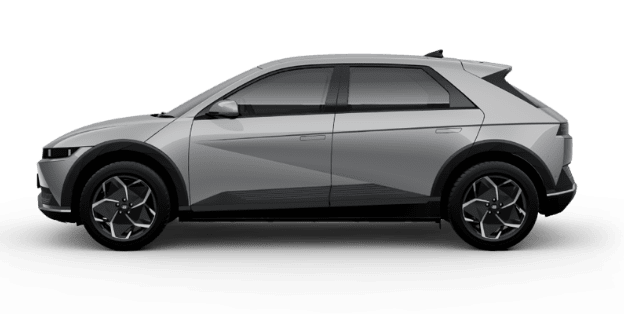
Hyundai Motor Group plans to produce IONIQ 5 vehicles with specific
autonomous-ready modifications at Hyundai Motor Group Metaplant America
(HMGMA) in Georgia.
- Google DeepMind – Accelerating next-generation humanoid robotics
Boston Dynamics has established a strategic partnership with Google DeepMind to accelerate the development of next-generation humanoid robots. Advanced AI models and training systems are essential for robots to perform complex tasks in real-world environments and collaborate effectively with people. Through this partnership, Boston Dynamics robots are expected to achieve greater autonomy and adapt more effectively to complex operating environments.
Hyundai Motor Group plans to establish a robot production facility in the U.S. with an annual capacity of up to 30,000 units by 2028. The Atlas humanoid robot will first be deployed at production facilities including HMGMA before broader deployment is expanded through phased validation.
Building an Open Ecosystem Through the Robot Reference Platform and Continued Investment in Korea’s Physical AI Future
Executive Chair Chung also outlined initiatives aimed at supporting the growth of Korea’s Physical AI ecosystem through open collaboration and continued investment.
“The
outcomes of collaboration with global technology leaders should contribute to
the growth of Korea’s Physical AI industry. To that end, Hyundai Motor Group
plans to foster an open ecosystem that supports innovation in robotics and AI
technologies.” — Hyundai Motor Group Executive Chair
Euisun Chung
- Robot Reference Platform: Hyundai Motor Group and NVIDIA are collaborating to develop a Robot
Reference Platform that combines Hyundai Motor Group’s and NVIDIA’s Physical AI
capabilities.
The platform will provide research robot models to universities, research institutes and startups, helping foster an open ecosystem that supports technological innovation and the development of Physical AI talent while contributing to the broader growth of Korea’s robotics and AI industries. - Supporting universities, research institutes and startups: The Robot Reference Platform is expected to provide universities, research institutes and startups with a standardized hardware and software environment, enabling them to more easily develop and validate Physical AI technologies. The initiative aims to help address challenges faced by organizations with innovative ideas but limited access to commercialization opportunities and validation infrastructure.
Hyundai Motor Group is also continuing large-scale investments aimed at
driving the next leap forward in Korea’s industrial and technology ecosystem. Continued
investments in Korea’s industrial and technology ecosystem include:
- Saemangeum AI Valley: In the Saemangeum region of Jeonbuk State, the Group is
developing Saemangeum AI Valley, which includes an approximate
KRW 9 trillion investment in AI
data centers, robotics manufacturing clusters, electrolyzer plants and AI hydrogen
city infrastructure.
In particular, the robotics manufacturing cluster will serve not only as a production base for the Group’s own robotics products, but also as a robotics foundry that provides manufacturing services for small and medium-sized enterprises that lack manufacturing expertise.
- Advanced industrial hubs in the Yeongnam region: Hyundai Motor Group plans to invest a total of KRW 42 trillion over the next decade to foster advanced industrial hubs focused on AI-driven manufacturing, future aerospace industries and sustainable energy infrastructure.
Through these initiatives, Hyundai Motor Group aims to strengthen key foundations for the Physical AI era, including data and energy infrastructure, robotics production capabilities and real-world validation capabilities. The Group also expects these investments to contribute to enhanced industrial competitiveness, balanced regional development, job creation and broader economic vitality in Korea.