
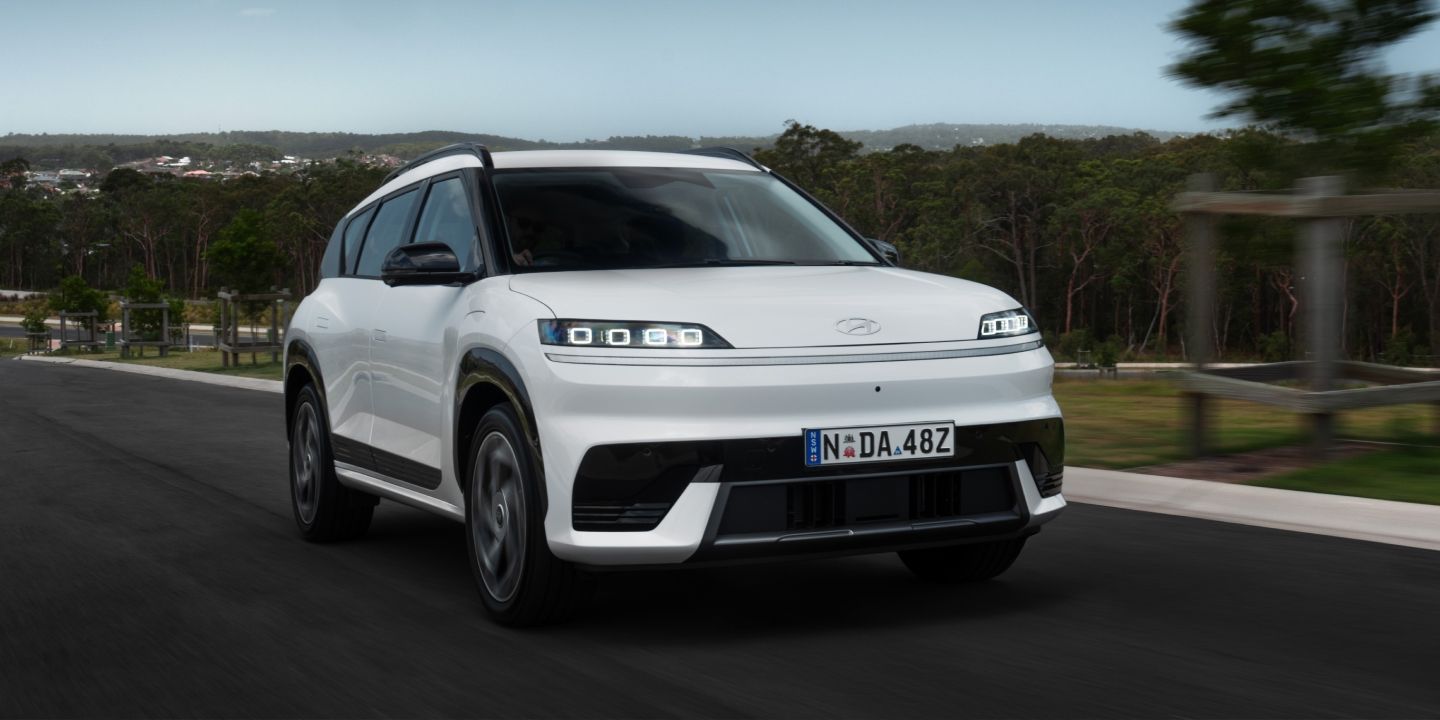
5 EV Myths Debunked: Why the 2026 Hyundai ELEXIO is the Reality Check Australia Needed

Hi, I’m Ronald Yuwono,
Hi, I’m Ronald Yuwono, Assistant Manager of Product Planning at Hyundai Motor Company Australia, and welcome to Mythconceptions, an all-new series where we address common myths and misconceptions about vehicles.
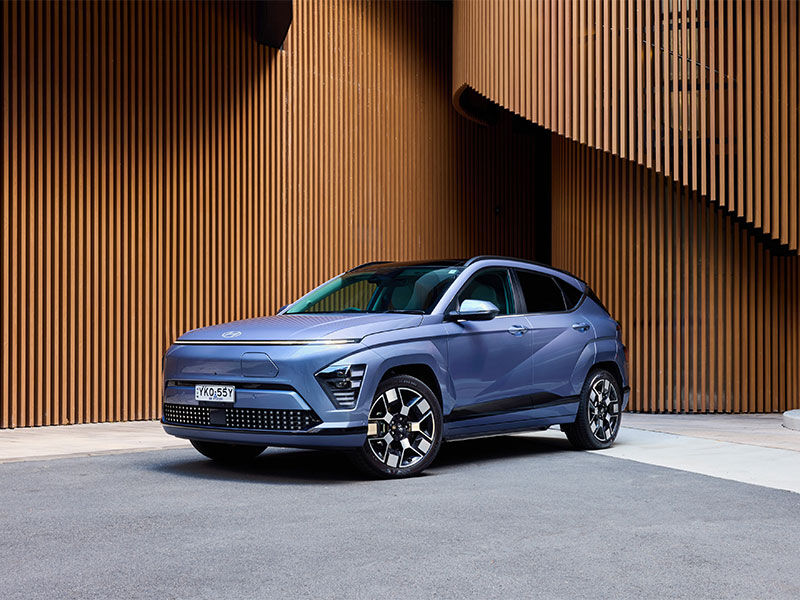
This time we’re looking at the top five EV myths and misconceptions in Australia, with help from our all-new, all-electric ELEXIO.
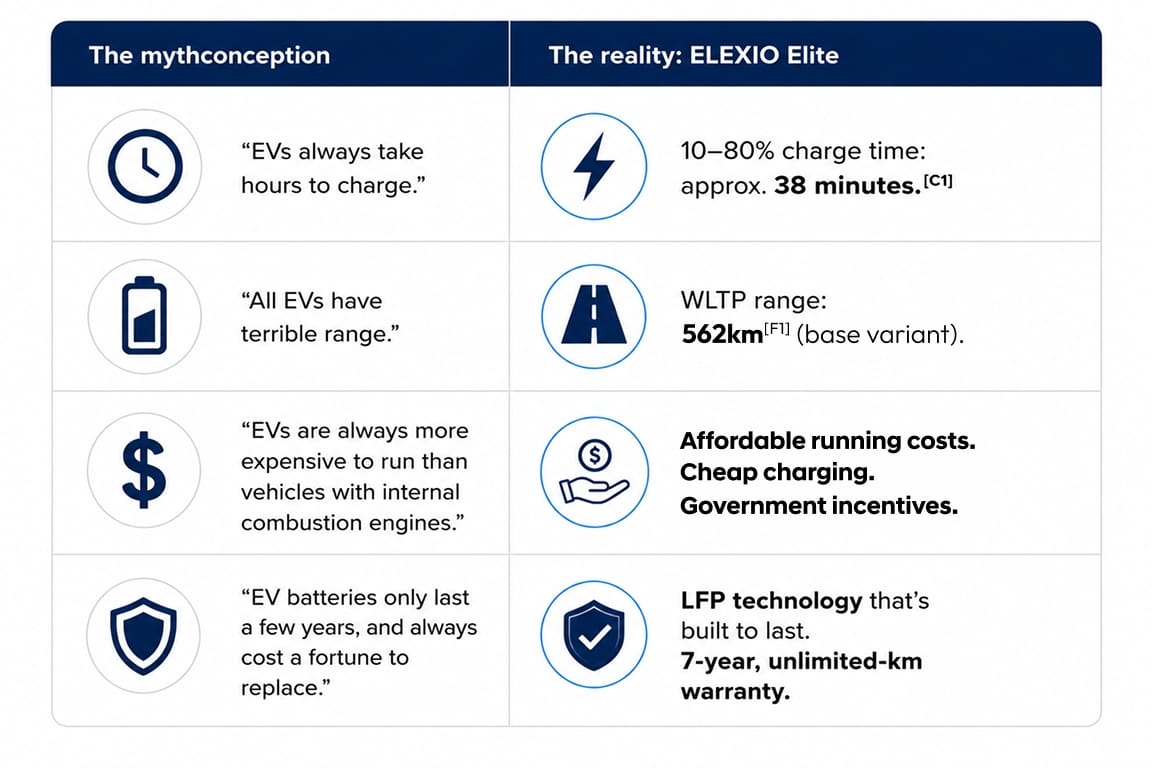
MYTHCONCEPTION 1: “EVs always take hours to charge”.
Not true. At least, not entirely.
The truth is, it depends on AC/DC – the electrical currents, not the Aussie rock band. Although, oddly enough, that’s how they got their name…
Anyway, if you charge an EV using a regular three-pin power point – for example, one of the wall sockets you have at home – it can indeed take multiple hours to top up the battery. This is what’s known as Level 1 AC charging, and it’s most useful when you’re not in a rush, like charging while you’re asleep. It’s no different from plugging in a smartphone or laptop before you go to bed. Same method, same process.
Level 2 AC charging is similar, but instead of using a wall socket you use a wallbox, a small wall-mounted charging station that can be found in all sorts of places: car parks, shopping centres, hotels. You can even get one installed in your own home. Using this method can still take hours, but it’s nonetheless faster than Level 1 AC charging.
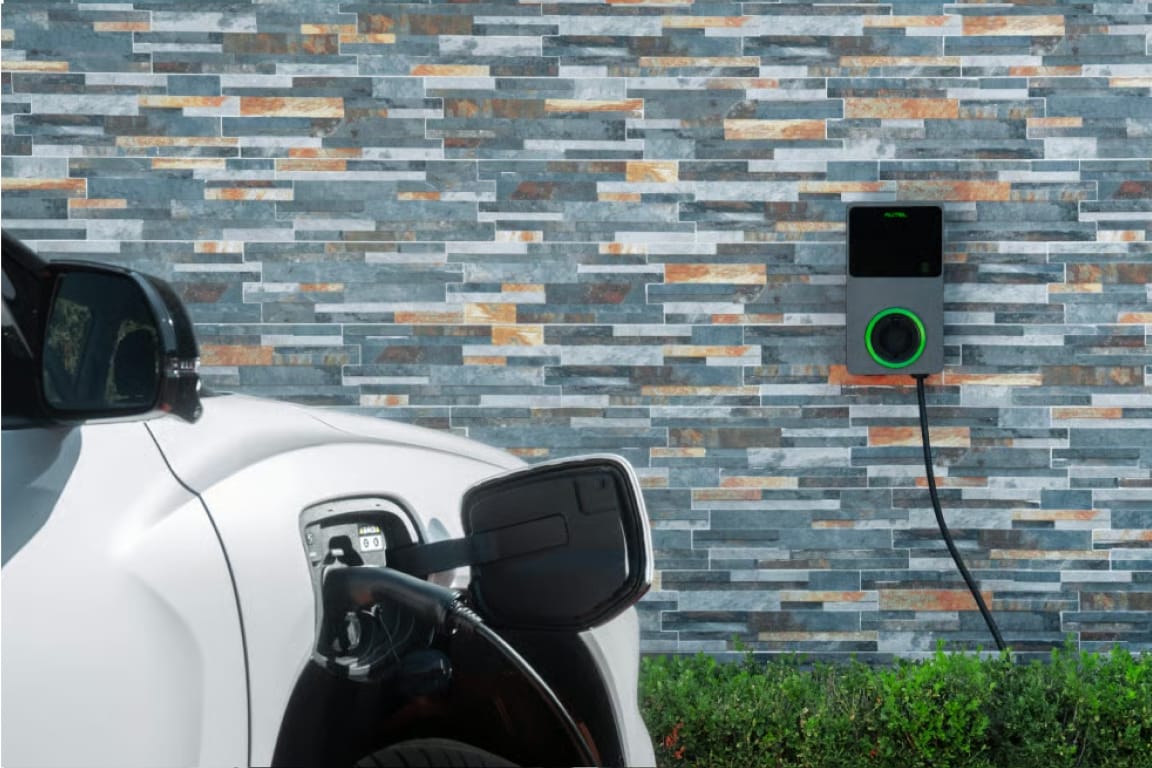
The Hyundai ELEXIO being charged with a wallbox.
Opt for a fast charger, though, such as a DC public fast charger – which are now available at more than 1,200 locations across Australia – and things get even faster. This process, known as Level 3 DC charging, can reduce your wait from several hours to a matter of minutes.
The ELEXIO, for example, can charge from 10–80% in approximately 38 minutes[C1] when using a 150kW charger. 38 minutes![C1] That’s faster than charging some smartphones.
So no, EVs don’t always take hours to charge. Depending on the method, even feature-packed EV SUVs like the ELEXIO can be charged in just over half an hour.
MYTHCONCEPTION 2: “EVs all have terrible range”.
False. Long gone are the days when EVs really struggled to go the distance.
Fun fact: some of the earliest EVs, created way, way back in the 1800s – such as the brilliantly named Flocken Elektrowagen – could just about reach 40km before running out of juice. Very impressive for the time, but still, less than a marathon. We’ve come a long way since then, though.
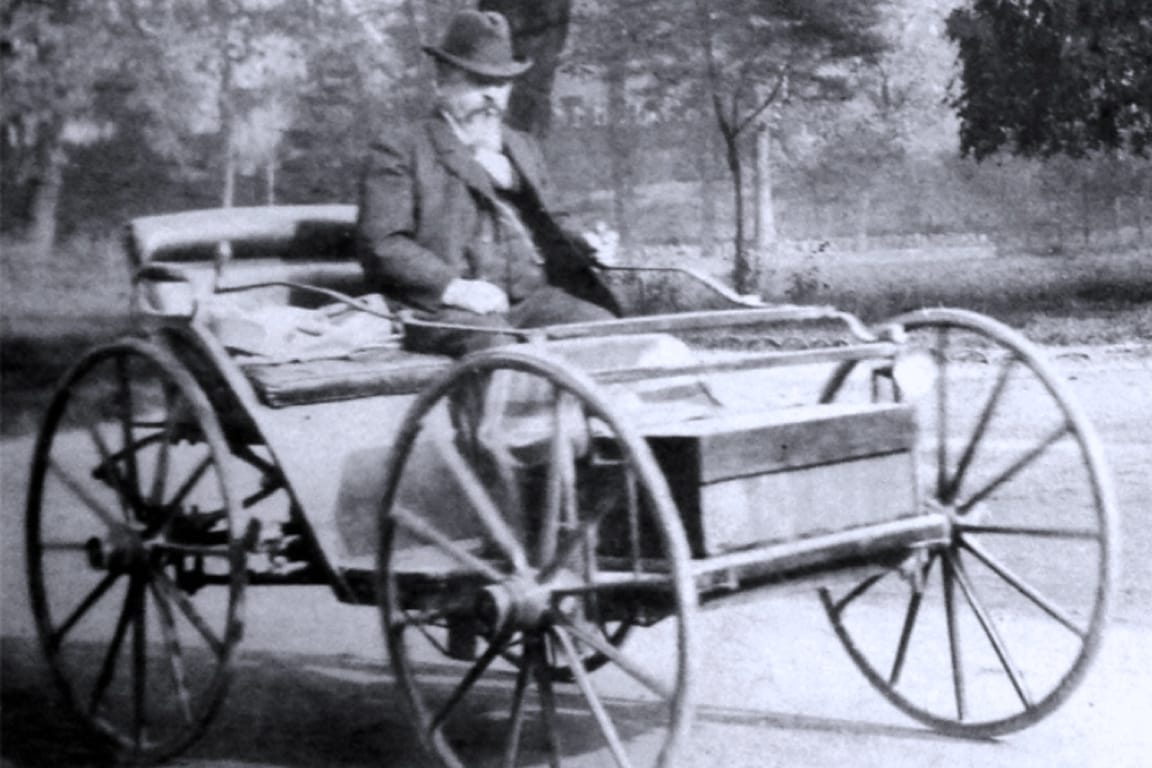
The Flocken Elektrowagen, driven by its inventor, Andreas Flocken.
Case in point: according to the WLTP – which stands for the Worldwide Harmonised Light Vehicles Test Procedure – the Hyundai ELEXIO range is up to 562km[F1] for the base variant. That’s 14 times the range of the Elektrowagen.
To put that scale into perspective even more, the distance between Sydney and Coffs Harbour is 530km – in other words, 32km less than the WLTP range of the base variant ELEXIO.
And it also means that the average Aussie, who according to The Real Australian Commute Report 2025 drives roughly 37km a day, would only need to plug in their ELEXIO once every 15 days.
So 562km[F1] should keep you going for a few trips to the shops (or a few dozen, anyway).
MYTHCONCEPTION 3: “EVs are always more expensive to run than vehicles with internal combustion engines”.
Incorrect. EV running costs can actually be much lower compared to owning a car with an ICE (that’s an internal combustion engine to you and me). In fact, owning an EV like the ELEXIO can potentially save you hundreds if not thousands of dollars a year.
First of all, those public EV charging stations we mentioned earlier? Some of them offer free charging. And those that don’t often cost less than fuelling up at a petrol station.
Second, purchasing an EV can, depending on where you live, come with major government incentives, which, again, can save you a lot of money.
And third, contrary to other mythconceptions out there, many EVs are simpler than ICE vehicles – mechanically speaking, anyway – and as a result can be cheaper to maintain.
Take the ELEXIO. Despite all of its advanced tech – from the 27” panoramic infotainment system to Hyundai Smartsense[DA2] safety features and Digital Key 2 Touch controls[CS2] – it’s remarkably simple.
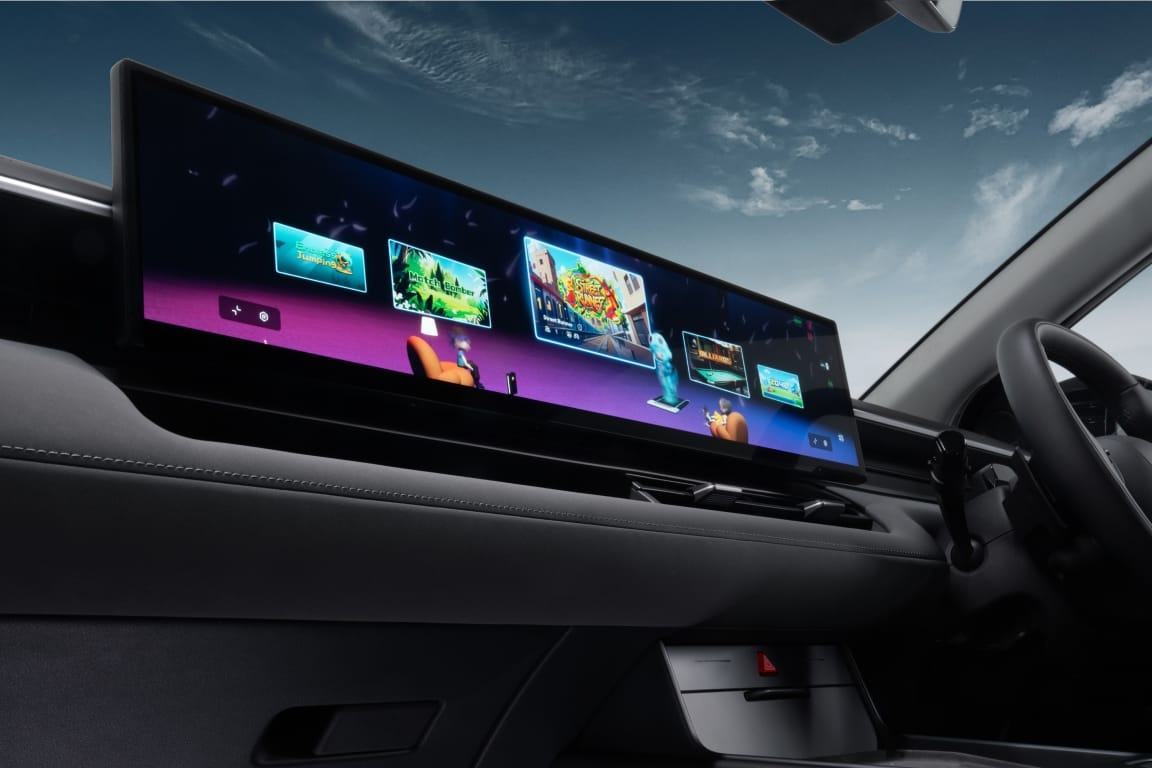
The ELEXIO’s high-tech 27” infotainment system.
It doesn’t have an engine. Doesn’t have a clutch. Doesn’t have an exhaust. What it does have, however, is fewer moving parts than many ICE equivalents. And fewer moving parts means a greater chance of less frequent maintenance; and less frequent maintenance means…? You guessed it – less money spent on upkeep. (Potentially.)
So EVs are often less expensive to run than ICE vehicles, not more.
Mythconceptions 4 & 5: “EV batteries only last a few years, and always cost a fortune to replace”
Wrong and wrong, respectively!
To be fair, though, this used to be a valid concern. In decades past, the batteries in old EVs did need to be replaced rather regularly, and when that happened, it could cost a king’s ransom. But this is no longer the case, thankfully.
The truth is, EVs have evolved a great deal – in the last decade especially.
Since the 2010s, EV battery tech has shifted from high maintenance to low cost; from air cooling to liquid cooling; from Lithium Manganese Oxide (LMO) to Lithium Iron Phosphate (LFP).
In other words, the batteries in many modern EVs are not only more efficient and more durable, but cheaper, too, meaning they don’t always need to be replaced every few years – or at great cost.
The LFP battery benefits alone are considerable: more safety, more stamina, more stability. And battery replacement costs in Australia have declined significantly, too. According to the U.S. Department of Energy (DOE), the average price of a lithium-ion battery pack for a light-duty EV has decreased 90% over the past 15 years, making them much cheaper to replace than they used to be.
And the good news: ELEXIO doesn’t just use liquid-cooling technology and LFP batteries; it also comes with a 7-year, unlimited-km warranty, so in the extremely unlikely event that the battery does need to be replaced during that period – and when we say “extremely unlikely”, we mean it, with only 0.3% of EVs produced from 2022 and onwards requiring a total battery replacement, according to research from Recurrent Auto – Hyundai will take care of it, free of charge.
So, if the battery does give up the ghost during the warranty period – which, again, is very unlikely – then the replacement may not cost a single cent. How’s that for value for money?
Done, done, done, done and done – that’s five mythconceptions busted!
So, to recap:
- EVs don’t always take hours to charge.
- EVs don’t all have terrible range.
- EVs aren’t always more expensive to run than ICE vehicles.
- And EV batteries don’t last only a few years, and don’t always cost a fortune to replace.
And the all-new Hyundai ELEXIO is living proof of that. See for yourself.
Related news.

Ready to take the next step?
That’s a wrap for our first instalment of
Mythconceptions – see you soon for more!
Explore the range
DISCLAIMERS
[C1] When connected to a 150kW charger, the ELEXIO can recharge from 10% to 80% in approximately 38 minutes. Charging times may increase if peak charging rates are not achieved. Charging times may vary based on factors including but not limited to charger type and condition, battery temperature, electricity supply, auxiliary consumables (e.g. air-conditioning) and environmental conditions.
[CS2] The Hyundai Digital Key 2 feature requires a compatible mobile device, Bluelink® app installation and an active Bluelink® subscription. Features, app and specifications are subject to change. Hyundai Digital Key 2 and Digital Key 2 Touch can be shared via the Wallet app (Apple Wallet, Google Wallet and Samsung Wallet) on your mobile device. Shared keys can only be used on devices that are compatible with Hyundai Digital Key. Convenience aid only. Not intended as a permanent key replacement.
[DA2] Hyundai SmartSense® is a registered trademark of Hyundai Motor Company. Safety features are not a substitute for attentive driving. The accuracy and operation of Hyundai SmartSense® technologies may vary based on factors including, but not limited to, weather, speed, traffic, road conditions and markings. Availability of various Hyundai SmartSense® safety features depend on vehicle variant and transmission. Please refer to your Owner’s Manual for further details on Hyundai SmartSense® feature limitations.
[F1] Figure based on WLTP (Worldwide Harmonised Light-Duty Vehicles Test Procedure) static laboratory combined average city and highway cycle test, which measure, energy consumption, range, and emissions in passenger vehicles, designed to provide figures closer to real-world driving behaviour. Real life driving results will vary depending on a combination of driving style, type of journey, vehicle configuration, battery age and condition, use of vehicle features (such as heating and air conditioning), as well as operating, environmental and climate conditions.