ADAS Level 1 vs Level 2: Key Differences Explained
Published: June 10, 2026
Fuel efficiency and safety have become two major priorities for Indian car buyers today. As manufacturers work to improve fuel efficiency, technologies like ADAS (Advanced Driver Assistance Systems) are making driving significantly safer. Hyundai, one of India’s leading automakers, integrates both fuel-efficient engines and ADAS features in several models, offering a blend of smart performance and safety. This blog decodes ADAS Level 1 vs Level 2, explains their distinctions, and highlights Hyundai cars that deliver both high fuel efficiency and advanced safety support.
Table Of Contents
What is ADAS?
ADAS, or Advanced Driver Assistance Systems, refers to a set of electronic technologies designed to assist drivers and enhance safety through automation. These systems use sensors, cameras, and radar units to collect information around the vehicle and respond to potential hazards.
In India, ADAS is becoming a sought-after feature among buyers who value protection during daily commutes or long trips. Hyundai’s vehicles, like the CRETA, boast advanced safety features powered by ADAS that make driving smoother and reduce accident risk.
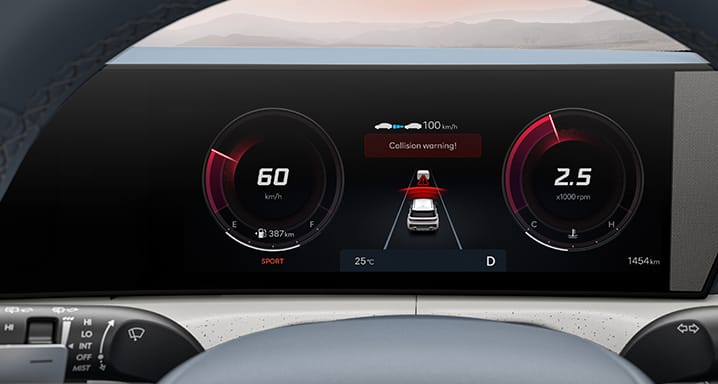
ADAS can alert you about lane departure, help maintain distance from the vehicle ahead, and even intervene to prevent collisions if the driver doesn’t act in time.
Why ADAS Matters for Indian Car Buyers?
India sees varied driving conditions: busy urban routes, highways, and uneven rural roads. Here’s why integrating ADAS makes a strong case for Indian buyers:
● Rising road-safety awareness: The growing emphasis on safety ratings and consumer research has led to greater interest in ADAS-equipped vehicles.
● Government and regulatory focus: The Indian transport ministry’s push to improve vehicle safety standards encourages brands like Hyundai to integrate such technologies.
● Enhanced driving comfort: Features such as adaptive cruise control and lane-keeping assist reduce fatigue on long drives.
● Reduced accident risk: Real-time detection of vehicles, pedestrians, and obstacles enables timely braking or steering.
ADAS bridges the gap between traditional driving and automated safety support, making it a valuable technology for Indian roads.
Related Read: How Much Does a 5-Seater Car Cost in India? A Quick Overview
ADAS Level 1 Explained
ADAS Level 1 represents the initial stage of driving automation. It supports one automation function at a time, such as steering or acceleration/braking. At this level, the driver remains fully responsible for controlling the vehicle.
Common Level 1 ADAS features include:
● Anti-lock Braking System (ABS): Prevents wheel lock during sudden braking.
● Electronic Stability Control (ESC): Maintains vehicle stability during sharp turns or slippery surfaces.
● Hill-Start Assist Control: Prevents rollback when starting on inclined roads.
● Rear Parking Sensors and Backup Camera: Assist with safe reversing via visual and audio alerts.
● Cruise Control: Maintains a steady speed on highways.
Among Hyundai’s cars, models like the GRAND i10 NIOS, AURA, and i20 integrate several Level 1 ADAS features. They strike an ideal balance between affordability and safety while maintaining excellent fuel efficiency.
ADAS Level 2
ADAS Level 2 elevates automation by simultaneously combining steering, acceleration, and braking. The driver must remain attentive, but the system can handle certain tasks in controlled conditions, such as highway cruising.
Key Level 2 ADAS features found in Hyundai’s models include:
● Forward Collision-Avoidance Assist (FCA): Detects vehicles or pedestrians ahead and automatically applies brakes if required.
● Lane Keeping Assist (LKA): Helps the car stay centred in its lane.
● Blind-Spot Collision Warning (BCW): Alerts the driver of vehicles in blind spots.
● Driver Attention Warning (DAW): Monitors driving patterns to detect fatigue.
● Smart Cruise Control (SCC): Maintains distance from the car ahead by automatically adjusting speed.
Vehicles like IONIQ 5 are equipped with Level 2 ADAS, offering both advanced safety and superior fuel economy through their hybrid and electric configurations.
ADAS Level 1 vs Level 2: Side-by-Side Comparison
| Feature / Parameter | ADAS Level 1 | ADAS Level 2 |
|---|---|---|
| Type of automation | Single-function (either steering or braking/acceleration) | Dual-function (steering + braking/acceleration) |
| Driver involvement | Full control | Partial assistance, but the driver must stay alert |
| Common features | Cruise Control, ESC, ABS | Lane Keep Assist, Adaptive Cruise Control, Collision Avoidance |
| Complexity | Basic electronic control | Integrated sensor and radar coordination |
| Fuel Efficiency Impact | Minimal | Improved through smoother speed control |
| Available in Hyundai cars | i20, GRAND i10 NIOS, AURA | IONIQ 5, CRETA Facelift |
| Cost level | Economical | Relatively premium |
While both levels prioritise safety, ADAS Level 2 adds more automation and comfort, ideal for longer urban and highway drives.
Also Read: Best Cars Under ₹12 Lakh With Sunroof: Style Meets Affordability
Popular Indian Cars Equipped with ADAS Level 1 and Level 2
Hyundai cars with Level 1 ADAS:
● Hyundai GRAND i10 NIOS: Equipped with ESC, ABS, and parking sensors.
● Hyundai AURA: Offers hill-start assist and rear camera sensors for safer manoeuvring.
● Hyundai i20: Incorporates stability control and multiple driver alert features.
Hyundai cars with Level 2 ADAS:
● Hyundai CRETA: Features Forward Collision Warning, Lane Keeping Assist, and Smart Cruise Control.
● Hyundai IONIQ 5: Integrates radar-based Level 2 ADAS and regenerative braking for better control and range efficiency.
These vehicles not only deliver fuel-efficient powertrains but also prioritise passenger protection and driving confidence.
Why Choose Hyundai India for ADAS-Enabled Cars?
Hyundai India focuses on enhancing safety standards with accessible ADAS technology across segments. The brand’s SmartSense suite includes features such as driver-attention alerts, automatic braking, and adaptive cruise control. Combined with Hyundai’s efficient petrol, diesel, and electric engines, these models deliver exemplary safety without compromising mileage.
How ADAS Enhances Driving Safety on Indian Roads?
ADAS proves its worth in India’s busy traffic and unpredictable roadway conditions by reducing the risk of accidents and enhancing driver awareness.
● Accident prevention: Automatic emergency braking and collision alerts lower the chance of front-impact collisions.
● Reduced driver fatigue: Cruise control and lane-centring functions ease mental load during long drives.
● Improved pedestrian safety: ADAS in Hyundai cars detects pedestrians early and applies the brakes if necessary.
● Efficient fuel use: Controlled acceleration and braking through adaptive systems help maintain consistent fuel economy.
Together, these benefits show how ADAS complements efficient vehicle design in ensuring safety and longer vehicle life.
Future of ADAS Technology in India
India’s automobile industry is steadily moving towards higher ADAS levels (3 and above), where cars will soon manage more driving tasks independently. Hyundai continues to invest in next-generation safety and hybrid-electric solutions. The integration of radar and camera fusion systems will make upcoming models even more responsive to road conditions. As awareness grows, advanced ADAS features may become standard across future Hyundai lineups in India.
Experience smart, safe, and fuel-efficient driving with Hyundai’s ADAS-enabled cars.
FAQs
What is the main difference between ADAS Level 1 and Level 2?
Level 1 provides single-function control (either steering or braking), while Level 2 can handle both tasks simultaneously.
Can ADAS Level 2 drive the car autonomously?
The driver must always remain alert and retain control. ADAS only assists under specific conditions.
Are Level 1 ADAS features mandatory in new cars in India?
Not yet, but many manufacturers, including Hyundai, offer these features as standard for added safety.
How reliable are ADAS systems in heavy Indian traffic?
Hyundai’s SmartSense ADAS is designed to recognise complex traffic patterns and provide timely alerts, offering dependable support on Indian roads.
Does Hyundai offer ADAS in budget cars?
Hyundai’s entry-level models include essential Level 1 ADAS features, ensuring basic safety is accessible to most buyers.
How does ADAS improve driving safety on Indian roads?
By alerting drivers to potential hazards, automatically regulating speed, and maintaining vehicle stability, ADAS significantly reduces the risk of accidents.