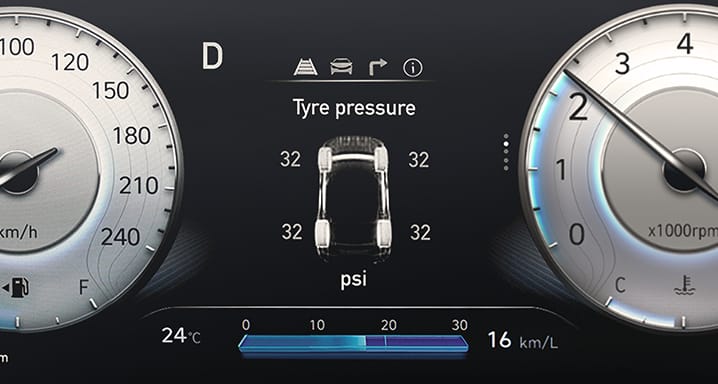
What is a Tyre Pressure Monitoring System? A Complete Guide to TMPS
Published: June 11, 2026
A Tyre Pressure Monitoring System (TPMS) is a crucial safety feature in modern vehicles that continuously monitors tyre pressure. Correct tyre pressure is essential for safe driving, fuel efficiency, and prolonging tyre life. Hyundai prioritises vehicle safety and integrates advanced technologies, such as TPMS, to enhance driver awareness and safety on the road.
Table Of Contents
Introduction to Tyre Pressure System (TPMS)
A tyre pressure system, commonly known as TPMS, is an electronic system that monitors tyre inflation pressure in real time. It alerts the driver when tyre pressure falls below or rises above the recommended level, which is vital for maintaining vehicle safety and performance. Maintaining the right tyre pressure helps prevent tyre blowouts and improves overall driving comfort. Hyundai incorporates tyre pressure monitoring systems as part of its commitment to innovative safety technologies aimed at protecting drivers and passengers.
Why Tyre Pressure Monitoring Matters?
● Safety Enhancement: Properly inflated tyres reduce the risk of blowouts and loss of vehicle control. TPMS alerts drivers before tyre conditions become dangerous, helping prevent accidents.
● Fuel Efficiency Improvement: Under-inflated tyres increase rolling resistance, causing higher fuel consumption. TPMS helps maintain optimal tyre pressure, improving fuel economy.
● Extended Tyre Life: Correct tyre pressure prevents uneven and rapid tyre wear, saving on maintenance costs by extending tyre lifespan.
● Improved Vehicle Handling: Tyres at the right pressure ensure consistent handling, steering precision, and braking performance.
● Legal and Compliance Considerations: In many regions, including India, TPMS is becoming a standard safety feature that aligns with regulatory requirements, promoting road safety awareness.
Related Read: How Much Does a 5-Seater Car Cost in India?
How Does a Tyre Pressure System Work?
The tyre pressure system uses sensors to measure tyre pressure and send data to the vehicle’s onboard computer, which then triggers dashboard alerts if pressure deviates from safe levels. There are two primary types of TPMS:
Direct TPMS Explained
Direct TPMS features sensors inside each tyre’s valve stem that measure pressure in real time. These sensors transmit accurate psi readings to the dashboard, offering immediate feedback. Benefits include precise pressure monitoring, quicker tyre issue alerts, and improved responsiveness. However, direct TPMS sensors require battery maintenance and may raise initial costs due to sensor installation inside each tyre.
Indirect TPMS Explained
Indirect TPMS estimates tyre pressure indirectly by using signals from the vehicle’s ABS wheel speed sensors. It monitors wheel rotation speeds; under-inflated tyres rotate faster because of their smaller diameter. This system is cost-effective because it doesn’t require additional sensors inside tyres, but it offers less precision than direct TPMS and may not detect slow leaks as effectively.
Hyundai equips selected models with TPMS, aligning with modern safety standards and enhancing driver confidence by ensuring tyre pressures remain within optimal thresholds.
How to Know if Your Car Has a Tyre Pressure System?
Most TPMS-equipped vehicles display a dedicated warning light on the dashboard, often resembling a tyre with an exclamation mark inside. In Hyundai cars, this TPMS light is a key indicator that alerts drivers to pressure irregularities. A steady light usually signals low tyre pressure, while blinking may indicate a system malfunction. Understanding these indicators enables prompt action to maintain tyre health and driving safety.
Also Read: The Ultimate Guide to Hyundai VENUE’s Interior and Infotainment Features
Common Tyre Pressure Issues Detected by TPMS
TPMS alerts drivers of various tyre pressure-related issues, such as:
● Under-inflated tyres: Cause poor handling and increased risk of blowouts.
● Over-inflated tyres: Lead to reduced traction and uneven tyre wear.
● Sensor Malfunctions: Battery failure or damaged sensors can trigger false warnings.
● Temperature Effects: External temperature fluctuations affect tyre pressure readings.
● Slow Leaks: TPMS helps identify gradual leaks early, preventing sudden tyre failures.
Benefits of TPMS for Hyundai Drivers in India
Considering Indian road and weather conditions, TPMS significantly improves driving safety. Fuel prices in India make optimal tyre pressure essential for cost savings. Hyundai’s focus on safety means TPMS integration supports enhanced driver protection on long highways and city roads alike. Key benefits for Indian drivers include:
● Adaptation to diverse road surfaces and temperatures
● Fuel cost reduction through efficient tyre management
● Increased safety for family and daily-use vehicles
● Support from Hyundai’s trusted service network for TPMS maintenance
Maintaining Your Tyre Pressure System
To keep TPMS functioning effectively, regular tyre pressure checks and sensor calibrations are necessary. Sensor batteries have a limited lifespan and may need to be replaced over time. Hyundai car owners can rely on authorised service centres for proper TPMS maintenance, ensuring sensor accuracy and durability. Aftermarket TPMS solutions exist, but professional servicing guarantees compliance with Hyundai’s safety standards.
Also Read: What is ESC in the Hyundai VENUE N Line and How Does It Enhance Driving Safety?
Conclusion
A tyre pressure monitoring system (TPMS) is an essential safety and efficiency feature that monitors your vehicle's tyres, warning you about pressure issues before they become hazards. For Hyundai drivers in India, TPMS not only promotes safer driving but also enhances fuel savings and tyre life under varied road conditions. Experience the confidence of driving Hyundai vehicles equipped with advanced safety technologies, such as TPMS and ADAS, for a safer journey.
Discover Hyundai cars with advanced safety features, including TPMS and ADAS for optimal driving safety and performance today.
FAQs
Can I drive safely if the TPMS warning light is on?
It is advisable to check and correct tyre pressure immediately; driving with the TPMS light on can be unsafe.
How often should I check or service my TPMS?
Regular tyre pressure checks should be monthly, with sensor servicing as recommended during vehicle maintenance.
Is TPMS mandatory for all cars in India?
TPMS is increasingly being adopted for safety compliance in India; it is standard on many new Hyundai models.
What should I do if my TPMS sensor battery dies?
Battery replacement is recommended at authorised Hyundai service centres to ensure system accuracy.
Can TPMS sensors be recalibrated or reset by myself?
Resetting may be possible, but professional service is advised for optimal performance.
Does using a spare tyre affect my TPMS?
Using a spare typically disables TPMS monitoring on that tyre; replace or repair the original tyre for normal functionality.